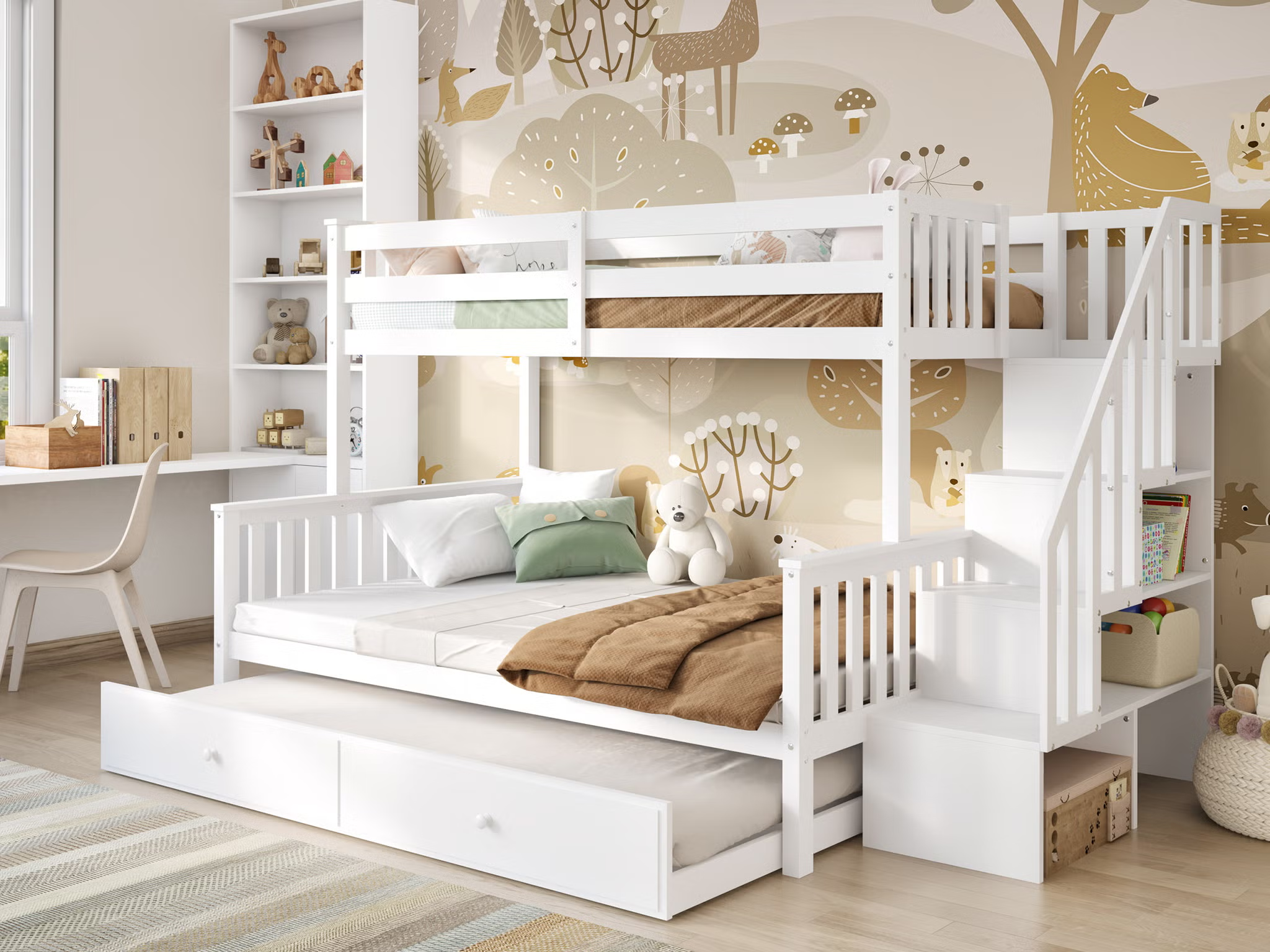
A kids bunk bed is one of the most space-efficient and practically valuable furniture investments available to British families with two children sharing a bedroom, stacking two full UK standard single sleep surfaces within the floor footprint of one bed and freeing the remaining bedroom floor space for the play, study, and storage functions that the shared British children’s bedroom must also serve. For British families considering the kids bunk bed purchase, the decisions that determine long-term safety and satisfaction are the British Standard BS EN 747 compliance, the structural quality for two children’s active daily use across the primary school years, the top berth mattress depth restriction, and the configuration that best serves the specific British children sharing the space.
Key Takeaways
- All kids bunk beds sold in the UK must comply with British Standard BS EN 747, which governs guard rail heights above the top berth mattress surface, maximum mattress depths for the top berth, ladder safety requirements, and structural load ratings for children’s bunk beds in the UK market.
- The top berth mattress depth is the most commonly overlooked safety specification in the British kids bunk bed purchase: the mattress must be within the maximum depth permitted by the specific frame’s guard rail height to maintain BS EN 747-compliant clearance above the sleep surface.
- Quality solid timber construction in British kids bunk beds, typically hardwood or quality engineered timber, provides the structural rigidity needed to resist the racking forces of two UK children’s active daily use across the 8 to 12 year primary school service period.
- The minimum recommended age for the top berth of a UK kids bunk bed is six years, when most British children have developed the physical coordination and sleep movement awareness to use the elevated sleeping position safely.
- The ability to separate the British kids bunk bed into two independent single beds when needed provides the flexibility that extends the total investment value beyond the shared bedroom years.
UK Kids Bunk Bed Configurations for British Families
| Configuration | UK Berth Sizes | Best For | Key British Consideration |
| Single over single | 90 x 190 cm each berth | Two British children of similar age | Most common UK configuration; BS EN 747 required |
| Small double over single | Lower: 120×190; Upper: 90×190 | Older larger child below; younger above | More generous lower berth for older British child |
| L-shaped bunk | Perpendicular berths in corner | British bedrooms with awkward layouts | Maximises central floor space in corner UK rooms |
| Bunk with trundle | Two berths plus pull-out third | British families needing occasional third sleep surface | Third berth for UK sleepovers; folds under when not needed |
| Bunk with desk | Top berth; desk replaces lower bed | One British child needing sleep and study space | Study zone below; popular in compact British bedrooms |
UK Kids Bunk Bed Safety: BS EN 747 Explained
Guard Rail Requirements Under BS EN 747
British Standard BS EN 747 specifies minimum guard rail height requirements above the top berth mattress sleep surface on any bunk bed sold in the UK. The guard rail must extend to a minimum height above the top of the mattress surface to prevent the sleeping British child from rolling over the guard rail during normal sleep movement. The critical practical implication for British families is that the maximum safe mattress depth for the top berth is determined by the specific frame’s guard rail height: a mattress deeper than the frame’s maximum safe depth reduces the effective guard rail clearance below the BS EN 747 minimum, creating a fall risk even when the guard rail is physically present and intact. Always confirm the maximum safe top berth mattress depth for the specific UK kids bunk bed frame with the British retailer before purchasing any replacement top berth mattress.
Structural Load Ratings for UK Kids Bunk Beds
BS EN 747 also specifies structural load ratings for UK kids bunk bed components, covering the static and dynamic load requirements for the sleeping platforms, guard rails, and access ladder under the dynamic loading of British children’s use. These load ratings are designed for children’s typical body weights and the dynamic forces of sleep movement and ladder climbing. British families should confirm that the specific kids bunk bed frame carries the BS EN 747 load rating documentation for each berth position. Quality UK kids bunk bed manufacturers from specialist children’s furniture brands provide this documentation as a standard part of the product information available to British retailers and consumers.
The British Standard Ladder Requirements
The access ladder of a UK kids bunk bed must comply with BS EN 747 rung spacing, depth, and grip requirements for British children’s bunk beds. Beyond the standard requirements, quality British kids bunk bed frames provide ladders with adequate rung depth for secure British children’s foot placement, appropriate rung spacing for the specific age range the bunk serves, and secure attachment to the frame that does not loosen under repeated daily use. The ladder is the highest-frequency interaction point between British children and the bunk bed structure, and its quality directly determines the safety of daily mounting and dismounting of the top berth across the full bunk service years.
Browse the complete range of kids bunk bed options for British families at the Boori UK website.
Frequently Asked Questions
What age is appropriate for the top berth of a UK kids bunk bed?
The minimum recommended age for the top berth of a British kids bunk bed is six years, based on the physical coordination, sleep movement awareness, and ability to safely use the ladder that most UK children develop by this age. Individual British children develop at different rates: assess whether the specific child can mount and dismount the ladder safely and independently rather than relying on age alone as the determining factor.
How much weight can the top berth of a British kids bunk bed hold?
UK kids bunk beds complying with BS EN 747 must meet specified static and dynamic load ratings for each berth. The specific top berth load rating varies by frame model and manufacturer. Confirm the top berth load rating for the specific British kids bunk bed frame with the retailer before purchasing, particularly for older or heavier British children approaching the upper weight range for the specific frame.
Can a UK kids bunk bed be placed against the wall in a British bedroom?
Placing the wall side of the UK kids bunk bed against a British bedroom wall is acceptable and the wall itself provides fall protection on that face. The open side or sides must retain the full BS EN 747-compliant guard rail coverage regardless of wall placement. Confirm the specific wall placement guidance for the particular UK kids bunk bed frame with the British retailer.
How do I choose a top berth mattress for a UK kids bunk bed?
The top berth mattress must be within the maximum depth permitted by the specific frame’s guard rail height to maintain BS EN 747-compliant clearance. Confirm the maximum top berth mattress depth with the British retailer before purchasing. Within the safe depth range, the mattress should be medium-firm, explicitly safety certified, and in the correct UK standard single dimensions of 90 x 190 cm for the standard single bunk berth.
Final Thoughts
A quality British kids bunk bed is one of the most space-efficient furniture investments available to UK families with shared children’s bedrooms. Choosing BS EN 747-compliant solid timber construction, confirming the top berth mattress depth restriction, and selecting a convertible design produces the safest and most durable UK kids bunk bed investment for the British shared bedroom. Browse the complete range at the Boori UK website.