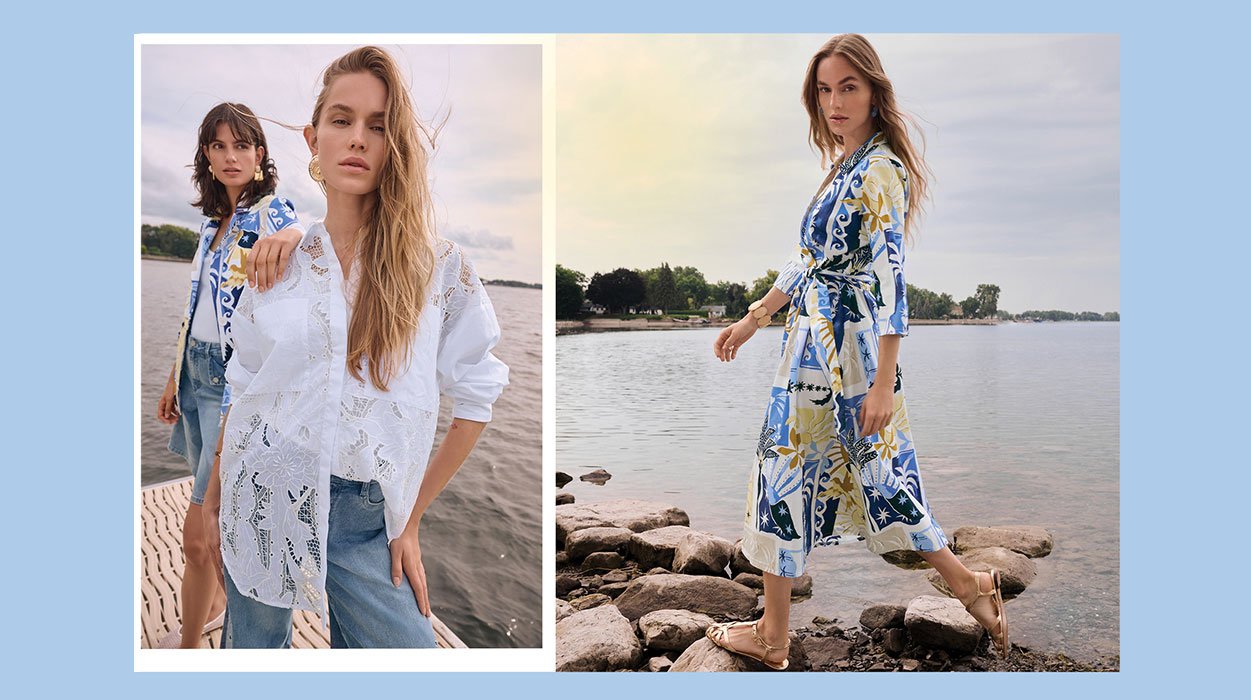
Most people use the words “blazer” and “jacket” as though they mean the same thing. In casual conversation that is fine, but when you are building a wardrobe, the distinction actually matters. Each one occupies a different role, works in different settings, and sends a different signal. If you have been trying to figure out which one to prioritize — or whether you need both — this breakdown of Joseph Ribkoff blazers vs. jackets is a useful starting point.
The Core Difference
Here is the clearest way to frame it: a blazer is always a jacket, but a jacket is not always a blazer.
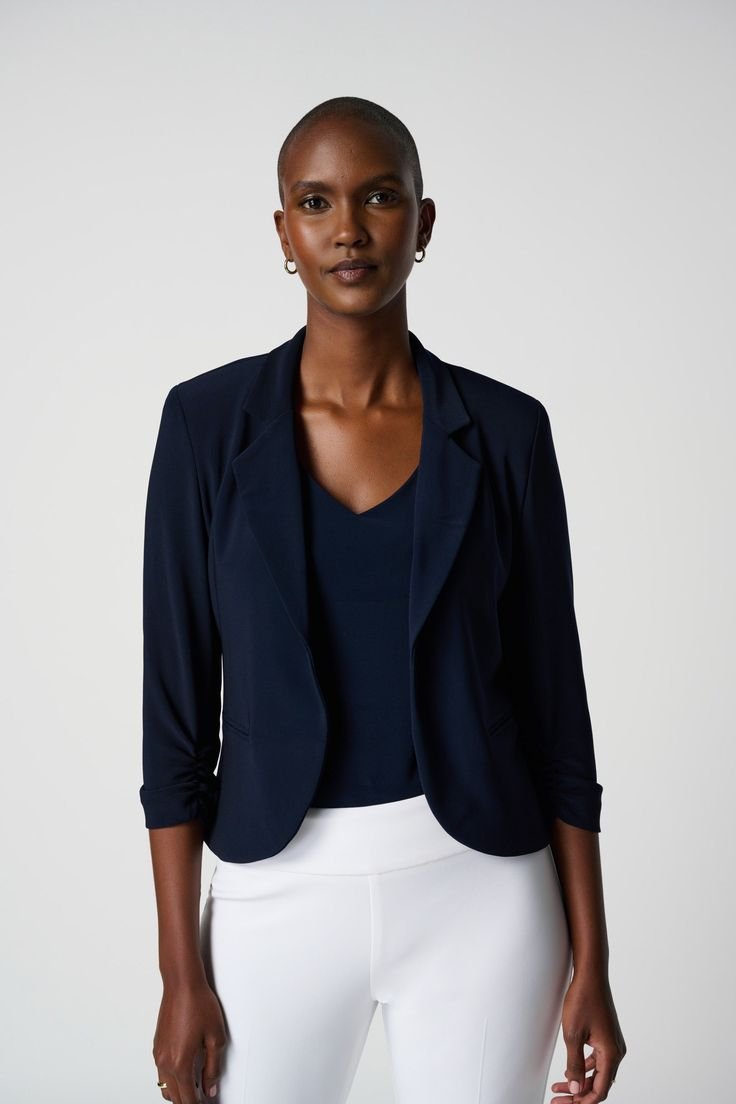
A blazer is defined by its tailoring. It has a structured shoulder, a lapel (typically notched or peaked), and a fitted silhouette designed to follow the shape of your body. Its roots are in professional dressing — it signals formality and polish without being as rigid as a suit jacket.
A jacket is the broader category. It includes everything from cropped boxy styles and leatherette bombers to suede-feel layering pieces and moto silhouettes with zip details and hardware. Jackets range from casual to statement-making, and they tend to be less structured and more versatile in terms of the settings they suit.
Joseph Ribkoff produces both at a consistent level of quality. The choice between them comes down to where you are going and what you want your outer layer to do.
When to Reach for a Blazer
Joseph Ribkoff blazers are built around structure and refinement. You will find options in solid knit fabrics, textured boucle, and subtle lurex finishes — pieces that are clearly designed for occasions where looking put-together is the point.
A blazer earns its place in your rotation in situations like these:
- At work or in professional settings. A fitted blazer over a simple top and tailored pants is one of the most reliable outfit formulas in a woman’s wardrobe. Joseph Ribkoff’s versions add enough visual interest — through fabric texture or tonal detailing — to avoid looking generic, without crossing into anything that reads as casual.
- For an elevated evening look. A structured blazer over a dress, or over a camisole and slim pants, immediately makes an outfit feel intentional. It is one of the easiest ways to shift something simple into something that looks considered.
- When travelling. Because Joseph Ribkoff constructs most of its blazers from wrinkle-resistant fabrics, they pack well and arrive ready to wear. A single blazer can move between a business meeting, a dinner, and a day of sightseeing without missing a beat.
When to Reach for a Jacket
The jacket category is where Joseph Ribkoff lets the design vocabulary open up. This is where you find the leatherette bombers, the scuba suede boxy silhouettes, the faux fur-trimmed statement pieces. These are outer layers with personality — pieces designed to define a look rather than simply complete one.
A jacket makes more sense than a blazer in situations like these:
- For casual or weekend outfits. A textured or moto-inspired jacket gives a relaxed outfit a lift without the formality that a blazer brings. Paired with jeans or simple trousers and a classic top, it does a lot of work with minimal effort.
- When you want the outer layer to be the focal point. A bold jacket in a statement fabric or an unexpected silhouette draws attention in a way that a blazer typically does not. If the jacket is the thing you want people to notice, lean into that.
- For creative or social settings. Dinner with friends, a gallery opening, a weekend away — these are moments where a structured blazer might feel too stiff and a relaxed, expressive jacket fits better.
How to Decide Which One You Need
If your daily life involves professional settings, client-facing work, or frequent semi-formal occasions, a blazer will pay for itself quickly. If your wardrobe is more casual or you want to add personality and edge to your everyday outfits, a jacket is the more natural investment.
The honest answer for most wardrobes is that one of each is the right move. A neutral blazer and a more expressive jacket together cover nearly every layering scenario you are likely to face. They can share the same bottoms and tops, and swapping one for the other completely changes the feel of an outfit with no additional effort.
Formality Is a Spectrum, Not a Rule
It is worth noting that neither blazers nor jackets are locked into a single context. A relaxed knit blazer can look great at a casual dinner. A structured moto jacket can work in a creative office. The categories are a useful starting framework, not a rigid dress code.
What Joseph Ribkoff does well across both is give you pieces that are clearly made with intention — the fabric, fit, and detailing are all considered. Whether you are reaching for the tailored polish of a blazer or the expressive versatility of a jacket, the quality holds up the same way.