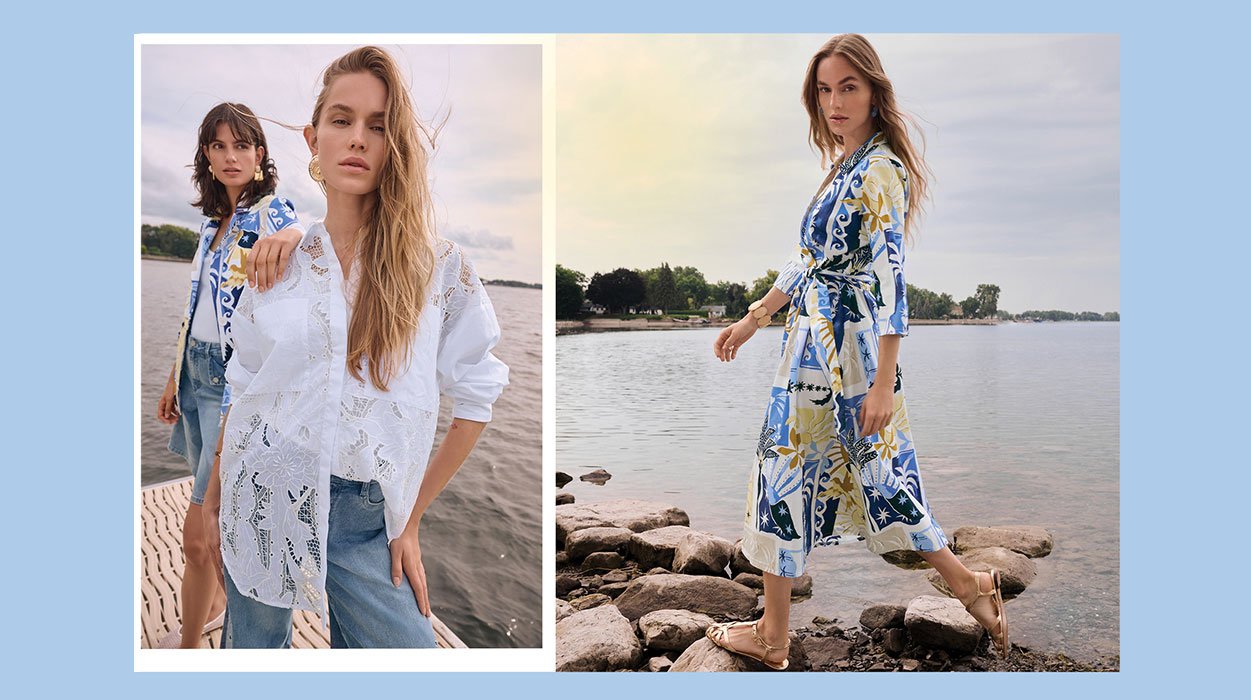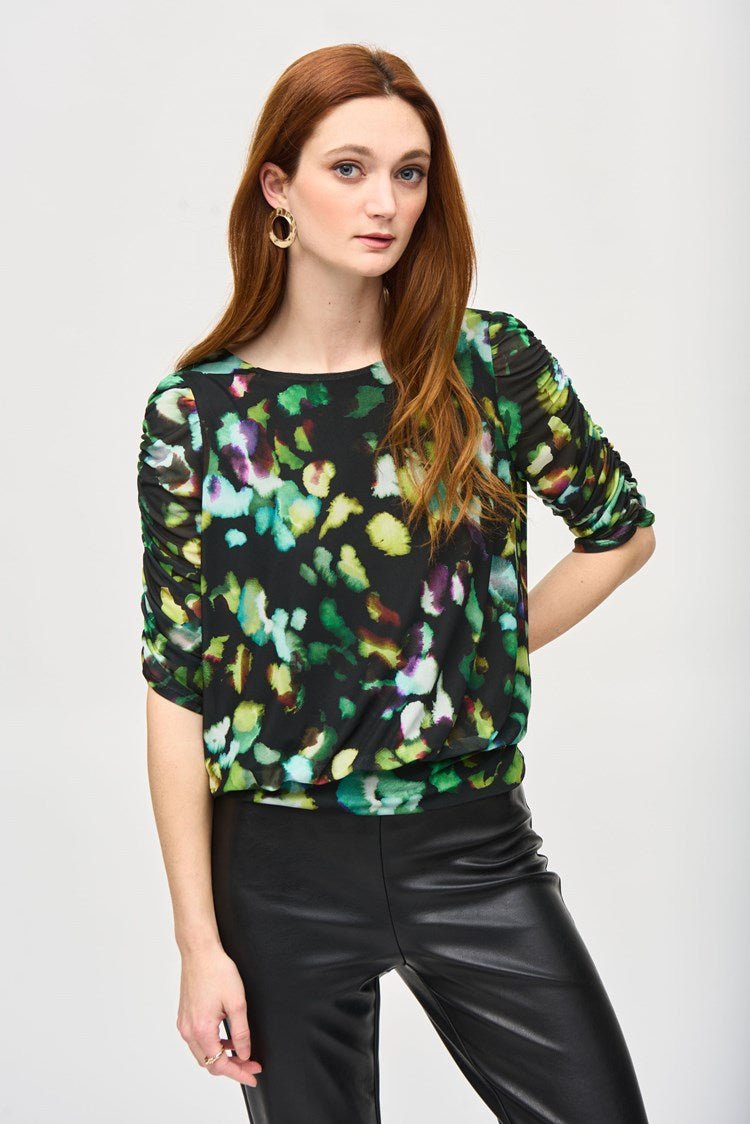
Shopping for tops sounds like one of the easier wardrobe decisions you can make. Then you land on a brand with a range this wide and realize the thumbnail images aren’t telling you nearly enough. Styles that look similar at a glance serve very different purposes in practice, and buying the wrong cut for your lifestyle means owning something you never quite reach for.
This is a practical guide to understanding what Joseph Ribkoff’s tops lineup actually offers — and how to figure out which part of it belongs in your wardrobe.
What Ties the Range Together
Before breaking down specific styles, it’s worth understanding the common thread running through the collection. The majority of Joseph Ribkoff tops are built around proprietary fabrics, and the one you’ll encounter most is Silky Knit — a smooth, stretchy material that resists wrinkles, holds its shape through a full day, and survives being packed in a suitcase without turning into a disaster. For anyone who’s ever pulled a “nice blouse” out of a carry-on looking like it lost a fight, that last point is not a minor detail.
The other thing worth knowing is that these tops are designed to function within a coordinated system. Joseph Ribkoff’s tops, pants, skirts, and jackets are built to work together, which simplifies wardrobe-building considerably — particularly if you’re trying to get a lot of outfit combinations out of a small number of pieces.
Breaking Down the Styles
Blouses sit at the most polished end of the spectrum. Pleating, lace inserts, structured necklines, zip accents — these are pieces designed for environments where looking pulled-together is non-negotiable. They pair naturally with tailored trousers for professional settings and transition easily into evening with a pencil skirt.
Tunics take a different approach. Longer through the body with a more relaxed silhouette, they’re cut to flatter through the midsection and hips rather than to impress in a boardroom. Over slim pants or leggings, they offer an effortless balance of comfort and polish that tends to be the most forgiving option in the collection — especially for anyone who wants something presentable without feeling constrained.
Camisoles and sleeveless tops are the workhorses most people underestimate. A Silky Knit camisole layered under a blazer or open cardigan is one of the most efficient routes to a complete-looking outfit. Many feature double-layer construction that provides smooth, clean coverage — functional details that matter when a top is operating as a foundation for everything built over it.
Knits and sweaters are where casual and polished converge. The range covers standard crew necks through more detailed pieces featuring color-blocking and jacquard prints. What distinguishes this category is that the fabrics and finishing don’t feel like a drop-off from the dressier options — the same design attention shows up at both ends of the formality spectrum.
How to Narrow It Down
Style preference is actually the wrong place to start. Start with occasion.
Where will you wear this most often? That question eliminates more options than any aesthetic consideration. If your week is dominated by professional settings, blouses and structured tops will carry the most weight — a single neutral blouse can move from a morning meeting to an evening dinner without looking misplaced in either context.
If comfort and ease are the priority, tunics and the sportswear-adjacent pieces from the Spring/Summer 2026 collection are worth a closer look. Same fabric quality and design attention, delivered in silhouettes that don’t ask much of you when you’re getting dressed at 7 AM.
If you’re building a wardrobe from scratch or trying to maximize outfit combinations from a limited number of pieces, start with camisoles. One or two in neutral tones will integrate with nearly everything else in the collection and give you more flexibility than any other single category in the lineup.
Sizing Is Worth Paying Attention To
Joseph Ribkoff runs its own sizing system from 2 through 22, and fit varies meaningfully between silhouettes. A fitted camisole and a relaxed tunic in the same labeled size will sit very differently on the body — which is obvious in theory but easy to forget when ordering online. Pay attention to the silhouette descriptor (fitted, straight, relaxed) rather than treating the size number as the only variable. Fit consistency within a given silhouette is one of the brand’s genuine strengths; fit consistency across completely different cuts is not something any sizing system can deliver.
The Bottom Line
These aren’t impulse purchases that get worn twice and forgotten. The fabrics perform, the construction holds up, and the coordinated design logic means pieces integrate naturally into a larger wardrobe rather than sitting in isolation. The key is matching the style to how you actually live — not to some idealized version of your wardrobe that bears limited resemblance to a regular Tuesday.