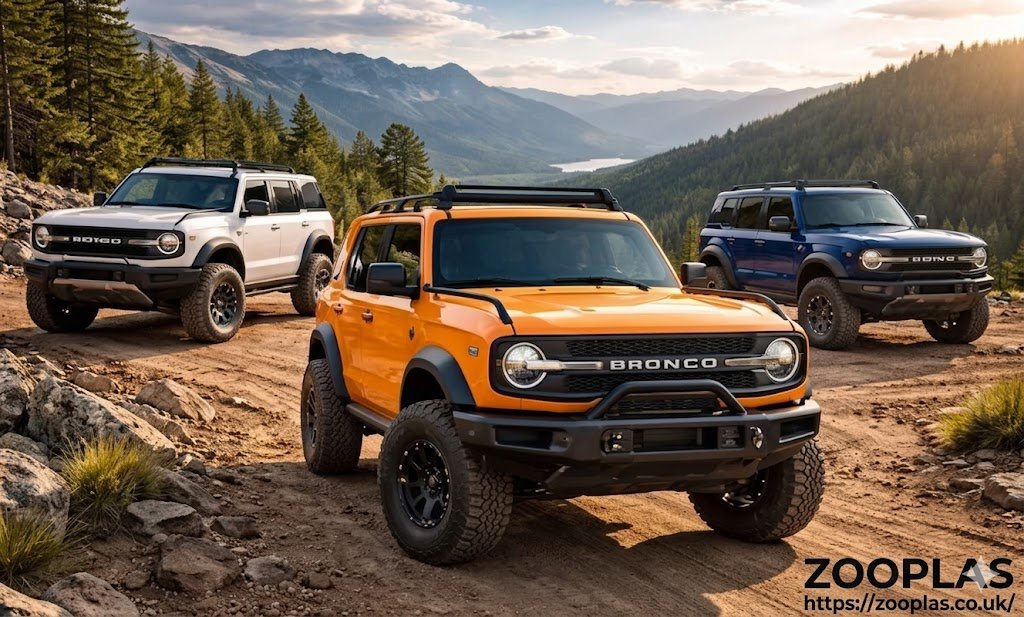
The Ford Bronco is more than just a vehicle; it is an American icon that has come to represent the spirit of adventure, exploration, and rugged capability. Over the past decades, the Bronco has been a symbol of Ford’s commitment to delivering tough, durable, and versatile vehicles designed to conquer the toughest terrain. Whether it’s traversing rocky trails, sandy dunes, or urban streets, the Ford Bronco has earned its place as one of the most beloved off-road vehicles in history.
From its initial release in 1966 to its revival in 2021, the Ford Bronco has seen numerous transformations while maintaining its core identity as a no-nonsense, off-road ready vehicle. This article takes a deep dive into the Ford Bronco’s history, design evolution, modern features, and cultural significance.
Origins and the Birth of the Bronco (1966-1977)
The Ford Bronco was introduced in 1966 as Ford’s answer to the growing demand for recreational off-road vehicles. At the time, the most popular off-road vehicles were the Jeep CJ and the International Harvester Scout, both of which were compact 4×4 vehicles. Ford wanted to compete with these brands and create a new type of vehicle that combined the ruggedness of an off-road machine with the versatility of a daily driver.
The original Bronco was designed from the ground up to be a tough, capable vehicle with a focus on off-road performance. It featured a short wheelbase, high ground clearance, and solid axles, which made it incredibly maneuverable on rough terrain. Available in three body styles — wagon, roadster, and pickup — the early Bronco was designed for utility, but also offered customization for different needs. The vehicle was powered by either a 170-cubic inch inline-six engine or an optional V8 engine, giving it ample power for both work and play.
Ford’s goal was to create a vehicle that would appeal to both farmers and outdoor enthusiasts. The Bronco quickly gained popularity as a rugged, go-anywhere vehicle, capable of handling both city streets and challenging off-road environments. It was designed to be simple, durable, and easy to maintain — qualities that made it appealing to a wide range of customers.
The First Generation: A Cultural Shift (1966-1977)
The first generation of the Bronco (1966-1977) is perhaps the most iconic and defining era for the vehicle. In its early years, the Bronco was marketed as a compact 4×4 SUV, capable of tackling rough terrain but also practical for everyday use. It was seen as a departure from the traditional full-size trucks that dominated the market at the time.
With its distinctive square headlights, blunt front-end design, and removable roof panels, the first-generation Bronco quickly became a fan favorite. The vehicle’s rugged design made it an ideal option for off-road enthusiasts who wanted a reliable, high-performance vehicle. Over the course of its first generation, the Bronco became popular with those who wanted an off-road vehicle that could also serve as a practical family car.
One of the most important innovations during this time was the addition of four-wheel drive. This feature made the Bronco one of the most capable off-road vehicles available, allowing it to climb hills, cross streams, and tackle obstacles that would have been impossible for most other vehicles at the time. The Ford Bronco’s short wheelbase made it extremely nimble, and its high ground clearance allowed it to navigate rough terrain with ease.
The Bronco’s Evolution: Second and Third Generations (1978-1996)
As the 1970s came to a close, Ford realized that the off-road vehicle market was changing. The demand for larger, more luxurious vehicles was on the rise, and the Bronco’s compact design was beginning to feel out of step with the larger trucks that were becoming popular. Ford responded by introducing the second-generation Bronco in 1978, which marked a significant departure from the original design.
The Second Generation (1978-1979)
The second-generation Bronco featured a much larger body style, designed to appeal to those who wanted a more comfortable and spacious vehicle for daily driving. The new Bronco was now based on the Ford F-150 pickup truck, which gave it a much larger frame and more interior space. This new Bronco was equipped with more modern features, such as air conditioning and power windows, making it more appealing to suburban buyers who wanted a blend of luxury and rugged capability.
While the second-generation Bronco was still capable of off-road adventures, it was clear that Ford was shifting the vehicle toward a more mainstream market. The Bronco’s classic 4×4 capabilities were still intact, but the larger body and more comfortable interior made it a more suitable option for daily driving. The vehicle was powered by a range of V8 engines, which gave it plenty of towing capacity and performance for the era.
The Third Generation (1980-1996)
The third-generation Bronco arrived in 1980, and it marked the final chapter for the traditional Bronco design before the vehicle was discontinued in 1996. With the advent of the Ford Explorer and other large SUVs, the Bronco found itself competing in a shrinking market. The third generation of the Bronco continued to feature four-wheel drive, but it was now marketed as a larger, more refined SUV designed for families and off-road enthusiasts alike.
Despite its rugged capabilities, the third-generation Bronco struggled to maintain its market position against newer, more efficient competitors. The end of its production in 1996 was seen as a culmination of changes in consumer preferences, where smaller, more efficient SUVs were taking center stage.
The Hiatus: The Bronco Disappears (1997-2020)
For nearly 25 years, the Ford Bronco was absent from Ford’s lineup, leaving a void for off-road enthusiasts. During this hiatus, many fans of the Bronco clung to memories of the vehicle’s rugged charm, and the model developed a loyal following. Meanwhile, other automakers capitalized on the SUV craze, offering vehicles like the Jeep Wrangler and Toyota 4Runner, which carried the torch for off-road vehicles during the Bronco’s absence.
Ford briefly explored the idea of bringing the Bronco back in the early 2000s, but it wasn’t until 2021 that Ford decided to fully revamp and reintroduce the iconic vehicle. The decision to revive the Bronco came at a time when interest in off-road vehicles was on the rise, driven by a new generation of outdoor adventurers and enthusiasts looking for a vehicle that could go anywhere.
The Return of the Bronco: Sixth Generation (2021-Present)
In 2021, after more than two decades of anticipation, Ford introduced the sixth-generation Bronco. The new Bronco was revived with a modern twist, combining classic design cues with cutting-edge technology and engineering. Ford’s goal was to create a vehicle that honored the Bronco’s rugged legacy while meeting the needs of today’s adventurous drivers.
The Design and Features of the 2021 Bronco
The 2021 Ford Bronco returned with a design that paid homage to its roots while incorporating modern features. The Bronco’s rugged body-on-frame construction remained, and it offered removable roof panels and doors, allowing for an open-air driving experience that was a hallmark of the original design. The new Bronco also featured advanced off-road technologies, including G.O.A.T. modes (Goes Over Any Terrain) to adjust the vehicle’s settings for different terrains, and a sophisticated suspension system for enhanced performance on rough trails.
The 2021 Bronco was available in multiple trims, including Base, Big Bend, Badlands, and Wildtrak, offering a variety of options for off-road enthusiasts. Ford also introduced the Bronco Raptor, a high-performance version of the vehicle designed for extreme off-road adventures, with a powerful turbocharged V6 engine and an upgraded suspension system for the toughest terrains.
Engine Options and Performance
The new Ford Bronco offered a range of engine options, including a 2.3-liter EcoBoost four-cylinder engine and a 2.7-liter twin-turbo V6, providing drivers with plenty of power for both off-road exploration and highway driving. The Bronco’s four-wheel-drive system and advanced suspension technology made it one of the most capable off-road vehicles on the market, and its trail-ready features made it the perfect vehicle for tackling rocks, sand, snow, and more.
The Legacy of the Ford Bronco
Since its reintroduction in 2021, the Ford Bronco has once again become a staple of American automotive culture. It has become synonymous with off-road adventures, freedom, and exploration. The Bronco’s legacy is one of durability, versatility, and courage — values that continue to resonate with drivers who seek a vehicle that can handle the toughest challenges.
Today, the Ford Bronco represents more than just a car; it’s a lifestyle. Its loyal following is not just based on its off-road capability, but also its timeless design and spirit of adventure that transcends generations. From the first-generation models to the 2025 updates, the Ford Bronco remains a symbol of American toughness and the ultimate companion for the modern explorer.
Conclusion
The Ford Bronco has remained one of the most significant vehicles in the world of off-road automobiles for over half a century. Whether in its original form from the 1960s or as the modern-day powerhouse, it continues to attract fans, enthusiasts, and adventurers who appreciate its ruggedness, reliability, and timeless design.
As we look toward the future, the Bronco’s legacy will only continue to grow, as it evolves to meet the needs of a new generation of drivers. For those who crave adventure and the thrill of the outdoors, the Ford Bronco remains the ultimate vehicle to take them where the road ends and the adventure begins.
Let me know if you would like more details, graphics, or information on specific aspects of the Ford Bronco!