You hoover the middle of the room. You do it regularly, more or less. You tell yourself the flat is clean, and for the most part, you believe it.
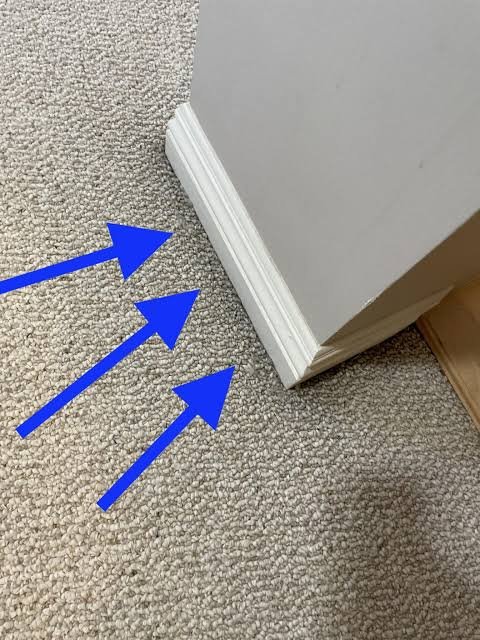
Then you move a piece of furniture. And there it is: a dense ridge of dust, grime, and something that might be ancient crisp crumbs lining every single edge of the carpet undisturbed.
So why does dirt accumulate at carpet edges with such speed? And more importantly, what can you do about it? We’ll discuss this in the following guide.
Foot Traffic
Life in modern London keeps most of us moving at a frantic pace. Between rushed morning school runs and stumbling through the front door after a long shift, our hallway and living room floors have to cope with a fair amount of wear and tear.
But think about how you actually navigate your home. You walk through the centre of the hallway, step into the middle of the kitchen, and trudge a well-worn path directly to the sofa.
Nobody walks pressed flat against the wallpaper like a jewel thief. Because human feet rarely tread within two inches of the wall, that specific zone never benefits from the natural friction of your socks or slippers.
Every step you take in the middle of your space acts like a miniature leaf blower, displacing the air and sending loose dust skimming across the room.
When this rushing air hits the wall, it stalls instantly and drops its payload straight into the perimeter fibres, which lock the dirt down.
Carpet Fibres
The physical structure of a carpet makes it an incredibly effective, horizontal air filter. Synthetic and wool yarns have microscopic surface textures that can trap floating debris before it settles elsewhere in the room.
When that airborne dust reaches the wall, it drops directly into these undisturbed perimeter loops. The carpet grips the grime instantly, burying it deep within the pile where a casual surface sweep can never reach it.
Vacuuming Techniques
Standard household vacuums are simply too bulky to get right up against your walls. The reason for that is that the wide plastic head is designed to clear big spaces quickly, which is why it physically can’t get flush against corners and edges.
When you push the machine forward, that bulky plastic bumper hits the skirting board long before the actual spinning brush bar can get near the wall. This leaves a permanent, highly frustrating gap of a few centimetres completely untouched by suction.
Because of this design flaw, your vacuum cleaner effectively clocks out the moment it gets near a corner.
It’ll happily polish off the main floor, but will leave the final inch completely untouched, forcing you to get down on your knees with the crevice nozzle to finish the job.
Carpet Type
Not all carpets are equally defenceless against edge dirt. The amount of grime that is collected, and how stubbornly it is retained, depends entirely on the fibre type, pile height, and backing material.
For example, loop pile carpets, common in hallways and high-traffic areas, tend to trap fibrous debris between loops at the edges.
Cut pile carpets hold fine dust more readily near the base of the fibre. And synthetic carpets can generate static electricity, which actively attracts airborne particles, particularly near walls where air circulation is already reduced.
Older carpets with worn edges or fraying fibre tips present an even greater challenge, as those loose threads catch and hold debris like Velcro.
This ageing material becomes a physical trap for grime, making the border nearly impossible to clean with a standard vacuum.
Environmental Factors
Even the most beautifully renovated Victorian properties in West London suffer from an invisible structural quirk: air pumps constantly through the gaps beneath the floorboards.
Because of temperature and pressure differences between indoors and outdoors, air can be drawn inward through gaps beneath skirting boards.
As this air moves into the room, the perimeter carpet can trap fine dust, soot particles, and other airborne pollutants carried with it.
This process is known as filtration soiling, and it leaves a dark line that is notoriously difficult to shift with standard household sprays.
If winter drafts have left your perimeters looking permanently bruised, standard household sprays won’t cut it.
Eliminating this kind of structural staining requires targeted professional assistance. To find proper carpet cleaners, Chiswick residents usually look for local specialists who know exactly how to treat filtration soiling.
Practical Cleaning Tips for Carpet Edges
The good news is that edge dirt is manageable. However, it requires a bit more effort than simply running the hoover back and forth across the middle of the room and calling it done.
Here’s how to actually tackle it:
- Use the crevice tool, and use it properly. Run it slowly along every skirting board, pressing lightly into the junction between carpet and wall. Most of the debris is sitting right in that crease.
- Move furniture before cleaning. Even shifting a sofa a few centimetres reveals years of accumulated grime. Clean the full edge before pushing it back.
- Work in one direction. Use slow, deliberate strokes, pulling away from the wall instead of across it. This action lifts the debris without pushing it around.
- Vacuum edges before the main body of the carpet. Any debris you disturb along the edges will settle back into the central area, which you’ll then clean in the main pass.
- Use a stiff brush on stubborn build-up. A dry, stiff-bristled brush worked gently along the skirting line will loosen compacted debris before the vacuum has any chance of lifting it.
- Clean regularly, not occasionally. Sporadic deep cleans are no substitute for consistent edge maintenance. Even a quick monthly pass with the crevice tool prevents serious accumulation.
- Consider professional cleaning annually. For deep-set grime along edges and in high-traffic rooms, a professional extraction cleaning session will cover what domestic equipment can’t reach.
Conclusion
And now, congratulations are in order! By understanding the physics behind your dusty carpet edges, you’ll know exactly what causes the problem and how to tackle it.
Once you’ve cleared that final boundary line, you can pat yourself on the back for a job well done. You’ll have officially reclaimed your margins, so brew a fresh kettle, put your feet up, and enjoy a home that is genuinely clean from wall to wall.