You’ve sent in your RSVP, the invitation is pinned somewhere in your kitchen, and now you’re staring at the closet wondering which suit to wear. In most cases, a sensible color will do just fine. Once in a while, though, a guest chooses badly and ends up being remembered as the man in that suit.
Here’s how to match your suit color to the occasion, plus a plain list of the shades that tend to cause trouble.
Read the Invitation First
Before you give color a single thought, check what the invitation tells you about the dress code, the start time, and the venue. Etiquette experts, including the Emily Post Institute, point to the invitation and the time of day as the most reliable signals of how formal a wedding will be. Those clues will narrow your choices far more than personal preference.
Here’s how the usual dress codes translate into suit colors:
- Black tie. A black tuxedo is expected. If the invitation says “black tie optional,” a very dark suit can work, but the tuxedo is the safer call.
- Formal or cocktail. Dark suits in navy, charcoal, or black are the norm.
- Semi-formal. Navy and grey in any depth work, and mid-tones such as medium blue are fine.
- Casual or daytime garden. Lighter greys, pale blues, and even warm shades like tan become options.
If there’s no dress code at all, assume semi-formal and dress one step up instead of one step down.
The Reliable Shades
A few colors work at nearly any wedding. If your closet holds only one or two suits, make them these, and they’ll carry you through years of invitations.
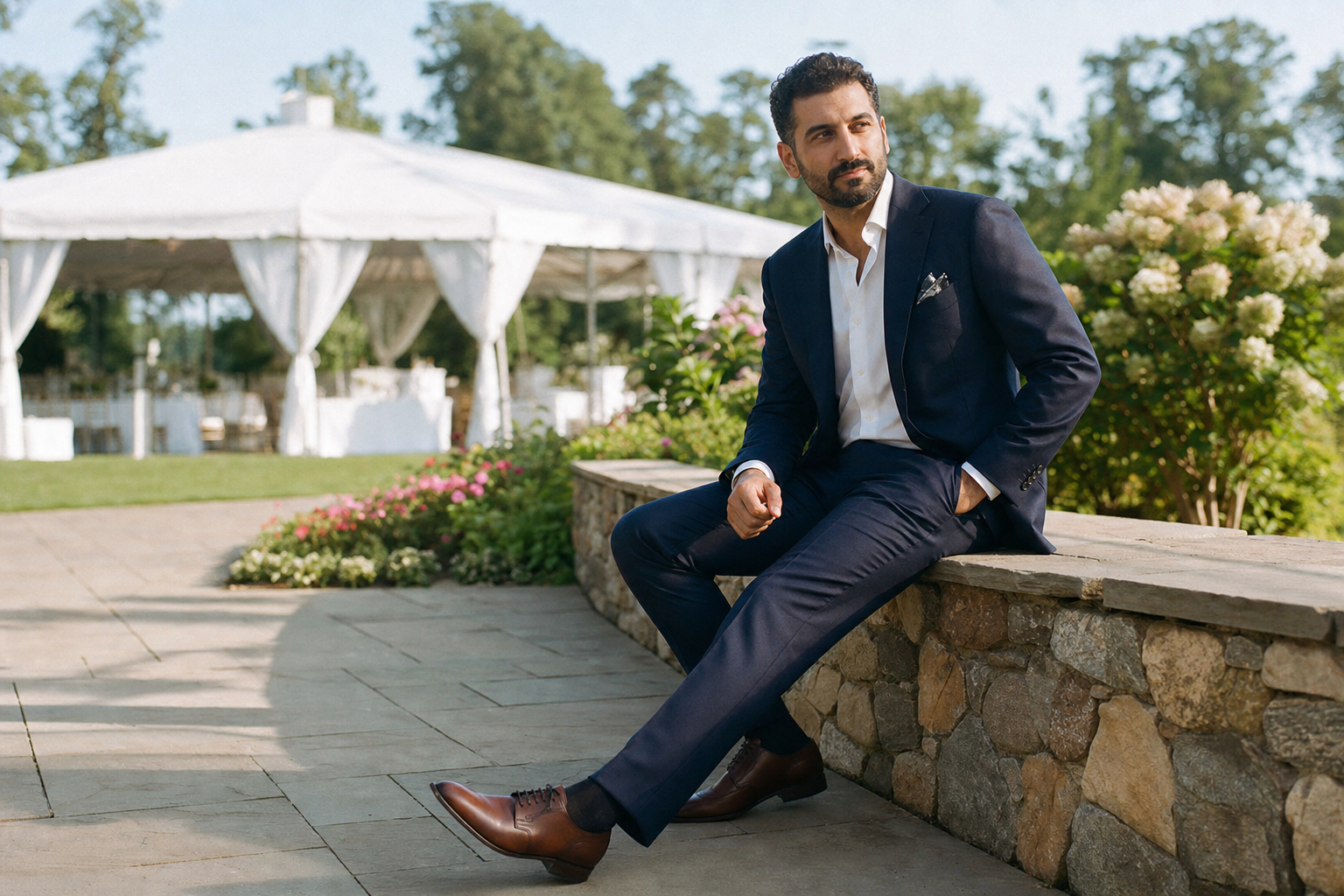
Navy. The most versatile pick of all. It’s dressy enough for an evening reception, relaxed enough for an afternoon ceremony, and flattering on almost everyone.
Charcoal and dark grey. A bit more serious than navy, which makes them a strong fit for autumn, winter, and evening events.
Mid-grey. The true middle ground. It works in every season and goes with almost any shirt and tie.
Medium blue. Livelier than navy without being loud, which makes it a good option for spring and summer.
What to Wear for Daytime and Summer Weddings
Sunlight and heat call for a lighter approach. A dark suit isn’t wrong at a daytime wedding, but lighter colors look more natural in daylight and feel cooler.
- Light grey looks crisp and refined at outdoor ceremonies. A breathable stretch fabric helps when you’re seated in the sun and then dancing later.
- Light blue is a natural for beach, garden, and destination weddings.
- Tan and warm browns suit rustic, vineyard, and barn settings, especially in late summer and early fall.
Because heat is often the biggest challenge at summer weddings, fabric matters as much as color. Choose lightweight, breathable cloth, and think about whether the suit will resist wrinkling after hours of wear.
What to Wear for Evening and Formal Weddings
As the day winds down, the palette deepens. Evening receptions and anything described as formal call for darker tones:
- Navy and charcoal remain the dependable standards.
- Black suits are appropriate in the evening and increasingly common. They tend to feel heavy at daytime events.
- Tuxedos are the correct choice for black tie. If you go to formal events often, owning one may make more sense than renting each time.
Colors Guests Should Skip
This is the section most readers came for. None of these are absolute laws, but each carries enough risk to give you pause.
White, ivory, and cream. The old rule against wearing white applies to men as well. A white or ivory suit can compete with the couple in photographs. Unless they’ve asked for an all-white dress code, leave it at home.
The same colors as the wedding party. If the groomsmen are in light grey with blush ties and you arrive in that exact combination, you may be mistaken for a straggler from the lineup. If you’re unsure, ask someone close to the couple.
Loud colors and bold patterns. A bright red suit, a large plaid, or a shiny metallic finish pulls attention away from the couple. Save it for an event that’s about you.
Black at a casual or daytime wedding. It isn’t a serious offense, but black at a noon garden ceremony can look overdressed and somber.
Colors with cultural significance. Some traditions attach specific meanings to certain shades. At many Chinese weddings, red is strongly associated with the bride, and in some cultures all-black or all-white clothing signals mourning. If you’re attending a wedding outside your own background, a quick question to the couple or a relative is always appreciated.
Let Your Shirt and Tie Do Some of the Work
Your suit isn’t the only thing setting the tone. The shirt and tie can raise or lower the formality and help the outfit suit the season.
- A white dress shirt makes nearly any suit look more formal.
- A light blue shirt softens a dark suit for a daytime event.
- A patterned shirt or an open collar relaxes the whole look for casual weddings.
- A darker tie grounds a light suit at a later reception.
If you’re putting together a wedding wardrobe, two solid dress shirts, one white and one light blue, will cover most combinations.
A Quick Checklist Before You Decide
Picking your suit color comes down to a few questions:
- What does the invitation say about dress code, time, and venue?
- Does the season call for a lighter or darker shade?
- Could your choice match the wedding party or draw attention from the couple?
- Are there cultural traditions you should ask about?
If you settle on navy, grey, or charcoal, you’re almost always safe. From there, go lighter for sunny afternoons and darker for formal evenings. Skip white, avoid anything that competes with the couple, and you’ll fit right in, in every photo.