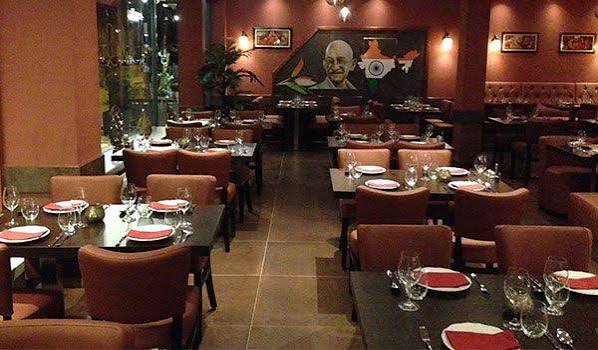
The difference between a good Indian kitchen and a great one rarely sits in the dishes people talk about. It hides in small details, the ones nobody photographs and most diners never notice. Judging an Indian restaurant amsterdam on these quiet signs of craft tells you far more than any headline dish or star rating.
Here are the details worth paying attention to, and what each one reveals about the kitchen behind the pass.
The bread that cannot be faked
Everyone orders naan and stops thinking about bread. The bread section is actually one of the clearest tests of a kitchen’s skill.
Look for a Roomali Roti, stretched by hand until it is almost translucent and cooked on an inverted griddle. It is one of Rasoi’s chef’s signatures, and it is a signature for a reason: it requires a specific skill and a specific person present to make it, and it cannot be prepared in advance and reheated. A kitchen that puts a hand-stretched bread on its menu is committing to having someone on shift who can actually make it.
Of everything on the menu, a bread like this quietly tells you the most about the hands in the kitchen.
The cheapest dish, cooked with care
A kitchen reveals its standards not in its showpiece but in the dish it has no commercial reason to fuss over.
A slow-cooked dal needs hours and hides nothing behind cream or spice. If the cheapest bowl on the menu arrives with real body and depth rather than thin and grainy, the kitchen cares all the way down. There is no marketing reason to cook a budget dish that carefully, so a kitchen that does it anyway is telling you something honest. It is the detail that separates a place that cooks for its regulars from one that coasts on its signature.
Order something cheap. The care, or the lack of it, is impossible to hide.
Signatures spread across the whole menu
Where a kitchen places its chef’s signatures is a quiet statement about what it values.
At Rasoi, the signatures do not cluster in the expensive mains. They span the menu: Tandoori Lasooni Prawns and Tandoori Pomfret from the tandoor, Mutton Rogan Josh and Lahori Ghosht among the mains, and notably several vegetarian dishes including Khatta Meetha Baingan and the Mushroom Galouti Kebab. A kitchen staking its name on a vegetable dish, not just its priciest meat, is one that takes the whole menu seriously rather than treating half of it as filler.
The spread of those marks is a detail most diners never read, and it says more than the prices do.
Regional names that prove real breadth
A menu that names where its dishes come from is a kitchen confident in cooking across the country.
Vague, generic dish names suggest a narrow, familiar list. Specific regional names, a Kashmiri braise, a Kolkata-style fish curry made with Catla fish, a Hyderabadi green gravy of mint and coriander, prove the kitchen draws from the full cuisine rather than one well-worn corner. This is a detail you can read in two minutes, and it reliably separates a kitchen with range from one repeating variations on a single sauce.
Count the regions named on the menu. The number is a quiet measure of ambition.
The honesty in how heat is marked
How a menu handles spice reveals how the kitchen thinks about flavour.
Graded heat levels, separating hot from very hot, show a kitchen paying attention to the difference. A good spread of dishes with no heat marking at all shows it does not lean on chilli to carry flavour, because depth comes from spice blends and slow technique rather than burn. A menu where everything is fiery is often hiding thin cooking behind heat. The most accomplished dishes frequently carry no warning at all.
An honest, specific approach to heat is the mark of a kitchen confident in its actual flavours.
Reading the details, not the headlines
None of these details make it onto a review or a photograph, which is exactly why they are worth knowing. They are the quiet proof of how a kitchen actually works when nobody is watching.
The hand-stretched bread, the carefully cooked cheap dish, the signatures spread across the menu, the regional names, the honest heat markings. Each is a small sign of craft that a confident kitchen shows and a lazy one cannot fake. Read them and you judge a place on what it demonstrably does rather than on how loudly it markets itself.
And for the nights you would rather stay in, the same details apply when you place an indian takeaway amsterdam order. A kitchen that gets the small things right in the dining room gets them right in the container too, so the dal still has depth and the gravy still holds its body when it reaches your table.