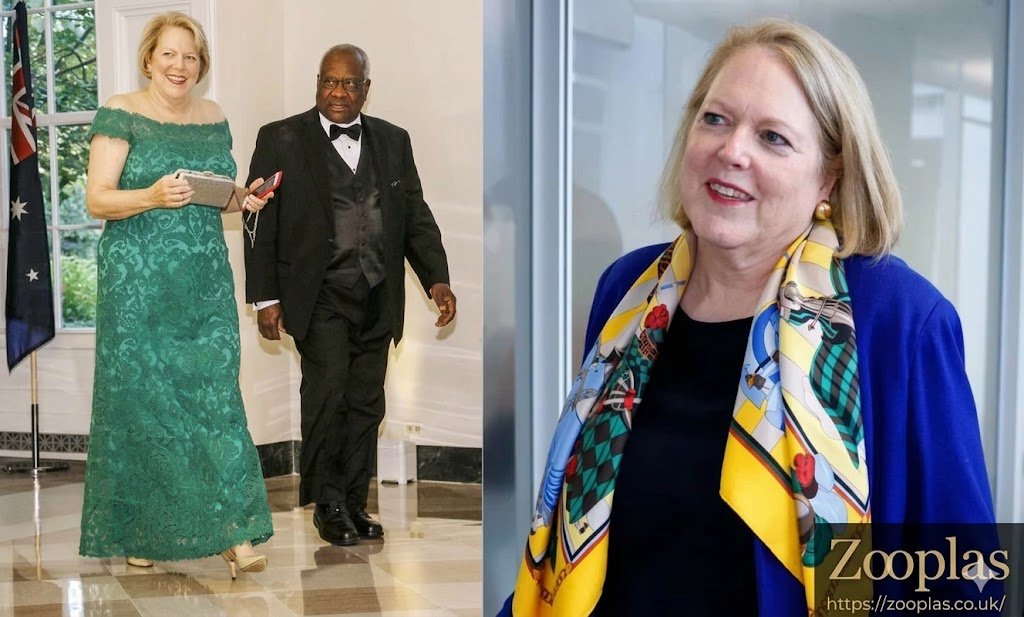
Clarence Thomas is one of the most influential and controversial figures in the history of the United States Supreme Court. Serving as an associate justice since 1991, he has consistently shaped American law with his originalist philosophy, conservative views, and distinctive approach to interpreting the U.S. Constitution. His tenure, now spanning over three decades, has sparked debates on everything from voting rights and civil rights statutes to ethical concerns and personal controversies.
Clarence Thomas Early Life and Education
Born on June 23, 1948, in Pin Point, Georgia, Thomas was raised in a segregated world. His father left the family when he was young, and his mother struggled to raise him and his brother. To provide them with a more stable upbringing, his mother sent Thomas and his brother to live with their maternal grandfather. His grandfather instilled in him a sense of discipline and a work ethic that would guide him through his education and professional life.
Thomas attended the College of the Holy Cross in Massachusetts, where he graduated cum laude in 1971. He then attended Yale Law School, earning his J.D. in 1974. After law school, Thomas went on to work in various legal positions, including in private practice, as an assistant attorney general in Missouri, and later, in the Equal Employment Opportunity Commission (EEOC) under President Ronald Reagan.
Nomination to the Supreme Court
In 1991, President George H.W. Bush nominated Thomas to the Supreme Court, filling the seat left by Thurgood Marshall, the first African American justice. Thomas was the second African American justice to be appointed, making his nomination highly symbolic.
However, Thomas’s confirmation was fraught with controversy. During the Senate hearings, law professor Anita Hill accused him of sexual harassment during their time working together at the Department of Education and the EEOC. Hill’s testimony, which was widely televised, polarized the nation. Thomas vehemently denied the accusations, describing them as a “high-tech lynching.” Despite the allegations, he was confirmed by a narrow 52-48 vote in the Senate.
Clarence Thomas Judicial Philosophy
Clarence Thomas is known for his originalist approach to interpreting the Constitution. He believes in reading the Constitution based on its original meaning at the time it was written, rejecting modern interpretations that seek to adapt the Constitution to contemporary issues. This philosophy places him in alignment with a more conservative, textualist school of thought, which also emphasizes the literal meaning of legal texts.
Thomas is often considered one of the most conservative members of the Supreme Court, alongside colleagues like Samuel Alito and the late Antonin Scalia. His decisions often reflect a deep skepticism toward judicial precedents, leading him to challenge long-established rulings. He has consistently argued for a limited role of federal courts and a broader deference to state legislatures and governments.
Some of his notable opinions include his dissenting view in cases like Roe v. Wade, where he expressed the view that the Constitution does not guarantee a right to abortion, and his opposition to broad interpretations of civil rights laws, including the Voting Rights Act and affirmative action policies.
Clarence Thomas Controversies: Gifts, Ethics, and Financial Disclosures
One of the most prominent controversies surrounding Justice Thomas has been his acceptance of undisclosed gifts and trips from wealthy benefactors, particularly Harlan Crow, a billionaire real estate developer. Over the years, Thomas has reportedly accepted luxury vacations, private jet flights, and stays on Crow’s yacht, among other high-value gifts, without disclosing them in his annual financial reports as required by law.
Reports first surfaced in 2023 about the nature of these gifts, sparking calls for increased transparency and ethics reform in the judicial branch. Some critics have argued that these gifts raise concerns about potential conflicts of interest, particularly given Thomas’s rulings on cases that could affect Crow’s business interests. In response to this, Thomas has amended some of his financial disclosures but has faced calls for a full investigation into his financial dealings.
Clarence Thomas Voting Rights and Civil Rights
Throughout his tenure, Thomas has been a vocal critic of the Voting Rights Act (VRA), one of the most important pieces of civil rights legislation in U.S. history. His opinion in the Shelby County v. Holder case (2013) was pivotal in striking down a key provision of the VRA that required states with a history of discrimination to get federal approval before changing their voting laws. Thomas argued that this pre-clearance requirement was outdated and unconstitutional, and his views have led many to question his commitment to expanding voting rights for marginalized communities.
In other areas of civil rights, Thomas has consistently taken conservative positions, advocating for a narrow reading of civil rights statutes and pushing for the Court to overturn precedents that favor broad protections for historically disadvantaged groups.
Clarence Thomas Personal Life
Clarence Thomas married Virginia (Ginni) Thomas in 1987. Ginni Thomas is a conservative activist and has been involved in various political causes, particularly those aligned with right-wing conservative movements. Her involvement in efforts related to the 2020 presidential election raised concerns about potential conflicts of interest, as some of the issues involved in the election were subjects of cases before the Supreme Court. Despite these concerns, Justice Thomas has not recused himself from any cases that may involve his wife’s political activities.
Thomas also has a son, Jamal Thomas, whom he has publicly acknowledged as part of his family. He previously had a marriage to Karon Blaine, which ended in divorce before his Supreme Court appointment.
Clarence Thomas Retirement Speculation
As of 2026, Clarence Thomas is still serving on the Supreme Court, despite being the second-oldest justice after Justice Ruth Bader Ginsburg (who passed away in 2020). At 78 years old, there has been ongoing speculation about whether Thomas will choose to retire soon. However, Thomas has not indicated any plans to step down from the Court, and justices often remain in their positions for life unless they choose to retire or are removed through impeachment.
Clarence Thomas Legacy and Influence
Justice Clarence Thomas’s legacy is deeply tied to his originalist philosophy and his commitment to constitutional textualism. Over his decades on the Supreme Court, Thomas has influenced major rulings on abortion, affirmative action, the Voting Rights Act, and many other areas of law. His conservative leanings have reshaped the Court, making it one of the most ideologically conservative in recent history.
Despite his controversial past, including the Anita Hill allegations and his current ethical dilemmas surrounding gifts and financial disclosures, Thomas’s voice remains powerful in shaping the direction of American law. His influence in constitutional law, particularly in states’ rights, voting rights, and civil rights, will likely be debated for generations to come.
Conclusion
Clarence Thomas stands as a polarizing figure in American jurisprudence. His philosophy has left an indelible mark on the U.S. legal system, particularly in areas like voting rights, civil rights, and federal power. Whether admired for his consistency and commitment to his principles or criticized for his controversial rulings and ethics concerns, Thomas’s legacy on the Supreme Court will be felt for years to come.
This article covered Thomas’s career, controversies, personal life, and judicial philosophy, addressing all the major themes you requested. If you have any further questions or need additional details on specific aspects of his life and career, feel free to ask!