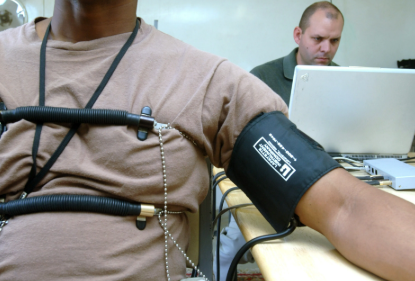
Most people have a pretty clear mental picture of a polygraph test. You sit in a quiet room. Wires get attached. A needle jumps across a graph. Someone watches closely, waiting for a reaction that might give you away.
It feels almost cinematic.
But once you move past that image, things get less obvious. What exactly is being measured? How do examiners decide whether someone is telling the truth? And maybe the biggest question of all—how reliable is it, really?
Let’s break it down in a way that actually makes sense.
What a Polygraph Is Really Measuring
Here’s the first thing to understand: a polygraph doesn’t detect lies. It detects physiological changes.
That’s a big difference.
The machine tracks things your body does automatically—your heart rate, blood pressure, breathing patterns, and skin conductivity (which is tied to sweating). You can’t easily control these, especially under stress.
Picture this. Someone asks you a question that makes you nervous—not even because you’re guilty, but because it hits close to something uncomfortable. Your heart ticks up. Your breathing shifts. Your body reacts before your brain catches up.
That’s the kind of response a polygraph picks up.
So instead of asking, “Did this person lie?” the test is really asking, “Did this person’s body react strongly to this question?”
And that’s where things get complicated.
The Structure of a Polygraph Test
The process isn’t just someone firing off random questions. There’s a structure to it, and that structure matters a lot.
First comes the pre-test interview. This part is longer than most people expect. The examiner talks with you, goes over the questions, and tries to establish a baseline. You might be asked simple, obvious questions like “Is your name John?” or “Are you sitting down?”—questions where the answer is clearly true.
Why? Because the examiner needs to see what your “normal” responses look like.
Then come the comparison questions. These are a bit tricky. They’re designed to make almost anyone feel slightly uneasy. Think along the lines of, “Have you ever lied to get out of trouble?” Most people have. Even if it’s minor, it creates a small internal reaction.
Finally, there are the relevant questions—the ones that actually matter to the investigation. For example: “Did you take the missing money?”
The entire judgment hinges on how your body reacts to these different categories.
How Results Are Actually Judged
This is where the interpretation comes in—and where human judgment plays a big role.
Examiners don’t just glance at the lines and make a gut call. They look at patterns across multiple readings. Each question is usually asked several times in slightly different ways to see if the responses are consistent.
If your physiological reactions spike more strongly during relevant questions than during comparison questions, that can be interpreted as deception.
If the opposite happens—stronger reactions to the comparison questions—it may suggest truthfulness.
And if the data is messy or inconsistent? You might end up with an “inconclusive” result.
Here’s a simple way to think about it. The test isn’t measuring truth directly—it’s comparing emotional responses. It assumes that lying about something important will create more stress than answering a vague, uncomfortable question.
That assumption works sometimes. But not always.
The Human Factor in Interpretation
Let’s be honest: this isn’t a purely mechanical process.
Two examiners could look at the same chart and come to slightly different conclusions, especially in borderline cases. That’s because interpretation involves training, experience, and, yes, a bit of subjectivity.
Some examiners rely heavily on scoring systems, assigning numerical values to reactions. Others lean more on overall patterns and professional judgment.
And then there’s the interaction during the test itself. The examiner’s tone, the way questions are phrased, even subtle cues in the room—all of that can influence how a person responds.
Imagine being in a small room with someone who seems convinced you’re hiding something. Even if you’re not, your body might react like you are.
That’s not a flaw in you. It’s just how humans work.
Why People Sometimes “Fail” When They’re Telling the Truth
This is probably the most misunderstood part of polygraph testing.
A strong reaction doesn’t always mean deception. It can mean fear, anxiety, embarrassment, or even confusion.
Think about someone who’s naturally anxious in high-pressure situations. Being wired up to a machine and asked serious questions could spike their stress levels across the board.
Or consider a person who feels accused or misunderstood. That emotional reaction can show up physically, even if they’re being completely honest.
There’s also something called “false positives”—cases where truthful individuals are judged deceptive. These aren’t rare enough to ignore.
Here’s a quick scenario. Someone is asked, “Did you ever take company property without permission?” They remember borrowing a pen years ago and not returning it. It feels trivial, but in the moment, it triggers a reaction. The machine doesn’t know the difference between that and something more serious.
It just records the spike.
And Yes, People Can Try to Beat the Test
You’ve probably heard that people can trick a polygraph. There’s some truth to that—but it’s not as simple as movies make it seem.
Some techniques involve trying to control your reactions during comparison questions—like tensing muscles slightly or altering breathing—to make those responses appear stronger. The idea is to blur the difference between “neutral” and “relevant” reactions.
Others try to stay unnaturally calm during key questions.
But here’s the catch: experienced examiners are trained to spot unusual patterns. Overdoing it can backfire. Sudden, unnatural shifts in breathing or heart rate can raise red flags.
Plus, maintaining that level of control over your body for an entire test isn’t easy. Most people slip.
Still, the fact that countermeasures exist—and sometimes work—is part of why polygraph results are debated.
Where Polygraph Results Are Used (and Not Used)
You might assume polygraph results carry a lot of legal weight. Surprisingly, they often don’t.
In many places, polygraph results aren’t admissible in court. Judges tend to be cautious about relying on something that depends so much on interpretation and indirect measurement.
That said, they’re still widely used in other contexts.
Law enforcement agencies sometimes use them during investigations. Not necessarily as final proof, but as a tool to guide questioning or assess credibility.
Certain government jobs, especially in security and intelligence, may require polygraph tests as part of the screening process.
And in some cases, they’re used in private settings—employment disputes, internal investigations, even relationship conflicts, though that last one can get messy fast.
So How Reliable Are They?
This is where opinions start to split.
Supporters argue that, when done properly by trained professionals, polygraph tests can be a useful tool. Not perfect, but helpful.
Critics point out that the science isn’t solid enough to justify strong conclusions. The core issue remains: physiological responses don’t equal lies. They reflect emotional states, which can be influenced by all sorts of factors.
Most serious discussions land somewhere in the middle. Polygraphs aren’t magic truth machines, but they’re not entirely useless either.
They’re best seen as one piece of a larger puzzle—not the final answer.
What It Feels Like to Take One
If you’ve never taken a polygraph test, it’s hard to fully picture the experience.
You’re sitting still, hooked up to sensors, knowing every small reaction is being recorded. The questions are deliberate, sometimes repetitive. Silence stretches between them.
Even if you walk in confident, the setting itself can get to you.
A lot of people say the hardest part isn’t the questions—it’s the pressure of being watched and evaluated in such a controlled environment.
That pressure alone can shape the results.
Rxplore more websites
The Bottom Line
Polygraph test results aren’t as straightforward as they look on TV. They’re built on patterns of physiological responses, filtered through human interpretation, and influenced by the emotional state of the person being tested.
That doesn’t make them useless—but it does mean they need to be handled with caution.
If there’s one takeaway, it’s this: a polygraph doesn’t measure truth. It measures how your body reacts under pressure. And those reactions don’t always tell a clean, simple story.
Understanding that gap is what separates the myth from the reality.