Food businesses across the UK are paying closer attention to the materials used in their displays and service counters. Whether it’s a bakery cabinet housing fresh pastries or a vending machine panel that customers interact with daily, the choice of plastic matters more than it used to.
PETG, short for Polyethylene Terephthalate Glycol, has been quietly gaining ground as a trusted material in food-contact environments. Its combination of clarity, strength, and verified safety credentials makes it a practical choice for anyone working in food service, retail, or catering.
What Makes PETG Food-Safe?
The key reason PETG has become so widely adopted in food environments is its compliance with FSA and EU food contact regulations. These standards confirm that the material won’t transfer harmful chemicals into food or beverages, making it approved for direct contact with consumables.
Unlike some plastics that require additional coatings or treatments to pass hygiene standards, PETG is food-safe from the outset. Its non-porous surface resists bacterial growth and cleans easily with standard disinfectants, a genuinely useful quality in any commercial kitchen or counter-service environment.
Clarity and Strength in One Material
Acrylic has long been a popular choice for retail and food displays, but it can chip or crack under impact. PETG offers comparable optical clarity, with light transmission of around 88 to 90%, while proving significantly more resilient during fabrication and everyday use.
Polycarbonate is stronger still, but tends to cost more and can be more demanding to work with. PETG sits neatly between the two, which is part of why it appeals to fabricators and food businesses alike. Those sourcing material for specific cabinet dimensions or counter installations will find that cut-to-size PETG sheet takes much of the guesswork out of ordering.
Where It’s Being Used Across the UK Food Industry
PETG has found a clear role across a range of food service and hospitality settings. Typical applications include:
- Restaurant counters and sneeze guards, providing a transparent barrier between food and customers
- Bakery display cabinets, where products need to be visible while remaining protected and hygienic
- Vending machine windows and kiosk panels, where both food-safe compliance and impact resistance are priorities
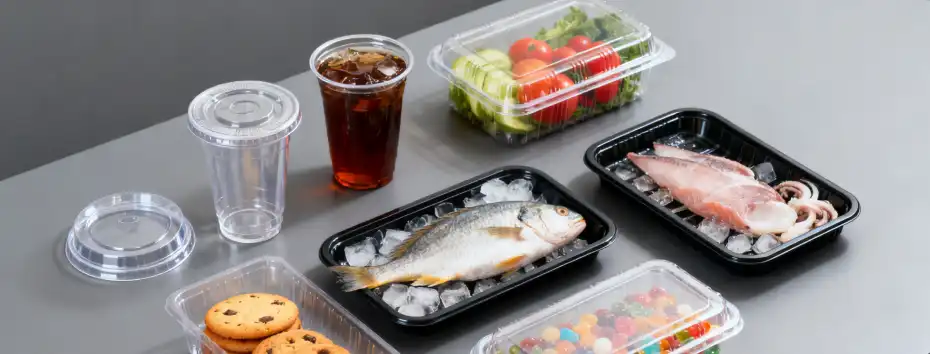
- Food display boxes and packaging, for environments where the sheet comes into direct contact with produce
Each of these uses benefits from PETG’s balance of visibility, durability, and compliance. The material also holds up well under frequent cleaning cycles, which are standard in any professional food environment.
Working With PETG
One reason fabricators and fitters prefer PETG is that it’s straightforward to work with. It can be cut, drilled, routed, and cold-bent without the cracking or chipping that standard acrylic is prone to. Cold bending is achievable up to 2mm thickness, which is useful when creating curved enclosures or shaped display panels.
PETG also takes to screen printing and UV digital printing well, so it’s a practical choice for branded display applications or labelled food counters. For installations that need a precise fit, the sheet can be machined to tight tolerances.
Final Take
PETG’s growing presence in UK food environments isn’t accidental. Food businesses need materials that perform well under daily pressures, meet regulatory requirements, and are easy to maintain. PETG addresses all of these needs without compromise.
For bakery counters, restaurant displays, and vending installations, it’s a material that has earned its place. As awareness of its food-safe credentials grows, more businesses will likely be specifying it instead of defaulting to older alternatives.