Most display materials compromise somewhere.
● Glass is beautiful but heavy, fragile, and expensive to cut precisely on a retail timeline.
● Timber is warm but blocks light entirely.
● Metal is structural but cold and difficult to work with at speed.
An acrylic sheet sits in the middle of all of those qualities and handles light better than any of them. That combination is why it has become the default material across retail display design in the UK, from luxury boutiques in London to high-street chains running seasonal campaigns across dozens of stores simultaneously.
Why Acrylic Works So Well in Retail Environments
Before getting into the specific applications, it helps to understand why retail designers keep coming back to this material over everything else.
The key properties that matter in retail: Acrylic sheets offer over 92% light transmission, which is higher than standard glass and allows products to be displayed clearly without distortion. They are also around half the weight of glass, making them safer and more practical for freestanding and suspended installations. Their laser and CNC cuttable properties allow for precision edges in virtually any shape or size, while the availability of more than 100 colours makes it easy to match any brand palette. Additionally, diamond-polishable edges provide a crystal-clear finish on every cut edge, enhancing the overall appearance and quality of the material.
These properties make it one of the most versatile retail display materials available. Here is exactly how designers use it in practice.
7 Ways Retail Designers Use Acrylic Sheets
1. Window Display Installations
A shop window is the first point of contact between a brand and a passing customer. What happens in that window in the first two seconds determines whether someone slows down or walks past.
How designers use acrylic here:
A clear perspex sheet suspended in a window catches light differently at different times of day. Morning light produces one effect. Artificial evening lighting produces another. Designers use this quality deliberately rather than treating it as a side effect.
A frosted acrylic sheet takes a different approach. The satin surface diffuses light into a soft ambient glow rather than transmitting it directly. This works particularly well for lifestyle and wellness brands where atmosphere matters as much as product visibility.
2. Counter and Point-of-Sale Displays
The counter is where the decision to buy is made. The display material directly affects the perceived value of whatever is sitting on it.
What works at the counter level:
● Clear acrylic risers for full product visibility
● Gloss acrylic sheet in high-gloss black for luxury drinkware and jewellery
● Tiered stands for cosmetics and skincare ranges
● Modular units with magnetic connections for interchangeable product layouts
Why it matters: Research from shopPOPdisplays found that 62% of shoppers make impulse purchases influenced by well-designed and strategically placed displays. Counter level is exactly where that statistic lives. A product on a clean, clear riser consistently outperforms the same product sitting flat on a shelf.
3. Brand Colour Backdrops and Zone Panels
Acrylic is not only a display unit material. Retail designers use it at a much larger scale to define spaces and establish brand colour presence within a store.
How it works in practice:
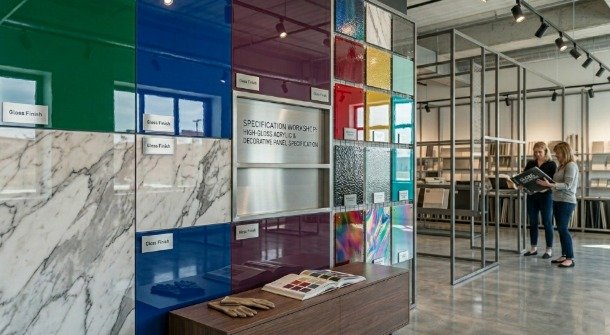
A coloured acrylic splashback style wall panel behind a product range signals that this area has a distinct identity within the store. Department stores use this to separate beauty, accessories, and homeware sections without building permanent partition walls.
Why colour-through material matters:
The colour runs through the full thickness of the sheet rather than sitting on the surface as a coating. LED lighting, which is almost universal in modern retail, bleaches surface-treated materials over time. Colour-through acrylic holds its saturation under LED exposure in a way that printed or painted alternatives do not. Acrylic is an ideal material for a wide range of display and branding applications due to its versatility and durability. It works well for zone definition panels because it can be removed and repositioned without requiring structural changes. For brand colour backdrops, colour-through acrylic sheets help resist LED bleaching and maintain a vibrant appearance over time. Seasonal display walls benefit from easy panel swapping between campaigns or seasons without the need for repainting, while product photography walls provide consistent colour across every sheet, ensuring a clean and professional visual presentation. 4. Cut-to-Size Display Components
Retail display design is not a standard-dimension world. A counter display built for a specific gondola end needs to be exactly the right width. A suspended panel needs to clear the frame by a precise margin. Standard sheet sizes almost never fit without on-site modification.
What cut-to-size actually delivers:
● Panels arrive ready to install with no on-site cutting required
● Socket and fixing holes pre-drilled during production
● Edge polishing completed before the sheet leaves the workshop
● CNC routing holds tolerances to within 1mm across large-format sheets
The visible difference
A hand-sawn edge shows stress marks and produces a satin finish at best. An acrylic sheet cut to size using a laser cutter produces a water-clear edge that requires no further finishing. Perspex cut to size with diamond-polished edges looks identical to the face of the sheet. For retail designers working to tight installation timelines, that precision removes a significant source of on-site delays.
5. Signage, Wayfinding, and Edge-Lit Panels
This is one of the less obvious applications, but it is extremely common across mid-to-large retail formats.
Three specific ways designers use acrylic for signage:
Laser-engraved department signs
A perspex sheet laser-engraved with a department name or product category produces a clean, professional sign. The engraving catches light differently from the surrounding material, making text visible without any ink or print that could fade or peel.
Edge-lit panels
LEDs introduced along one edge spread light across the full face in a diffused glow. This effect works for directional signage, product callouts, and brand name displays in higher-end retail environments.
Suspended ceiling rail signs
Category signs on ceiling rail systems are retail display materials that most shoppers walk past without registering as a deliberate design choice. That invisibility is precisely the point.
6. Frosted and Metallic Finishes for Premium Retail
Clear acrylic is not always the right answer. Different retail contexts call for different finish choices, and each finish communicates something specific.
Finish guide for retail applications:
Different acrylic finishes are suited to different retail applications and help communicate specific brand messages. Clear gloss finishes are ideal for jewellery, cosmetics, and electronics displays because they maximise product visibility and clarity. Frosted finishes work well in homeware, wellness, and lifestyle settings by creating a softer and more atmospheric appearance. Metallic gold finishes are commonly used for luxury beauty and accessory displays, helping to convey a premium and aspirational feel. Coloured gloss finishes are particularly effective for brand zones and seasonal campaigns, as they reinforce brand identity and create visually impactful retail spaces. A gloss acrylic sheet in clear or pale colour maximises light transmission and suits any context where seeing the product clearly is the primary display goal. Frosted acrylic suits wellness and lifestyle retail, where the atmosphere of the display matters as much as the product. Metallic acrylic sheet in gold or silver adds visual weight without adding physical weight, which matters for wall-mounted installations.
7. Freestanding Structural Display Units
The largest-scale acrylic application in retail is the freestanding structural unit. Multi-tier display towers, floor-standing product glorifiers, and large-format brand installations all use acrylic at 8mm to 10mm thickness.
Why acrylic works at this scale:
● 10mm acrylic holds significant product weight without visible deflection across the shelf span
● The same unit in glass would require a steel subframe
● Flat-pack components with pre-drilled fixing holes install identically across every store location
● No on-site machining required during installation
Acrylic sheet cut to size at 8mm to 10mm with pre-drilled fixing holes means retail rollouts across dozens of stores become logistically manageable. Every unit arrives identical and produces the same result in every location. Perspex cut to size components can also incorporate coloured acrylic splashback style back panels in a brand colour, combining structural clarity with brand presence in a single unit.
Specifying Acrylic for Your Next Retail Project
Thickness is the most practical decision when specifying acrylic sheet for any retail application. Different acrylic display applications require different material thicknesses to ensure the right balance of strength, durability, and appearance. Backdrop panels and window graphics typically use 3mm acrylic, while counter risers and product holders are better suited to 5mm or 6mm sheets for added stability. Mid-weight display units generally require 8mm acrylic to provide stronger structural support, whereas large multi-tier structural displays are best produced using 10mm acrylic for maximum strength and durability. Order with edge polishing specified if the panel edge will be visible in the finished display. Protective film stays on during transit and is removed only when the display is in its final position. Ordering cut to size with pre-drilled fixing holes removes the two most common sources of on-site installation delay.