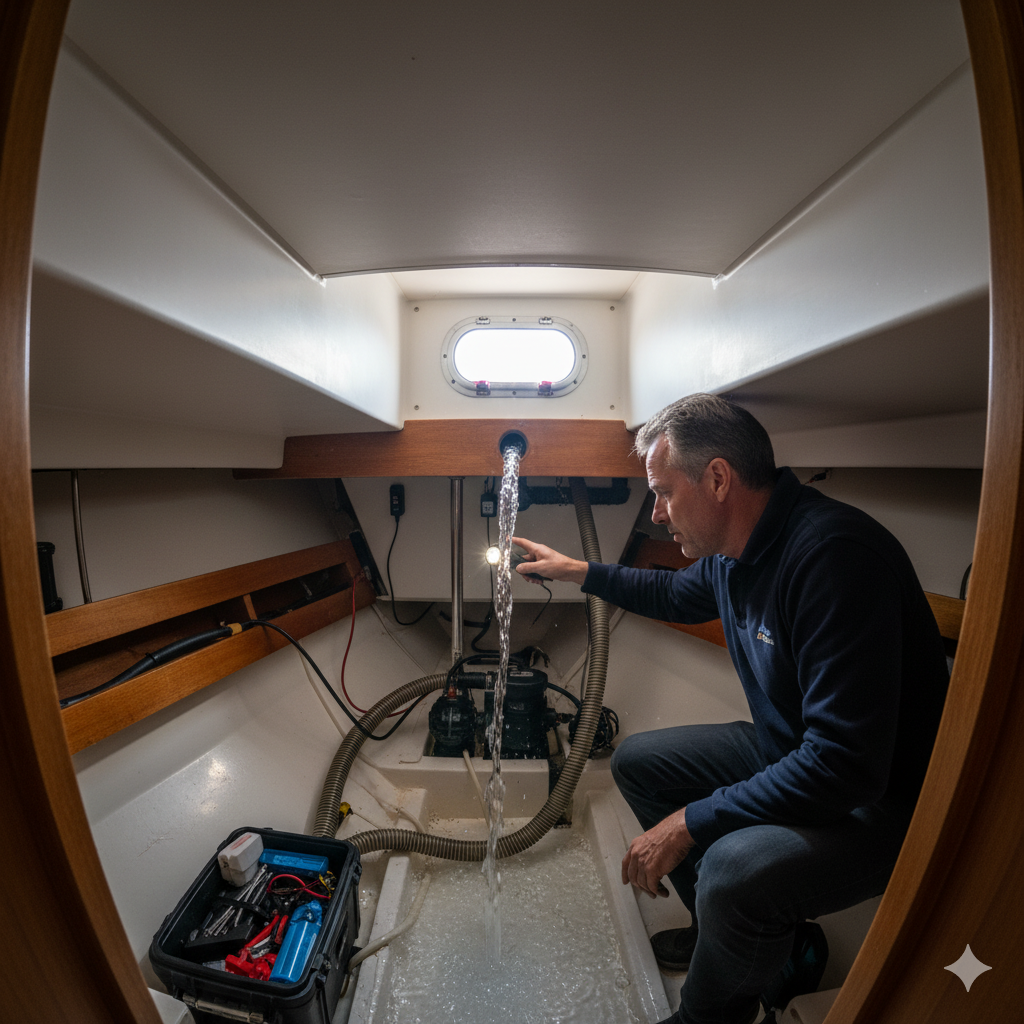
Every dinghy owner knows the feeling. You walk down to the dock after a rainstorm and find your boat sitting low in the water, hull full of rainwater. It’s a frustrating sight—and one that’s completely avoidable with the right equipment on board.
A good dinghy bilge pump is one of those purchases that quietly earns its keep. You don’t think about it much when things are going well, but the moment water starts pooling in your hull, you’ll be glad you have one. Whether you keep your vessel on a mooring, a lift, or tied to a dock, water intrusion is inevitable. Rain, spray, condensation—it all adds up.
This guide covers what to look for when choosing a bilge pump for your dinghy, the different types available, and what makes modern solar-powered options worth considering.
Why Bilge Water Is a Bigger Problem Than It Looks
Water in the bilge isn’t just an inconvenience. Left unmanaged, it adds significant weight to the hull—more than most people realize. A few inches of standing water can translate to hundreds of pounds of extra load, affecting handling, performance, and in serious cases, safety.
For smaller vessels like inflatables, RIBs, and wooden tenders, the stakes are especially high. These boats aren’t designed to sit heavy in the water for extended periods. Prolonged exposure to standing water can also accelerate wear on deck hardware, electrical components, and hull materials.
The fix is straightforward: consistent, automatic water removal. That’s exactly what a quality bilge pump provides.
Types of Bilge Pumps for Dinghies
Not all bilge pumps are built the same way. Here’s a quick breakdown of the main types:
Manual Pumps
Manual bilge pumps are simple, affordable, and require no power source. They work by hand—usually via a lever or piston mechanism—and are a reliable backup option. The downside is obvious: someone has to physically operate them. For boats that sit unattended, they offer no protection.
Electric Pumps
Electric bilge pumps are the most common solution for recreational boats. They’re typically wired into the vessel’s 12V electrical system and activated by a float switch. They work well, but they do draw from your battery and require proper installation.
Solar-Powered Automatic Pumps
The newest category—and one that’s growing fast in popularity—is the solar-powered automatic bilge pump. These units are completely self-contained. No wiring, no battery drain, no float switches to fail. They charge via a built-in solar panel during the day and use internal sensors to detect and remove water automatically, around the clock.
For dinghy owners who want a low-maintenance, set-and-forget solution, solar pumps are becoming the go-to choice.
What to Look For in a Dinghy Bilge Pump
Before buying, there are a few key specs worth paying attention to:
Pump Capacity (GPH)
GPH stands for gallons per hour—the rate at which the pump moves water. For smaller dinghies, a pump rated between 500 and 1,100 GPH is typically more than adequate. Higher GPH ratings mean faster water removal during heavy rain or flooding events.
Sensor Technology
Float switches are the traditional method for activating a bilge pump. When water rises to a certain level, the switch triggers the pump. They work, but they’re mechanical components that can wear out or get stuck.
More advanced pumps use electronic sensors that detect water at much lower thresholds—sometimes less than an inch of accumulation. This low-profile detection means water gets removed before it becomes a real problem.
Saltwater Compatibility
Salt is corrosive. Any pump used on a saltwater vessel needs to be built with marine-grade materials. Look for stainless steel intake strainers, corrosion-resistant housings, and components rated for both fresh and saltwater use.
Size and Weight
On a dinghy, space is limited. A compact, lightweight pump is much easier to position and manage. Units weighing under 5–6 pounds and measuring around 9″ x 6″ can fit easily in tight bilge areas or be placed on deck without getting in the way.
Ease of Use
Installation complexity varies significantly between pump types. Electric pumps require wiring and often some carpentry to mount properly. Solar pumps, by contrast, are typically plug-and-play—place the unit, lay the discharge hose over the side, and you’re done.
A Closer Look at Solar-Powered Bilge Pumps
The Raintaker Pro is one example of how far solar bilge pump technology has come. Engineered specifically for marine use, it’s a fully self-contained unit that works on dinghies, whalers, RIBs, Zodiacs, and wooden boats across fresh and saltwater environments.
A few features stand out:
No external power required. The built-in solar panel charges an internal battery, keeping the unit ready to operate day and night. After the initial charge via the included 120V wall cord, the Raintaker relies entirely on sunlight to stay powered.
Automatic activation. Internal sensors detect water accumulation—even less than an inch—and trigger the pump without any manual input. There are no buttons, no float switches, and no settings to fiddle with.
High-capacity pumping. The custom-designed 1,100 GPH pump can remove over 1,000 lbs of water on a single solar charge. For most dinghies and small boats, that’s significant capacity.
Marine-grade construction. The 316L stainless steel intake strainer and outlet port are rated for salt, fresh, and brackish water. A 3M foam base keeps the unit in place even during high winds, without scratching or marring the hull finish.
Simple setup. At under 5 lbs and measuring 9″ x 6″, the unit is easy to place anywhere water tends to collect. The included 6.5′ silicone discharge hose can be trimmed to length as needed.
Real users report strong results. One Boston Whaler owner described years of manual bailing before switching to the Raintaker, noting it eliminated the problem entirely. A RIB owner in Fort Lauderdale uses it while diving off the coast to prevent water accumulation through questionable factory scupper valves. A boat kept on a lift in Virginia reportedly stays completely dry after heavy rain—without any dependence on shore power or batteries.
Installation Tips for Your Dinghy Bilge Pump
Wherever you land on pump type, placement matters. Here are a few practical tips:
- Position the pump at the lowest point of the bilge, where water naturally collects first.
- Route the discharge hose over the side of the boat and keep it clear of any obstructions. Trim to length if needed.
- Check the strainer regularly for debris, especially after heavy use or prolonged mooring.
- For covered bilge areas, some solar pumps offer remote panel kits that allow the solar panel to be placed in sunlight separately from the pump body.
Keep Your Dinghy Dry, Automatically
A reliable dinghy bilge pump is one of the simplest ways to protect your investment. Whether you’re moored overnight, away for a week, or heading out after a storm, knowing your vessel will be dry when you return makes a genuine difference.
Solar-powered options like the Raintaker Pro have removed most of the traditional barriers—no wiring, no battery drain, no manual effort. They work quietly in the background so you can focus on what matters: getting on the water.
If you’re ready to stop bailing and start automating, it’s worth exploring what a purpose-built solar bilge pump can do for your setup.