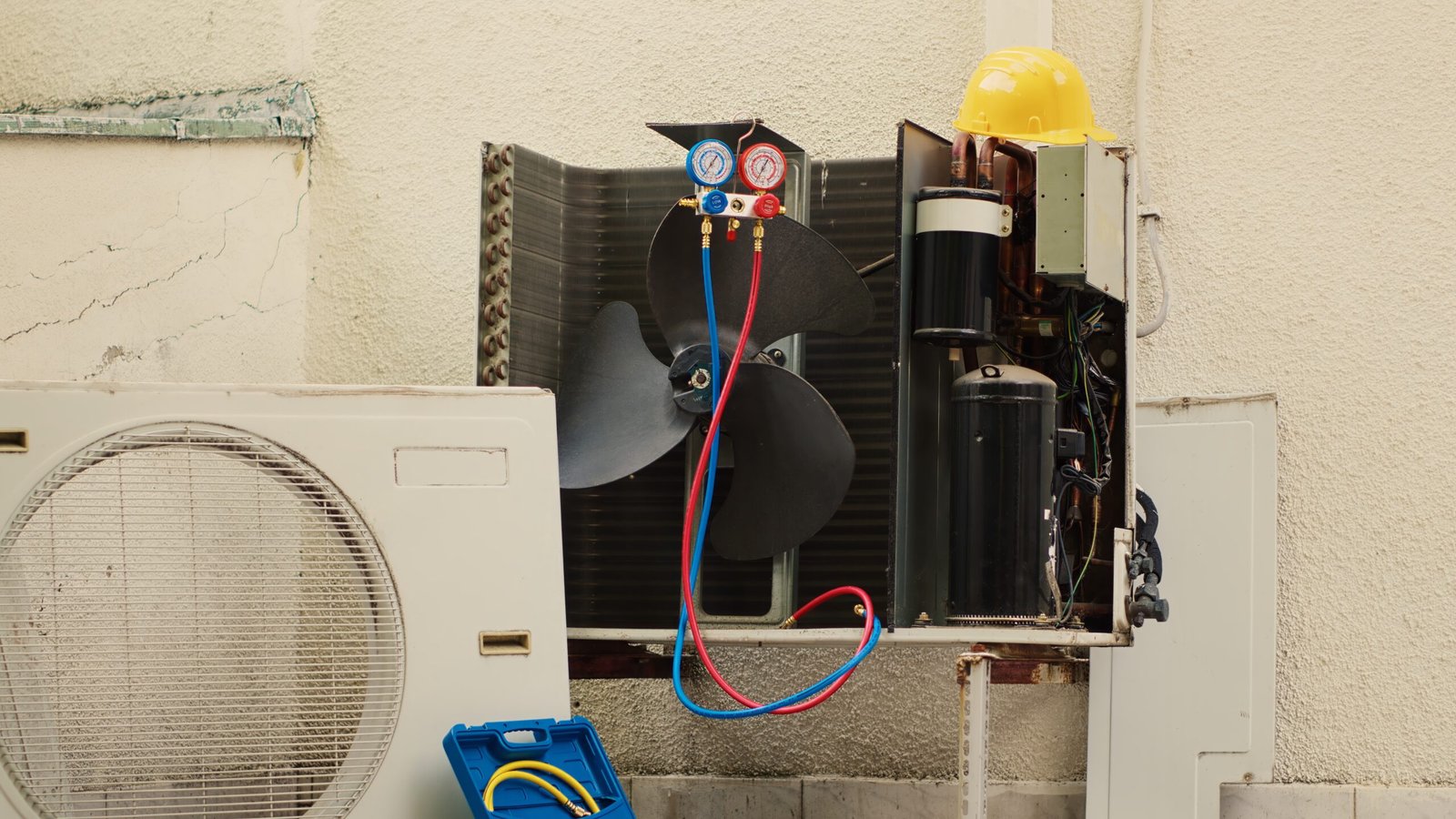
An air conditioner that stops working in July is not an inconvenience. It is an immediate priority, and how a homeowner responds in the first few hours shapes how expensive and disruptive the situation becomes.
Most AC failures follow predictable patterns. The components that wear out, the symptoms that appear before a system quits entirely, and the decisions around repair versus replacement are all reasonably consistent across systems and climates. Understanding them before a problem develops puts a homeowner in a much better position when one does.
For households in Colorado’s northern Front Range, where summer temperatures regularly push into the 90s. Most Air Conditioner Repair Thornton CO technicians stay busy from June through August. The combination of elevation, low humidity, and intense UV exposure creates operating conditions that accelerate wear on specific components.
What Are the Most Common Reasons Air Conditioners Stop Working?
AC systems fail in a handful of predictable ways, and the cause usually traces back to one of a short list of components.
Refrigerant leaks are among the most common. Low refrigerant does not just reduce cooling capacity. It causes the compressor to work harder than it should, shortening its lifespan. A system that cools poorly and ices over at the indoor coil is often an indication of a refrigerant issue rather than a thermostat or airflow problem.
Capacitor failure is one of the more frequent service calls in summer. Capacitors start and run the compressor and fan motors. They degrade over time, and heat accelerates that degradation. A system that hums but won’t start, or that starts and then quickly shuts off, is often a sign of a failed or failing capacitor.
Dirty condenser coils reduce the system’s ability to release heat outside. When the outdoor coil is coated with debris, the system has to work harder and longer to achieve the same level of cooling. Over time, this raises operating temperatures and stresses the compressor.
Clogged condensate drain lines cause the system to shut down as a safety measure when the drain pan fills. This is a simple fix, but a common reason a system stops cooling with no obvious mechanical failure.
Compressor failure is the most expensive outcome. The compressor is the heart of the refrigeration cycle, and when it fails on an older system, the repair cost often approaches or exceeds the cost of replacement.
What Warning Signs Appear Before a System Fails?
Most AC problems give notice before they cause a complete shutdown. The signals are easy to miss if you are not looking for them.
Watch for:
- Cooling that takes noticeably longer than it used to
- Unusual sounds during startup or operation, including grinding, squealing, or banging
- Ice forming on the refrigerant lines or the indoor coil
- A system that runs continuously without reaching the set temperature
- Higher utility bills during months with similar usage patterns to previous years
- Warm air from supply vents when the system appears to be running normally
- Water pooling around the indoor unit
Any of these is worth a service call before the problem advances. A technician who catches a failing capacitor or a refrigerant leak during a maintenance visit charges considerably less than one responding to a complete system failure on a weekend in August.
How Do Air Conditioners Actually Work?
Understanding the basic cycle makes repair decisions easier to evaluate.
A central air conditioning system moves heat from inside the home to outside, rather than generating cool air directly. The refrigerant absorbs heat at the indoor evaporator coil, travels as a gas to the outdoor condenser unit, where it releases that heat, returns as a liquid, and repeats the cycle.
The compressor drives the cycle by pressurizing the refrigerant. The blower fan moves air across the indoor coil. The condenser fan moves air across the outdoor coil to release heat. Every component in that sequence plays a specific role, and a failure in any one of them interrupts the whole process.
According to the U.S. Department of Energy, air conditioners account for about 12 percent of the electricity used in American homes each year, making them one of the most energy-intensive household appliances. A system running inefficiently due to a maintenance issue does not just cool poorly; it also consumes more energy. It runs longer, draws more power, and raises the utility bill before it ever trips a fault.
Repair or Replace: How to Make the Decision
This is the question every homeowner eventually faces, and the answer depends on a combination of factors rather than any single factor.
ENERGY STAR recommends evaluating a replacement for any air conditioner more than 10 years old, particularly if it requires a significant repair. A system in its second decade, running on aging refrigerant and with a compressor that has already cycled tens of thousands of times, is a different risk proposition than a five-year-old system with a failed capacitor.
A useful calculation: multiply the age of the system in years by the estimated repair cost. If the result exceeds $5,000, replacement typically delivers better value over the next five to ten years than keeping an aging system alive through repeated service calls.
A few additional factors point toward replacement regardless of that number:
- The system uses R-22 refrigerant, which is no longer manufactured and is increasingly expensive to source
- The repair involves the compressor on a system more than 12 years old
- Utility bills have risen significantly without a corresponding change in usage
- The system has needed multiple repairs within the past two seasons
What Does a Maintenance Visit Actually Cover?
Annual maintenance is the most cost-effective thing a homeowner can do to extend system life and reduce repair frequency.
A professional tune-up on a central AC system typically includes:
- Checking and adjusting refrigerant levels
- Cleaning the evaporator and condenser coils
- Testing and inspecting electrical connections and capacitors
- Lubricating moving parts in the blower and condenser fan motors
- Clearing the condensate drain line
- Testing thermostat calibration and system controls
- Inspecting ductwork connections for leaks
- Checking the air filter and replacing if needed
A maintenance visit that skips coil cleaning or does not check refrigerant pressure is not a complete service. Ask what is specifically included before scheduling.
What Should You Ask Before Scheduling a Repair?
A few direct questions before the technician arrives prevent surprises.
Do you charge a diagnostic fee and does it apply toward the repair? Most reputable companies charge a service call fee. Confirm whether it is credited if you proceed with the work.
Do you provide a written estimate before starting? An estimate before the work is an agreement. An estimate after is a bill.
Are you NATE certified? NATE certification (North American Technician Excellence) is the most recognized third-party credential in the HVAC trade and a reasonable standard to require.
What warranty covers the repair? Both parts and labor should be addressed in writing with a defined time period.
Are you EPA 608 certified? Anyone handling refrigerants is federally required to hold this certification. It is a baseline, not a differentiator.
Closing
An air conditioner that is well maintained fails less often, costs less to operate, and lasts longer than one that only sees a technician when something stops working. The gap between a proactive maintenance visit and an emergency repair call is almost always measured in both dollars and timing.
Scheduling before the season starts is considerably easier than scheduling after the first heat wave arrives.