Las Vegas gets roughly 300 days of sunshine a year. That’s great news for pool owners—until you realize what relentless heat, dust, and desert winds do to pool water. Without regular maintenance, what starts as a sparkling oasis can quickly turn into a murky, uninviting mess.Whether you’ve just moved into a home with a pool or you’ve owned one for years, understanding the basics of pool care can save you significant time and money. This guide walks you through everything you need to know—from why Vegas pools need special attention to what a professional maintenance schedule actually looks like.
Why Las Vegas Pools Need Extra Care
Most pool maintenance guides are written with moderate climates in mind. Las Vegas is anything but moderate. The combination of extreme heat, low humidity, and frequent dust storms creates a uniquely demanding environment for pools.
Here’s what you’re up against:
- Intense UV exposure breaks down chlorine faster, meaning chemical levels drop more quickly than in cooler climates
- High evaporation rates cause water levels to fall rapidly, concentrating minerals and throwing off your water’s chemical balance
- Desert dust and debris blow into pools constantly, clogging filters and introducing contaminants
- Hard water is common throughout the Las Vegas Valley, leading to calcium buildup on pool surfaces and equipment
These factors mean that pool owners in Las Vegas need to check and adjust their water chemistry more frequently than the national average. Skipping even a week of maintenance during peak summer months can lead to algae blooms, equipment damage, and costly repairs.
Core Pool Maintenance Tasks
Understanding what goes into proper pool care helps you stay on top of things—and know when to call in a professional.
Water Chemistry
Keeping your water balanced is the foundation of pool maintenance. The key parameters to monitor include:
- pH levels (ideal range: 7.2–7.6)
- Chlorine levels (ideal range: 1–3 ppm)
- Total alkalinity (ideal range: 80–120 ppm)
- Calcium hardness (ideal range: 200–400 ppm)
In Las Vegas, hard water and rapid evaporation can push calcium hardness and pH levels up quickly. Testing at least twice a week during summer is advisable. An imbalanced pool doesn’t just look unappealing—it can irritate swimmers’ eyes and skin, and corrode your equipment over time.
Skimming and Vacuuming
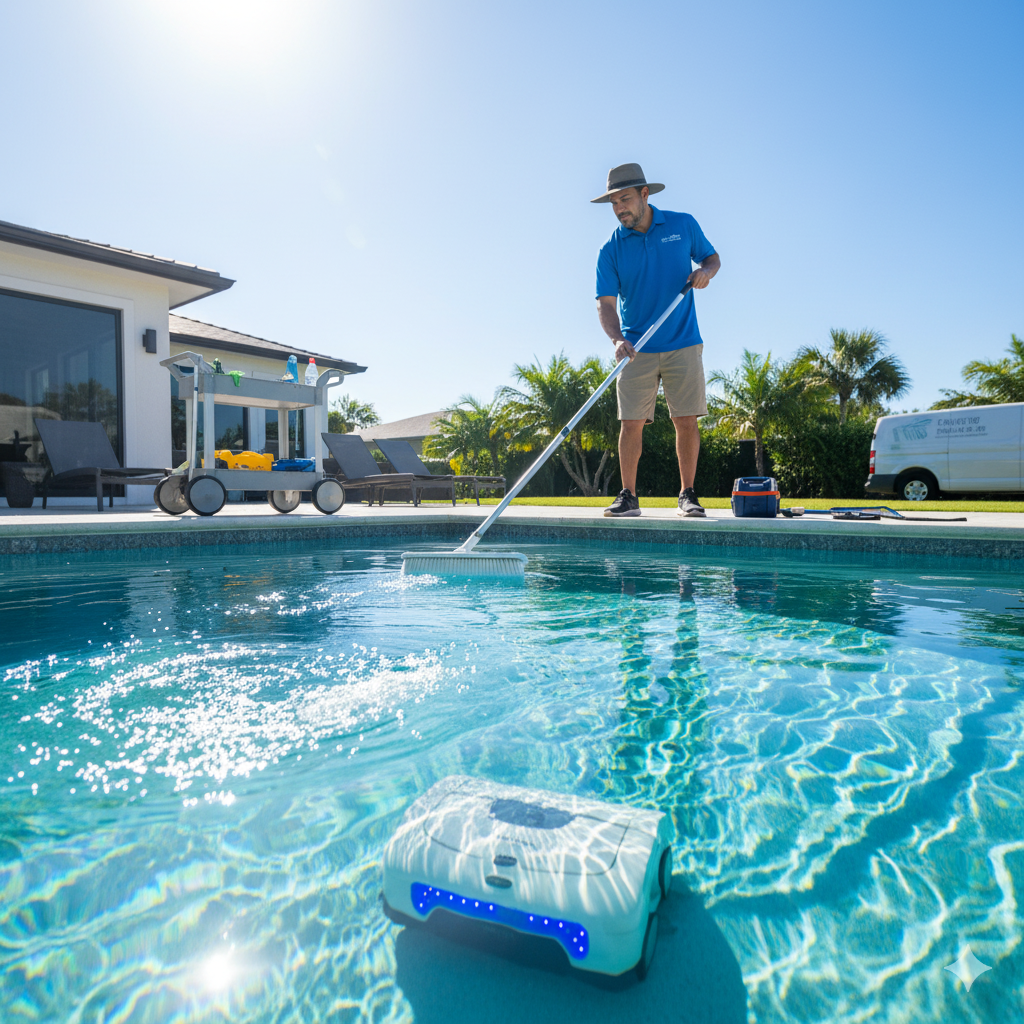
Surface skimming should be done several times a week to remove leaves, insects, and debris before they sink and decompose. Vacuuming the pool floor removes finer sediment and algae that settle at the bottom. Professional-grade, battery-operated vacuums are particularly effective here—they operate independently of your pool’s filtration system, which means less dirt and debris passing through your equipment.
Filter Cleaning
Your pool filter works hard in a desert environment. Sand, cartridge, and DE (diatomaceous earth) filters all require periodic cleaning to maintain proper flow and filtration. A clogged filter strains your pump and can lead to equipment failure if neglected. Filter cleaning is typically done monthly, though high-debris periods may call for more frequent attention.
Brushing Pool Walls and Tiles
Algae and calcium deposits tend to cling to pool walls, steps, and waterline tiles. Regular brushing—at least once a week—prevents buildup from becoming a much harder problem to remove down the line.
Specialized Pool Services Worth Knowing About
Beyond routine cleaning, there are several specialized services that Las Vegas pool owners may need from time to time.
Acid Washing
Over time, pools can develop deep-set stains, algae buildup, or discoloration that regular cleaning won’t address. An acid wash strips away a thin layer of the pool’s plaster surface, revealing a fresh, clean finish beneath. This service is typically recommended every few years depending on pool usage and condition.
Green to Clean Treatments
If a pool has been left unattended for an extended period, it can turn green with algae growth. A green-to-clean treatment involves shock treatments, algaecides, and multiple rounds of vacuuming and filtering to restore the water to safe, clear condition. It’s a more intensive process than standard pool cleaning in Las Vegas, but it’s highly effective.
Drain and Refill
Las Vegas water is notoriously high in total dissolved solids (TDS). When TDS levels become too elevated, no amount of chemical treatment will keep the water properly balanced. At that point, draining and refilling the pool with fresh water is the most effective solution. This is typically needed every few years.
Swimming Pool Repairs
Even well-maintained pools experience equipment issues. Pumps, heaters, lights, and automated systems all have a lifespan. When something breaks down, working with a service provider that partners with licensed repair contractors ensures the job is handled correctly and up to code.
Should You DIY or Hire a Professional?
This is the question most pool owners wrestle with at some point. DIY pool care is certainly possible—and doing your own skimming and basic chemical checks between professional visits is a smart approach. But there are strong reasons to work with a certified professional for your regular maintenance.
A Certified Pool Operator (CPO) has passed industry exams and understands the nuances of pool chemistry, equipment, and safety standards. In a demanding climate like Las Vegas, that expertise matters. Professionals bring specialized equipment, know how to spot early signs of equipment trouble, and can keep your pool in optimal condition year-round.
For homeowners who use their pools frequently, the cost of a professional pool cleaning service in Las Vegas is often offset by avoiding expensive repairs caused by neglected maintenance.
How to Choose a Pool Cleaning Service in Las Vegas
Not all pool service companies are equal. Here’s what to look for when evaluating your options:
- Licensing and insurance: Any reputable provider should be fully licensed and insured in Nevada
- Certifications: Look for a company with Certified Pool Operator (CPO) credentials
- Experience: A company with a long track record in the local market understands Las Vegas-specific challenges
- Transparent service offerings: Your provider should clearly outline what’s included in each service visit
- Reviews: Check Google, Yelp, and other platforms for consistent positive feedback from real customers
Family-owned companies with roots in the local community—like PoolStar, which has been serving Las Vegas and Henderson since 2006—often offer a more personalized level of service than large national franchises.
Seasonal Pool Care Tips for Las Vegas
Summer (June–September)
This is peak pool season, and also when maintenance demands are highest. Test water chemistry multiple times per week. Run your filtration system for 8–12 hours a day. Keep an eye on water levels as evaporation accelerates.
Fall (October–November)
As temperatures drop, you can scale back filtration hours. Give your filter a thorough clean after the busy summer season. Trim nearby trees to reduce leaf debris.
Winter (December–February)
Las Vegas winters are mild, so most pools stay in use year-round. You can reduce your maintenance schedule slightly, but don’t abandon it entirely. Freezing temperatures are rare but do occur occasionally.
Spring (March–May)
A full water chemistry check and equipment inspection at the start of spring sets you up for a smooth summer. This is also a good time to schedule any repairs or upgrades.