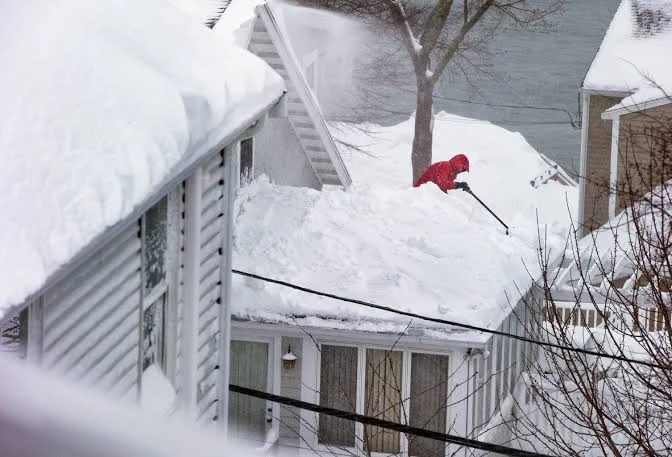
Ashtabula County is well known for receiving some of the heaviest snowfall in Ohio. Located along the southeastern shore of Lake Erie, the county sits directly in the lake-effect snow belt, where cold Arctic air moves across the relatively warm lake and produces intense snow bands. These storms can drop several inches of snow in just a few hours, and in major events, snowfall totals can reach several feet.
While the winter scenery is beautiful, these conditions can be extremely hard on residential and commercial roofing systems. Snow itself is not always the problem—it’s the repeated cycle of snow, melting, and refreezing that causes the most damage. Throughout the winter, temperatures often rise above freezing during the day before dropping well below freezing overnight. This freeze-thaw cycle places constant stress on shingles, flashing, and roofing materials.
One of the most common winter roofing problems in Ashtabula County is the formation of ice dams. As heat escapes through the attic, snow on the upper portion of the roof begins to melt. The water flows toward the colder roof edges, where it freezes and forms thick ridges of ice. As the ice grows, melting water has nowhere to drain and can back up underneath shingles, eventually leaking into ceilings, walls, and insulation.
Heavy snow accumulation also adds significant weight to a roof. Although modern roofing systems are engineered to support expected snow loads, multiple lake-effect storms without enough melting in between can create excessive stress. This is especially concerning for older homes or roofs that already have structural damage or water intrusion.
Strong winter winds create another challenge. Wind-driven snow can work its way beneath damaged shingles and flashing, allowing moisture to enter areas that normally remain dry. Wind gusts may also loosen shingles or expose vulnerable parts of the roofing system, increasing the likelihood of leaks when temperatures begin to warm.
Gutters are equally important during the winter months. When gutters become blocked with leaves or frozen ice, melting snow cannot drain properly. Water backs up onto the roof, contributing to ice dams and increasing the risk of moisture damage to fascia boards, soffits, siding, and even the home’s foundation.
Routine inspections before and after winter can help homeowners identify small issues before they become major repairs. Replacing damaged shingles, improving attic ventilation, cleaning gutters, and ensuring proper insulation all help roofs perform better during Northeast Ohio’s harsh winter weather. Preventative maintenance is often far less expensive than repairing extensive water damage after a difficult winter season.
Because Ashtabula County experiences some of the most challenging winter conditions in the state, homeowners should not wait until a leak develops before having their roof evaluated. Staying ahead of winter damage helps extend the life of the roof and provides greater peace of mind throughout the snowy season.
If you’d like to better understand how lake-effect snow impacts your roof and what steps you can take to protect your home, Learn More about winter roofing maintenance, preventative inspections, and preparing your roof for Ashtabula County’s demanding climate.