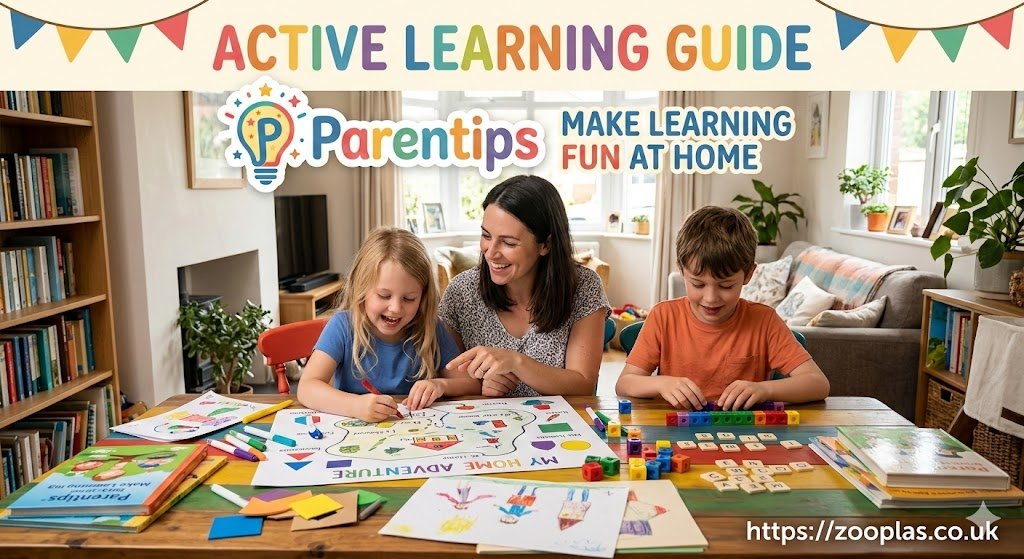
Learning doesn’t have to be boring. Too often, children are asked to memorize facts, complete worksheets, or sit quietly listening. While some structure is necessary, true learning happens when children engage, explore, and think for themselves. The Active Learning Guide from FParentips is a way for parents to turn everyday life into a rich learning adventure.
This guide is designed for parents who want their children to understand, create, and problem-solve, rather than just repeat information. It emphasizes curiosity, hands-on activities, reflection, and thinking critically about the world around them.
What Is Active Learning?
Active learning is a method of learning where the child is at the center of the process. Instead of simply listening or reading, children participate, explore, ask questions, and solve problems. They learn by doing and thinking, which helps them remember better and develop important skills.
For example, measuring ingredients for a cake teaches math. Observing how plants grow teaches science. Planning a small DIY project teaches planning and problem-solving.
Why Active Learning Matters
Active learning is not just about academic knowledge. It helps children in many areas of life:
- Engagement: Children stay interested and curious.
- Critical Thinking: They learn to analyze problems and explore solutions.
- Confidence: Children feel proud when they discover or create something on their own.
- Life Skills: Problem-solving, communication, and planning skills develop naturally.
Core Principles of the FParentips Active Learning Guide
1. Learning by Doing
Children learn best when they are actively involved. Hands-on activities like building, cooking, experimenting, or creating are more effective than worksheets.
2. Ask Questions, Don’t Give Answers
Instead of giving answers, parents can ask questions like:
- “What do you think will happen?”
- “How would you solve this problem?”
- “Can you try a different way?”
This encourages children to think independently.
3. Everyday Life as a Classroom
Learning can happen anywhere:
- Kitchen: Fractions, measurements, sequencing.
- Shopping: Budgeting, comparison, planning.
- Nature walks: Observation, research, creativity.
- Household chores: Sorting, organizing, problem-solving.
4. Reflect and Discuss
After activities, encourage children to reflect:
- “What worked well?”
- “What was challenging?”
- “What could you try next time?”
Reflection builds deeper understanding.
5. Teach Back
Having children explain what they learned to someone else reinforces their understanding and builds confidence.
6. Curiosity Over Completion
The goal is not finishing tasks quickly, but exploring, asking questions, and enjoying the process.
Implementing Active Learning at Home
Kitchen Learning
- Measuring ingredients → fractions and math.
- Cooking → sequencing and following instructions.
- Experimenting with flavors → science and creativity.
Household Chores
- Sorting laundry → categorization and patterns.
- Organizing shelves → planning and spatial awareness.
- Planning chores → time management and problem-solving.
Games and Play
- Board games → strategy and critical thinking.
- Card games → logic, numbers, probability.
- Role-play → social skills, creativity, communication.
Nature Activities
- Observing plants, insects, or animals → biology and observation skills.
- Collecting leaves or rocks → classification and patterns.
- Drawing or journaling → creativity and documentation.
Purposeful Technology
- Coding apps → problem-solving, logic, creativity.
- Research for projects → learning to gather information.
- DIY tutorials → following instructions and creating.
Age-Specific Activities
Toddlers (2–4 years)
- Sensory exploration: sand, water, clay.
- Sorting toys by color or size.
- Movement games for rhythm and coordination.
Preschool (4–6 years)
- Storytelling and puppet shows.
- Counting and simple math games.
- Nature scavenger hunts.
Early Elementary (7–9 years)
- Small science experiments.
- Creative writing prompts.
- Math applied in real life.
Tweens (10–13 years)
- DIY projects like bridges or models.
- Research small topics and present findings.
- Coding challenges or art creation.
Teens (14+ years)
- Community projects.
- Complex problem-solving challenges.
- Leadership opportunities and mentoring younger siblings.
Techniques for Active Learning
- Ask Open-Ended Questions: Encourage thinking instead of giving answers.
- Hands-On Projects: Learning through building, experimenting, or creating.
- Game-Based Learning: Strategy, logic, and teamwork through play.
- Reflection: Journaling or discussion to understand learning.
- Teach Back: Explain learning to reinforce knowledge.
- Intentional Use of Technology: Focus on interactive learning tools.
Overcoming Challenges
- Time: Use short, focused activities integrated into daily routines.
- Frustration: Celebrate effort and exploration, not just results.
- Screens: Choose purposeful learning apps instead of passive content.
Benefits of Active Learning
- Deep understanding of concepts.
- Critical thinking and problem-solving skills.
- Increased curiosity and motivation.
- Communication and collaboration skills.
- Confidence in independent learning.
Sample Activities to Try Today
| Activity | Age | Skills Learned |
|---|---|---|
| Bake a cake | 5–12 | Fractions, sequencing, planning |
| Budget grocery shopping | 7–14 | Math, planning, comparison |
| Nature journal | 6–12 | Observation, creativity |
| Build a bridge with blocks | 7–13 | Engineering, problem-solving |
| Write and illustrate a story | 6–10 | Writing, communication, creativity |
| Teach a sibling | 8–14 | Reflection, communication, confidence |
Conclusion
The FParentips Active Learning Guide is more than a set of activities — it’s a way of thinking about learning. By incorporating curiosity, hands-on activities, reflection, and meaningful engagement, parents can help their children develop lifelong skills, confidence, and a love for learning. Learning can happen everywhere, every day, and it can be exciting, practical, and fun.
Active learning prepares children not just for school, but for life — helping them think, create, explore, and succeed in any challenge they face. Parents can start today — no special tools required, just curiosity, guidance, and a willingness to make everyday life a classroom.