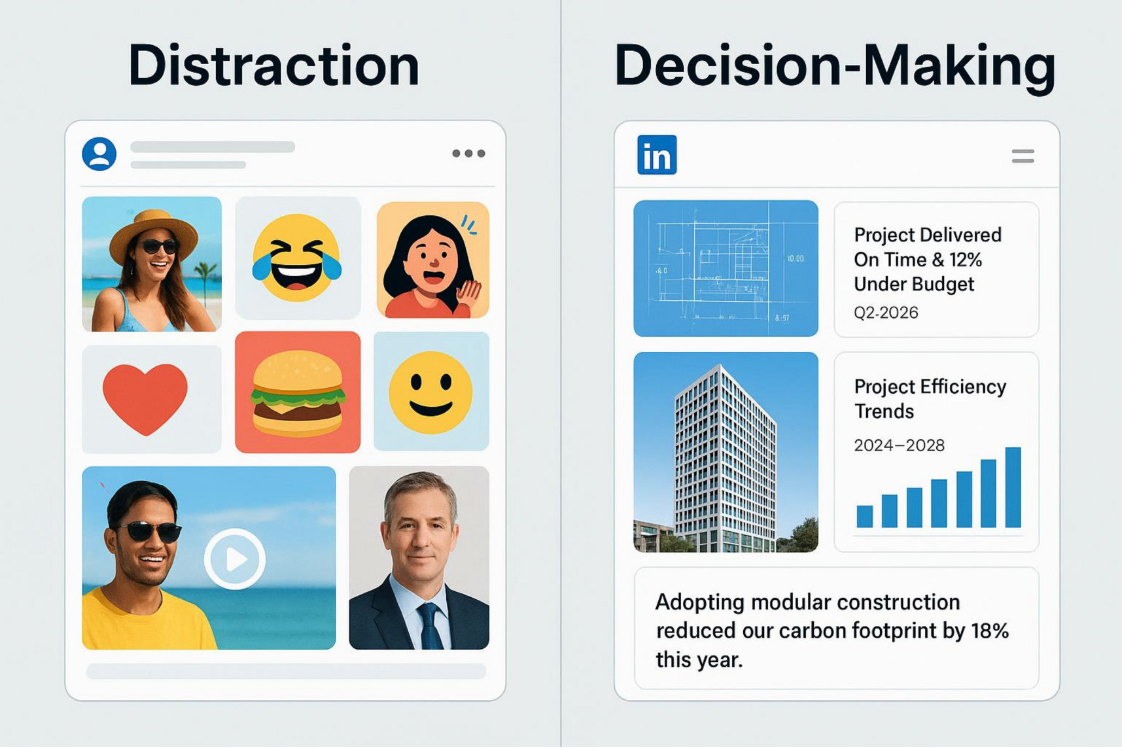
Why should construction leaders focus on LinkedIn marketing? Because LinkedIn helps you earn trust, show real experience, and bring in new work. Today, LinkedIn is more than a place to post updates. It’s a practical tool for business growth. Many firms can’t rely only on handshakes and referrals anymore. By 2026, having a strong online presence, especially on a professional platform like LinkedIn, is required if you want to win higher-value projects, hire strong people, and show that your company is moving with the industry. If you want to build a stronger online presence and reach the right people, it helps to understand how construction LinkedIn marketing works.
What Sets LinkedIn Apart for Construction Professionals?
LinkedIn is different from most social platforms because it is built for professional use. Instead of people scrolling for fun, it’s where owners, developers, architects, general contractors, facility managers, and other decision-makers spend time. They use LinkedIn to research partners, check out firms for future projects, and learn from industry updates. That makes LinkedIn a strong place for B2B marketing in construction, especially during the “shortlist research” stage before any meeting, intro, or bid.
LinkedIn also makes it easier to connect directly with people, share expert ideas, and post project photos and videos. These are key in an industry that runs on relationships and proof. With the right approach, your LinkedIn presence can go from a basic company listing to an active trust-builder that shows clients what you can do before they spend serious money.
The Business Impact of a Strong LinkedIn Presence
A strong LinkedIn presence can lead to real business results for construction firms. It helps you move from being seen as “another contractor” to being known for something clear, like “the sustainable housing team” or “the commercial fit-out crew that hits deadlines.” When you repeat that message and back it up with proof, clients have a clear reason to pick you-even if someone else bids lower.
Construction sales cycles often take 6 to 18 months, so staying visible matters. LinkedIn lets you keep showing what you can do through project updates, milestones, and examples of how you solve problems. Over time, this builds trust. Without that steady visibility and clear branding, you can get ignored by buyers who do more research and compare more options than they used to.
The Key Benefits of LinkedIn Marketing for Construction Industry Leaders
Amplifies Brand Credibility and Authority
In construction, trust is the base of every good partnership. LinkedIn marketing helps you build that trust by showing your skills again and again. When you share industry updates, explain how you handled a tough project, or talk about new methods, you build a reputation that serious clients pay attention to. This is not just “getting your name out.” It’s showing that your company is a reliable expert for larger, more difficult jobs.
A strong LinkedIn presence also helps you replace broad claims with real proof. You can share case studies, explain tricky jobsite problems, or talk about safety practices that work. This kind of content helps you stand out and gives clients the confidence to choose you for important work.
Expands Valuable B2B Networks and Partnerships
Construction runs on relationships, and LinkedIn is a key online place to build them. You can connect with architects, developers, engineers, subcontractors, suppliers, and procurement teams. These connections can turn into partners, project leads, or future clients.
Staying active on LinkedIn means joining the right conversations, sharing helpful input, and building a community around your company. This helps you build relationships before any formal proposal is on the table. If you regularly show that you understand the real problems in the industry, people start to see you as a useful contact-which can lead to new partnerships and joint opportunities.
Attracts Top Talent and Boosts Recruitment
Labor shortages are still a big issue in construction, so hiring is tied directly to growth. LinkedIn can help you attract strong workers by showing your culture, values, and career paths. It gives you a way to share the people side of your company-employee spotlights, team wins, safety records, and community work.
Many job seekers research companies online before applying. If your LinkedIn page shows a real and positive work environment, that can make the difference. Posts like “day in the life,” training and apprenticeship details, and work anniversary shout-outs can help you show you’re a good place to build a career.

Improves Lead Quality and Sales Outcomes
For construction firms, LinkedIn is not only about visibility. It can also bring in stronger leads and help sales results, especially with long sales cycles. Buyers choose contractors based on proof, not promises. LinkedIn helps you build that proof over time.
If you post regularly about your work, results, and how you solve client problems, you build a “library” of evidence that prospects see during their research phase. That means when someone finally contacts you, they already understand your strengths and trust your ability to deliver. This often leads to better leads and more useful sales calls. If you connect LinkedIn with your CRM and follow-up process, it can feed your sales pipeline directly.
Supports Business Growth and Long-Term Visibility
LinkedIn marketing supports steady growth and long-term visibility. Markets can shift fast, and during slower economic periods, companies with clear positioning and a known reputation often keep winning work while others struggle. LinkedIn helps you show that your firm is reliable and forward-looking.
Regular activity keeps your company in front of decision-makers. Over time, this helps protect your market share, supports expansion into new areas, and strengthens your brand as your business changes. It’s about building a long-lasting online presence that helps business development in many ways.
How LinkedIn Marketing Strategies Differ for Construction Companies
B2B Audience Targeting Versus B2C Outreach
The biggest difference with LinkedIn marketing for construction is that it’s B2B. Consumer marketing often aims for broad attention and emotional appeal. Construction on LinkedIn is different: you are speaking to owners, developers, general contractors, architects, engineers, and facility managers. They are not there for entertainment. They want proof, confidence, and dependable partners for large projects.
Because of that, your message needs to speak to business goals and jobsite realities. You need to show you can deliver difficult work on time and on budget, keep jobs safe, and bring long-term value. That means your content should focus on facts, results, and clear insights-not vague claims.
Balancing Technical Expertise With Accessible Messaging
Construction is full of technical details, but good LinkedIn marketing means explaining those details in a clear way. Even though your audience is professional, not everyone knows every trade or method. Your goal is to show deep knowledge without pushing people away with too much jargon.
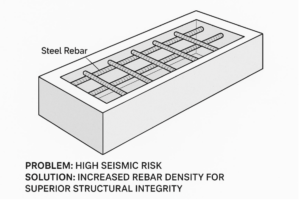
For example, a photo of rebar on a site can become strong proof if the caption explains why the spacing matters for seismic strength. If you describe a hard method, keep it simple: what problem came up, what you did, and what the result was. This helps you keep your authority while staying easy to understand for a wider group of professionals.
Building Social Proof in a Trust-Based Sector
Trust matters more than almost anything in construction. Your LinkedIn strategy should be planned to build social proof that shows your company’s quality, reliability, and focus on client success. This is more than posting a few testimonials. It means showing delivery again and again.
Posting completed projects with strong photos and clear case studies is a must. Add client quotes, awards, and honest lessons learned. Over time, this creates a strong trust story. That steady flow of proof helps prospects move from “interested” to “confident,” because they can see you deliver what you promise.
What Types of Content Work Best for Construction Leaders on LinkedIn?
Showcasing Completed Projects and Construction Proof
Construction is visual, and clients want to see what you’ve built. LinkedIn is a great place to show finished work and clear proof. Strong project photos, including before-and-after shots, help people understand your impact fast. Time-lapse videos can also show progress and how organized your team is.
Go beyond the “pretty picture” by adding context: key milestones, problems you solved onsite, and walkthroughs of the finished work. This shows skill, quality, and care. Each project post becomes proof that backs up your claims.

Sharing Thought Leadership To Influence the Industry
Sharing expert ideas on LinkedIn helps you attract better-fit clients and shape how people see your company. This can include posts about sustainability, compliance updates, new tools, or better ways to manage projects. Leaders can share longer posts, short updates, or articles to explain what they’re seeing in the market.
This type of content shows that your company keeps learning and improving. It also helps you build relationships over time because you become a trusted source, not just a vendor. Many clients want partners who understand the industry and bring more value than basic delivery.
Highlighting Team Culture and Company Values
People prefer working with people, and construction companies also need strong teams to grow. LinkedIn is a good place to show your culture and values for both clients and job candidates. Good content includes employee spotlights, new hire welcomes, work anniversaries, and safety wins.
Sharing “day in the life” posts from superintendents or project managers gives an honest look at how you run work. Community projects, apprenticeship programs, and event recaps also make your brand feel human. This content can boost team pride and show outsiders that your company is stable, supportive, and serious about doing things right.
Utilizing Video and Visual Storytelling
Because construction is visual, video works very well on LinkedIn. Short jobsite clips, quick method explainers, and short interviews with team members help people understand your work faster. Video walkthroughs of completed jobs can also show details that photos can’t.
Using both short and longer videos lets you reach people who want a quick update and those who want deeper detail. These videos can also be reused on your website and in proposals. Good visuals are one of the fastest ways to build credibility and stand out in a busy feed.
Action Steps: How Industry Leaders Can Elevate Their LinkedIn Strategy
Optimizing Profiles and Company Pages
The first step is to fully improve both leader profiles and the company page. Leader profiles should be more than online resumes. They should show leadership, industry knowledge, and the company’s direction. Use a professional photo, write a clear summary, and share useful posts regularly (original ideas or selected industry content).
Your company page should work like an active home base. Add strong project images, clear service details, company updates, and simple calls to action. If crafting a consistent brand voice across profiles feels like a challenge, specialists such as BuiltFor Studio help construction companies shape their communication strategy from the ground up. Keep both profiles and the page updated with current projects and wins so your online presence feels current, aligned, and credible.
Engaging With Relevant Industry Groups and Conversations
Joining the right LinkedIn groups and conversations helps you grow influence and keep up with what’s happening. Leaders should do more than read-they should comment with real input, share helpful resources, and start discussions on topics like new codes, sustainability, or new tech. This shows your company is part of the industry conversation.
When you engage in a genuine way, you become easier to approach and more trusted. It can also lead to strong networking, new partnerships, and direct feedback on what clients and peers are dealing with right now.
Leveraging Employee Advocacy and Personal Branding
Your employees can greatly expand your reach on LinkedIn. When team members share company updates, project posts, or leadership content from their own profiles, it often feels more real than a company-only post. People connect with people, so employee voices can build trust faster.
Supporting personal branding for key staff-like project managers, engineers, and safety leads-also shows how much skill you have in-house. When employees share what they know and what they’ve learned, it helps their careers and supports your company’s reputation as a team of capable professionals.
Investing in Paid LinkedIn Campaigns for Targeted Results
Organic posting builds trust over time, but paid LinkedIn campaigns can speed up reach and put your best proof in front of the right people. Paid ads can target by industry, job title, company size, and even specific companies, which makes it very useful for B2B construction marketing.
You can use paid campaigns to drive traffic to case studies, promote leadership content, recruit for hard-to-fill roles, or retarget website visitors who already know your brand. Paid reach helps your strongest content get seen by the decision-makers that matter most.
Measuring LinkedIn Marketing ROI for Construction Businesses
Critical KPIs for Industry Leaders To Monitor
To understand the real value of LinkedIn marketing, construction leaders should look past likes and follower counts and track KPIs tied to business results. Watch website traffic coming from LinkedIn, especially visits to project pages and service pages. Track engagement from target accounts on your company page and leader profiles, such as comments, shares, and direct messages from owners, developers, and architects.
Also track form fills and contact requests linked to LinkedIn, plus recruiting applications from the platform. Since sales cycles are long, measure things like:
- Sales conversations influenced by LinkedIn content
- How often your sales team uses LinkedIn posts as proof in proposals
- CRM notes that mention specific posts or project content
- Retargeting audience growth
- Changes in branded search volume (people searching your company name)
Attributing Leads and New Business to LinkedIn Efforts
To connect leads and new business to LinkedIn, you need a clear tracking process that links social activity with your marketing and sales funnel. This often means connecting LinkedIn activity with your CRM. When someone engages with your content, log it so your sales team can see what they viewed and follow up in a relevant way.
By tracking the path from first interaction to proposal and signed contract, you can see how LinkedIn supports your pipeline. Direct attribution can be hard because construction buying takes time, but steady tracking and feedback from your sales team (like “they mentioned our LinkedIn case study”) gives strong proof. When LinkedIn is tied to a good follow-up process, it becomes a measurable part of business development, shown through qualified opportunities and won work.
Common Mistakes Industry Leaders Make with Construction LinkedIn Marketing
Inconsistent Posting and Engagement
A common problem for construction leaders on LinkedIn is posting and engaging at random. Long gaps or sudden bursts can make it look like you don’t take the channel seriously. Since many buyers watch contractors for months before reaching out, an on-and-off presence does not build steady trust.
Consistency matters more than posting a lot. For most firms, 2-3 strong posts per week plus regular comment replies works better than five posts in one week and then nothing. Without a steady rhythm, even great projects and smart insights can get buried in the LinkedIn feed, and prospects may not see the full picture of what you do.
Over-Promoting Services or Neglecting Value-Driven Content
Another mistake is using LinkedIn mainly to sell services. If every post says “hire us” or “we’re the best,” people tune out. Construction buyers want solutions and proof, not constant sales talk.
The strongest strategies focus on useful content: project lessons, technical explanations, jobsite problem-solving, and industry updates. If you skip that value, you lose the chance to be seen as a trusted expert. The goal is to help and inform your audience long before you ask for work.
Ignoring Analytics and Platform Updates
If you don’t review LinkedIn analytics, you can’t know what’s working. That can lead to wasted time on content that doesn’t reach the right people or support business goals.
LinkedIn also changes often-new features, algorithm shifts, and new best practices. If you ignore updates, you miss chances to improve reach, engagement, or targeting. By checking analytics and keeping up with platform changes, you keep your strategy efficient and aligned with how LinkedIn works today.
Frequently Asked Questions about Construction LinkedIn Marketing
What is the best posting frequency for construction firms?
There is no perfect number, but a practical posting schedule for most construction firms is 2-3 posts per week. Consistency matters more than volume. Two strong posts every week will usually perform better than five weak posts followed by silence. Clear writing, useful info, and good visuals beat frequent posting with no purpose. This pace keeps you visible and builds social proof without overloading your team or your audience.
How do I measure success beyond likes and followers?
To measure real success, track business results. Watch website traffic from LinkedIn to project pages and service pages. Track direct inquiries, form fills, and contact requests tied to LinkedIn activity. Monitor recruiting results (quality and number of applicants). Most of all, connect LinkedIn with your CRM so you can see how content supports sales talks, speeds up the buying process, and adds to your qualified pipeline. If prospects bring up your LinkedIn posts on a call, that’s a strong sign your content is working.
Is LinkedIn effective for winning construction contracts?
Yes, LinkedIn can help you win contracts, often over time rather than overnight. It’s where owners, developers, architects, and procurement teams do research and build shortlists. A steady, active LinkedIn presence builds trust before you ever get invited to bid. When you regularly share project proof, expert insights, and real engagement with the industry, you become a safer choice in the eyes of buyers. Think of LinkedIn as an ongoing pitch that keeps showing your reliability and results to the people who decide who gets the work.