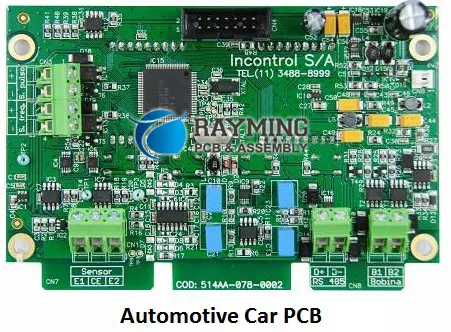
The automotive industry is undergoing a rapid transformation driven by electrification, connectivity, and advanced safety technologies. Modern vehicles are no longer purely mechanical systems; they are complex electronic platforms powered by sophisticated control units and sensors. At the heart of these systems lies the Automotive PCB, a critical component that enables communication, control, and functionality across various vehicle systems.
From engine management to infotainment and advanced driver assistance systems (ADAS), automotive PCBs play a vital role in ensuring performance, safety, and reliability. Understanding their structure, materials, and applications is essential for anyone involved in automotive electronics.
What Is an Automotive PCB?
An Automotive PCB is a printed circuit board specifically designed for use in vehicles. These boards are engineered to withstand harsh operating conditions, including extreme temperatures, vibration, humidity, and electrical stress.
Unlike standard PCBs, automotive PCBs must meet strict industry standards and reliability requirements. They are used in various systems within a vehicle, including engine control units (ECUs), braking systems, lighting, infotainment, and safety features.
The design and manufacturing of automotive PCBs require careful consideration of both electrical performance and environmental durability.
Key Characteristics of Automotive PCBs
The performance of an Automotive PCB is defined by its ability to operate reliably under challenging conditions. One of the most important characteristics is high thermal resistance. Automotive environments often involve significant temperature variations, and PCBs must maintain stability throughout.
Vibration resistance is another critical feature. Vehicles are constantly in motion, and PCBs must be designed to withstand mechanical stress without failure.
Moisture and chemical resistance are also essential, as automotive systems may be exposed to humidity, oil, and other contaminants.
Electrical reliability is crucial, especially in safety-critical systems. Automotive PCBs must provide stable signal transmission and consistent performance.
Long lifespan is another key requirement, as vehicles are expected to operate for many years without frequent maintenance.
Materials Used in Automotive PCBs
Material selection plays a crucial role in the performance of an Automotive PCB. High Tg (glass transition temperature) materials are commonly used to ensure thermal stability.
For applications that generate significant heat, metal core PCBs such as aluminum-based boards are often used to improve heat dissipation.
High-frequency materials may be used in communication systems to ensure signal integrity.
Flexible and rigid-flex PCBs are also used in automotive applications where space constraints and dynamic movement are involved.
All materials must meet automotive industry standards for reliability and environmental performance.
Structure of an Automotive PCB
The structure of an Automotive PCB varies depending on the application but typically includes multiple layers of copper and insulating materials.
Multilayer designs are common, as they allow for complex routing and improved signal integrity. Power and ground planes are often incorporated to ensure stable electrical performance.
Protective coatings such as conformal coating may be applied to shield the board from moisture, dust, and chemicals.
Connectors and mounting features are designed to withstand vibration and ensure secure connections.
The overall structure is optimized to meet the specific requirements of automotive systems.
Manufacturing Process of Automotive PCBs
The manufacturing of an Automotive PCB involves strict quality control and adherence to industry standards. The process begins with selecting materials that meet automotive requirements.
Copper layers are laminated onto the substrate, and the circuit design is transferred using photolithography. The board is then etched to create the desired circuit patterns.
Drilling and plating are performed to create vias and interconnections. Multilayer boards are built through lamination processes that ensure precise alignment.
A solder mask is applied to protect the copper traces, followed by surface finishing to improve solderability and durability.
Additional processes such as conformal coating or encapsulation may be applied to enhance environmental protection.
Finally, the board undergoes rigorous testing, including electrical testing, thermal cycling, and vibration testing, to ensure it meets automotive standards.
Advantages of Automotive PCBs
One of the main advantages of an Automotive PCB is its high reliability. These boards are designed to perform consistently under extreme conditions.
Another benefit is improved safety. Automotive PCBs support critical systems such as braking, steering, and airbag deployment, ensuring reliable operation.
They also enable advanced features such as ADAS, infotainment, and connectivity, enhancing the driving experience.
Thermal management is improved through the use of advanced materials and design techniques.
Additionally, automotive PCBs support the growing trend of electric and hybrid vehicles by enabling efficient power management and control systems.
Applications of Automotive PCBs
The use of Automotive PCB technology spans a wide range of vehicle systems. Engine control units (ECUs) rely on PCBs to manage fuel injection, ignition timing, and emissions control.
Advanced driver assistance systems use PCBs in sensors, cameras, and radar systems to enhance safety.
Infotainment systems use PCBs to support multimedia functions, navigation, and connectivity.
Lighting systems, including LED headlights and interior lighting, depend on PCBs for efficient operation.
Electric vehicles use PCBs in battery management systems, power converters, and charging systems.
These diverse applications highlight the importance of automotive PCBs in modern vehicles.
Design Considerations for Automotive PCBs
Designing an Automotive PCB requires careful consideration of multiple factors. Thermal management is critical, especially in high-power applications.
Vibration resistance must be addressed through proper component placement and mechanical design.
Signal integrity is important for communication and control systems. Designers must ensure proper routing and impedance control.
Environmental protection should be considered, including the use of coatings and protective enclosures.
Compliance with automotive standards and regulations is essential to ensure safety and reliability.
By addressing these factors, engineers can create robust and efficient automotive PCB designs.
Challenges in Automotive PCB Design
Despite their advantages, Automotive PCBs present certain challenges. The need for high reliability and compliance with strict standards can increase design complexity and cost.
Thermal management can be difficult in compact designs with high power density.
Balancing performance, cost, and manufacturability requires careful planning and expertise.
However, advancements in materials and manufacturing technologies continue to address these challenges.
Conclusion
The Automotive PCB is a critical component in modern vehicles, enabling advanced functionality, improved safety, and reliable performance. Its ability to withstand harsh environments and support complex electronic systems makes it indispensable in the automotive industry.
As vehicles continue to evolve with the adoption of electric and autonomous technologies, the demand for high-quality automotive PCBs will continue to grow. Businesses seeking dependable and high-performance solutions often partner with an experienced Automotive PCB manufacturer to ensure precision, reliability, and long-term success in their automotive electronic systems.