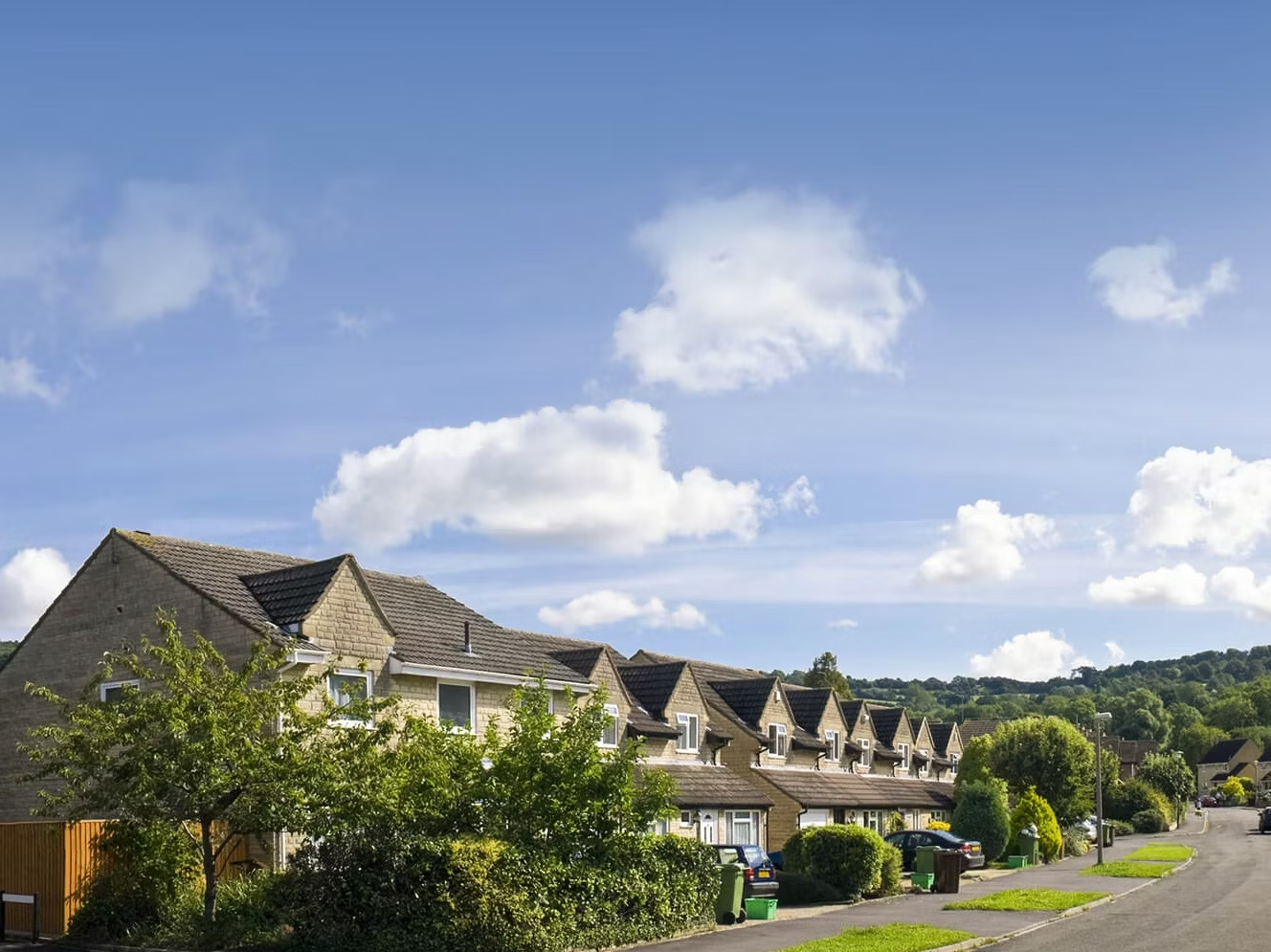
There is a specific kind of magic that happens when you cross the threshold of a home that has stood for over a century. In Bexley Village, that sensation is almost a requirement of residency. Walking down the High Street, past the flint-walled St Mary’s Church or the historic Golden Lion, you aren’t just in a London suburb; you’re in a pocket of Kentish history that has stubbornly refused to be swallowed by the urban sprawl.
Owning a period property here is a dream for many, but it is also a lifestyle choice that requires a certain level of stewardship. Whether you are eyeing a mid-Victorian terrace near the station or a grander Georgian villa overlooking the River Shuttle, navigating the local market requires specialist knowledge. Experienced Estate agents in Bexley Village often point out that while the charm of these homes is timeless, the responsibilities that come with them are very modern, especially when dealing with the strictures of a conservation area.
Stepping into this market means more than just a financial investment; it is a commitment to preserving the “Old Bexley” aesthetic. It’s about understanding the weight of a sash window, the breathability of lime mortar, and the patience required to work within the local planning frameworks. This is a guide for those who want to be more than just homeowners, but rather the next chapter in a house’s long story.
The Architectural Heritage of Bexley Village
Bexley Village doesn’t just have history; it wears it on its sleeve. The architectural tapestry of the DA5 area is remarkably varied for such a compact community. Much of the village core is defined by its Victorian and Edwardian growth, periods that brought prosperity and the railway, resulting in the rows of red-brick cottages and more substantial family homes that define the local landscape today.
Victorian architecture here ranges from the modest to the magnificent. You’ll find artisan cottages built for workers of the various mills that once lined the Shuttle, featuring decorative brickwork and slate roofs. Then there are the later Edwardian properties, which tend to offer a bit more internal space, wider hallways, and those iconic stained-glass front doors that glow like jewels on a rainy afternoon.
However, the real crown jewels of the village are the earlier Georgian houses. These are rarer and highly coveted. They are defined by their symmetry, high ceilings, and that sense of understated elegance that only a 200-year-old staircase can provide. Living in one of these means living in a space designed before the age of electricity, where the play of natural light was the primary architect. It creates a living experience that feels fundamentally different from a modern build.
Living in a Conservation Area: Rules and Realities
A significant portion of the village falls within the Old Bexley Conservation Area. For the uninitiated, this can sound like a layer of red tape designed to make your life difficult. In reality, it is the protective shield that keeps Bexley Village looking like a village. Without it, the historic shopfronts and period facades would have likely been replaced by generic modern alternatives decades ago.
When you live in a conservation area, you lose some “permitted development” rights. This means that changes you might take for granted in a newer house—like changing the windows, adding a dormer extension, or even painting the exterior a bold new colour—often require a conversation with the London Borough of Bexley’s planning department.
The goal isn’t to prevent change, but to ensure that change is sympathetic. If you want to replace your windows, the council will likely insist on timber-framed sash windows rather than uPVC. If you are repointing the brickwork, they will want to see a lime-based mortar that allows the old bricks to breathe. It’s about maintaining the “character and appearance” of the area. It adds a layer of complexity to home ownership, but it also protects your property value by ensuring the whole street stays beautiful.
Maintenance and Restoration for Period Properties
Owning a period home is a bit like owning a classic car; you can’t just ignore the maintenance and expect it to run forever. These buildings were constructed with different materials and philosophies than modern homes. They were built to move, to breathe, and to handle moisture in a way that modern damp-proofing often interferes with.
One of the most common mistakes new owners make is “over-sealing” an old house. If you use modern cement mortar on Victorian brickwork, you risk trapping moisture behind the surface, which eventually leads to the bricks crumbling. Similarly, using non-breathable plastic paints on old plaster can cause damp patches that seem impossible to shift.
The secret to a happy period home is working with the building, not against it. This means sourcing craftsmen who understand heritage techniques. It means checking the leadwork on the valleys of your roof and ensuring the original cast-iron guttering isn’t clogged with leaves from the village’s many mature trees. It might cost more upfront to use the “correct” materials, but it saves a fortune in structural repairs ten years down the line.
Energy Efficiency vs. Heritage Preservation
The dilemma of the 21st-century period homeowner is how to make a 19th-century house warm without destroying its soul. Older homes are notoriously drafty, and with energy costs remaining a primary concern for most households, the “retrofitting” conversation is more relevant than ever.
In a conservation area, you can’t always slap solar panels on the front roof or install thick external wall insulation. Instead, you have to be clever. Thick, heavy curtains are a traditional (and effective) solution for drafty windows. Internal wall insulation is an option, though it can shrink your room sizes slightly.
Many owners in Bexley Village are now opting for high-quality secondary glazing, which provides a significant thermal boost without altering the exterior appearance of the original windows. Others are looking at “thin-profile” double glazing designed specifically for heritage sash frames. It’s a balancing act—preserving the aesthetic while ensuring the house remains a comfortable, viable home for a modern family.
The DA5 Postcode: A Community Feel
Beyond the bricks and mortar, what makes period home ownership in Bexley Village so rewarding is the community itself. There is a sense of pride among residents here. People don’t just live in Bexley Village; they belong to it. Whether it’s the annual village events, the bustling weekend market feel, or just the fact that shopkeepers know your name, it feels like a genuine escape from the anonymity of London.
The village is small enough to be walkable but large enough to be self-sufficient. You have the library, the station with its direct links to London Bridge and Charing Cross, and an array of independent cafes and restaurants. For families, the proximity to high-performing schools and the open spaces of Danson Park or Hall Place & Gardens makes it an unbeatable location.
Buying a period home here is often a long-term move. It’s common to meet residents who have lived in the same house for thirty or forty years. They aren’t just owners; they are the custodians of these buildings. When they eventually decide to move on, they aren’t just selling a property; they are handing over a piece of the village’s identity to the next person.
Navigating the Local Property Market
If you are looking to buy in the village, you need to be prepared for a competitive environment. Character homes in DA5 don’t stay on the market for long. Buyers are often looking for that specific mix of historic charm and suburban convenience, and when a well-maintained period property appears, it usually sparks significant interest.
It is vital to have your “team” ready. This includes a mortgage advisor who understands the nuances of lending on older properties and, perhaps most importantly, a surveyor who specializes in period buildings. A standard RICS level 2 survey might not be enough for a Georgian villa; you want someone who can tell the difference between a minor settlement crack and a structural issue, and someone who won’t be scared off by the presence of a little timber and damp.
Being a proactive buyer means being part of the local conversation. Registrations with local experts are essential, as many of the best properties are discussed or even sold before they hit the major online portals. In a village where everyone knows everyone, those local connections are your most valuable asset.
Conclusion
Owning a period home in Bexley Village is a unique privilege. It offers a connection to the past that a new build simply cannot replicate. You are surrounded by the stories of those who lived there before—the Victorian families, the wartime residents, the people who watched the village transform while their four walls remained constant.
Yes, there are challenges. There will be drafty corners, planning applications for the smallest changes, and the ongoing quest to find the perfect shade of heritage cream for the window frames. But the reward is a home with character, soul, and a sense of place.
As you walk home from the station on a winter evening, seeing the warm glow of lights through a sash window or the silhouette of a chimney stack against the sky, those challenges tend to fade away. You aren’t just living in a house; you’re living in a piece of Bexley’s history. And for those who value heritage and community, there is no better place to call home.
Meta Description: Discover the charm and responsibility of owning a period home in Bexley Village. This guide covers conservation areas, maintenance, and heritage living in DA5.