Scientists treat lipophilicity as a measurable, controllable property rather than a vague concept. It directly influences how a molecule dissolves, crosses membranes, and distributes within biological systems. Accurate measurement becomes critical because small variations can shift a compound from viable to ineffective. Researchers rely on standardized experimental models and validated analytical tools to capture these differences. They do not depend on a single technique. Instead, they compare results across complementary methods to ensure consistency. This layered approach allows teams to interpret lipophilicity in context, rather than as an isolated number. Precision here reduces uncertainty in downstream development and supports more confident decision-making during early-stage screening.
Experimental Methods That Define Lipophilicity With Precision
Partition Coefficient Measurement Through Shake-Flask Method
Scientists often begin with the classical shake-flask method because it directly reflects how a compound distributes between two immiscible phases, usually octanol and water. In practice, researchers mix the compound into this biphasic system, allow equilibrium to establish, and then quantify concentrations in each layer using analytical tools such as HPLC. The resulting ratio defines the partition coefficient, commonly expressed as logP. This method remains a reference standard because it measures real physical behavior rather than inferred properties. However, accuracy depends on strict control of pH, temperature, and equilibration time. Laboratories that handle large datasets, including teams working with partners like WuXi AppTec, often standardize these variables to ensure reproducibility across compound libraries and screening campaigns.
Chromatographic Retention As an Indirect Measurement Strategy
Chromatographic techniques provide a faster and scalable alternative when direct partitioning becomes impractical. Scientists use reversed-phase HPLC to estimate lipophilicity by observing how long a compound interacts with a hydrophobic stationary phase. Molecules with higher lipophilicity typically retain longer because they interact more strongly with the column. Researchers calibrate retention times against known standards to convert these observations into logP or logD values. This approach supports high-throughput workflows where hundreds or thousands of compounds require evaluation. Accuracy depends on careful calibration and consistent solvent systems. Scientists do not treat chromatography as a shortcut but as a validated proxy that aligns closely with experimental partitioning when properly controlled.
Distribution Coefficient Under Physiological Conditions
While logP describes neutral molecules, most drug candidates exist in ionized forms under biological conditions. Scientists therefore measure logD, which accounts for pH-dependent ionization. This distinction becomes essential when evaluating compounds that must function in environments such as blood or intracellular compartments. Researchers adjust buffer systems to mimic physiological pH and measure how both ionized and non-ionized species distribute between phases. This approach provides a more realistic representation of behavior in vivo. Understanding this difference also clarifies lipophilicity meaning, since it shifts from a fixed property to a condition-dependent parameter. Scientists rely on logD data to refine molecular design and ensure compounds maintain sufficient permeability without sacrificing solubility.
Advanced Analytical And Predictive Approaches In Modern Research
High-Throughput Screening With Miniaturized Systems
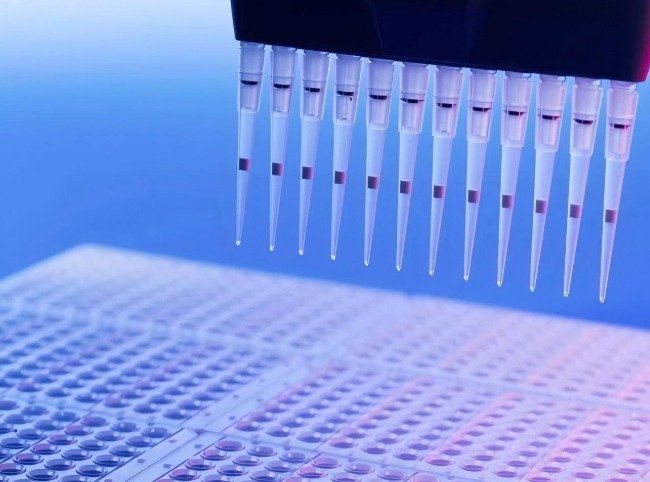
Modern drug discovery requires rapid evaluation of large compound libraries. Scientists address this need by developing miniaturized assays that replicate traditional partitioning methods in micro-scale formats. These systems reduce material consumption and increase throughput while maintaining acceptable accuracy. Automated liquid handling platforms control phase mixing, separation, and sampling with minimal variability. Researchers integrate these systems with analytical detection methods such as LC-MS to quantify concentrations precisely. This combination allows teams to screen hundreds of compounds within short timeframes. The key challenge lies in maintaining consistency across wells and avoiding cross-contamination. When properly implemented, high-throughput assays provide reliable lipophilicity data that aligns with larger-scale measurements.
Computational Modeling And In Silico Prediction
Scientists increasingly complement experimental data with computational models. These models estimate lipophilicity based on molecular structure, fragment contributions, and physicochemical descriptors. Software tools analyze features such as hydrogen bonding potential, surface area, and functional groups to predict logP values. Researchers use these predictions early in design stages to filter out compounds with unfavorable properties before synthesis. While computational methods offer speed, they do not replace experimental validation. Instead, scientists treat them as a first-pass screening tool. Continuous refinement occurs when predicted values are compared with measured data, improving model accuracy over time. This iterative process reduces experimental workload and accelerates candidate selection.
Cross-Validation Strategies To Improve Data Reliability
Accurate measurement does not rely on a single technique. Scientists routinely compare results from multiple methods to confirm consistency. For example, they may validate chromatographic estimates against shake-flask data or compare computational predictions with experimental outcomes. Discrepancies often reveal underlying issues such as compound instability, aggregation, or unexpected ionization behavior. Researchers investigate these differences rather than ignoring them, using them to refine both experimental design and interpretation. Cross-validation also strengthens confidence when advancing compounds into later development stages. Organizations with integrated platforms often centralize these workflows, ensuring that lipophilicity data remains consistent across projects and decision points.
Conclusion
Scientists measure lipophilicity through a combination of direct experiments, analytical techniques, and predictive models. Each method captures a different aspect of molecular behavior, and accuracy emerges from how these methods complement each other. The shake-flask method provides a physical reference point, chromatography enables scalability, and logD measurements introduce physiological relevance. High-throughput systems and computational tools extend these capabilities to modern discovery demands. Researchers do not rely on isolated values but interpret lipophilicity within a broader experimental framework. This integrated approach reduces uncertainty, improves candidate selection, and supports more reliable progression through development pipelines.