- That one cracked slab you’ve been stepping around for months. The uneven joint that catches every stroller wheel. The section that turns into a shallow pond every time it rains. At some point, patching starts to feel less like maintenance and more like a losing battle.
Sidewalk damage rarely announces itself all at once. It creeps in—one crack here, a small heave there—until the cumulative effect becomes hard to ignore. For homeowners and property managers, knowing when a repair will do and when a full sidewalk replacement is the smarter call can save considerable time, money, and frustration down the road.
This post breaks down the real signs that your sidewalk has crossed the point of no return, what drives the need for full replacement, and why acting sooner rather than later is almost always the right move.
The Difference Between Damage You Can Patch and Damage You Can’t
Not every crack means your sidewalk needs to come out. Hairline fractures and minor surface spalling are common, especially in climates with freeze-thaw cycles. These can often be sealed and left alone for years without causing structural problems.
The bigger concern is when the damage affects the stability or safety of the slab itself. Replacement becomes the more practical solution when you’re dealing with:
- Deep or wide cracks that run through the full depth of the slab, not just the surface
- Uneven sections where one slab has shifted significantly higher or lower than the adjacent one
- Repeated heaving caused by tree roots or soil movement that keeps coming back after repairs
- Crumbling or flaking concrete across a large area, which suggests the material itself has degraded
- Poor drainage that channels water toward your home’s foundation rather than away from it
A patch works well for isolated, contained damage. Once the problem is widespread or structural, the patch becomes a short-term fix for a long-term problem.
What Actually Causes Sidewalks to Fail
Concrete is one of the most durable materials used in residential construction—but it’s not invincible. Several factors accelerate deterioration and eventually force the replacement conversation.
Tree Root Intrusion
This is one of the most common culprits. As tree roots grow and expand beneath the surface, they exert significant upward pressure on concrete slabs. The result is the classic tripping hazard: one section lifted several inches above the other.
Grinding the raised edge down is a quick fix, but if the root system continues to grow, the problem will return. In many cases, replacement paired with root barriers or a modified installation approach is the only sustainable solution.
Soil Shifting and Settlement
The ground beneath a sidewalk isn’t static. Seasonal moisture changes cause soil to expand and contract. Poorly compacted fill settles over time. Erosion creates voids. Any of these can cause slabs to sink, tilt, or crack unevenly.
Mudjacking—where a slurry is pumped beneath the slab to lift it—can sometimes correct sinking. But if the underlying soil conditions are unstable, the same problem tends to resurface. Replacement with properly prepared base material addresses the root cause.
Freeze-Thaw Cycles
Water expands when it freezes. When moisture infiltrates existing cracks in concrete and then freezes, it widens those cracks from the inside. Repeat this process over many winters, and what started as surface damage becomes structural damage.
Older sidewalks that have been through decades of freeze-thaw cycles often develop a network of cracks that no amount of sealing can fully address.
Age and Surface Wear
Even well-maintained concrete has a lifespan. Most residential sidewalks last between 20 and 40 years, depending on installation quality, climate, and maintenance history. As concrete ages, it becomes more porous, more susceptible to staining, and more prone to surface deterioration.
At a certain point, the cost of ongoing repairs approaches—or exceeds—the cost of replacement. That’s the inflection point where replacement becomes the financially sensible choice.
Why Delaying Replacement Costs More Than You Think
The instinct to hold off on sidewalk replacement is understandable. It’s a visible expense that’s easy to put off. But delayed replacement typically generates costs that outweigh the upfront savings.
Liability exposure is a significant factor for property owners. A cracked or uneven sidewalk that causes someone to trip and fall can result in legal and medical costs far exceeding the price of replacement. In many municipalities, the property owner—not the city—is responsible for maintaining the sidewalk adjacent to their property.
Secondary damage is another hidden cost. A sidewalk that directs water toward your home, or one that sits directly against your foundation without proper drainage, can contribute to water intrusion, basement moisture issues, or foundation erosion over time.
Compounding repair costs also add up. Each patch, seal, or grinding job costs money. Three or four repair calls over five years can easily surpass what a replacement would have cost at the outset.
What a Sidewalk Replacement Actually Involves
For those unfamiliar with the process, a professional sidewalk replacement is more involved than simply pouring new concrete over old.
The existing damaged sections are removed and hauled away. The sub-base is then inspected, graded, and compacted to ensure proper drainage and a stable foundation for the new material. In cases where tree roots or drainage issues contributed to the original failure, those underlying problems are addressed before the new slab goes in.
New concrete is then poured, finished, and cured. Control joints are cut at appropriate intervals to manage future cracking. The result is a smooth, level surface that meets current safety standards—and one that should last for decades with basic maintenance.
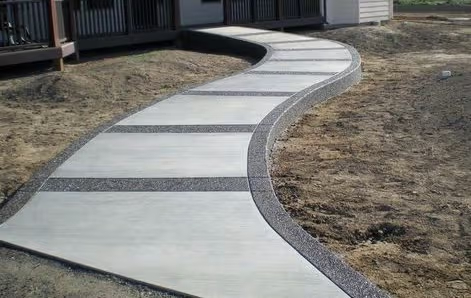
For properties with particular design requirements, there are also options beyond standard gray concrete. Exposed aggregate, stamped concrete, and broom finishes are all available through sidewalk replacement services, allowing homeowners to improve curb appeal at the same time.
The Safety Angle Property Owners Overlook
Sidewalk safety isn’t just about aesthetics. The Americans with Disabilities Act (ADA) sets specific requirements for accessible pathways on commercial and public properties, and many municipalities are extending similar standards to residential properties during renovation permits.
Uneven surfaces, cross-slopes that exceed safe thresholds, and damaged sections that impede mobility can all create accessibility issues. A sidewalk replacement is often an opportunity to bring a property into compliance—and to ensure that the space is genuinely safe for every person who uses it, including older adults and people with mobility limitations.
Getting the Timing Right
The best time to schedule a sidewalk replacement is during dry, moderate-temperature conditions—typically late spring through early fall in most of the United States. Concrete should not be poured in freezing temperatures or during periods of heavy rain, as both conditions affect curing and long-term durability.
If your sidewalk is showing signs of serious deterioration, getting ahead of the issue before winter sets in makes sense. Cold temperatures accelerate the damage already present, and addressing it in the fall is far preferable to dealing with a worse situation come spring.
Is It Time to Replace Yours?
Sidewalk-replacement improves safety, accessibility, and curb appeal by removing damaged, uneven, or poorly draining sections and installing a durable, level surface designed to last for decades with minimal maintenance. Sidewalk replacement isn’t a decision that needs to be rushed—but it benefits from careful evaluation. If you find yourself patching the same sections repeatedly, struggling with persistent drainage problems, or dealing with a surface that creates genuine tripping hazards, the signs are clear. Replacing the sidewalk at the right time ensures a smooth, stable path for pedestrians, reduces liability risks, and enhances the overall appearance and functionality of your property.
HeavenScape provides professional sidewalk replacement services designed to address both the visible damage and the underlying conditions that caused it. The result is a durable, safe, and properly finished surface that holds up for years.
Ready to get a closer look at what your property needs? Contact HeavenScape today for an assessment.