Walk through any well-run business district and you’ll notice something consistent: cameras. On storefronts, in parking lots, above entrances, and along hallways. Commercial security camera systems have become a cornerstone of modern business operations—not just for deterring crime, but for improving efficiency, ensuring compliance, and giving business owners peace of mind.
If you’re a business owner weighing whether to invest in a CCTV system, or looking to upgrade an outdated setup, this guide covers everything you need to know. From the key features of modern systems to what the installation process actually looks like, you’ll walk away with a clear picture of what commercial security CCTV camera installation involves and why it’s worth prioritizing.
What Is a Commercial CCTV System?
Closed-Circuit Television (CCTV) is a video surveillance technology that captures and transmits footage to a closed network of monitors, recording devices, or cloud storage. Unlike broadcast television, the feed is private—only accessible to authorized users.
A commercial CCTV system typically includes cameras (both internal and external), recording servers, video management software (VMS), and viewing monitors. Modern systems go much further, incorporating AI-driven analytics, license plate recognition, facial recognition, and mobile access—tools that transform a basic security setup into a fully integrated business intelligence platform.
The Core Components of a Modern CCTV Installation
Understanding what goes into a commercial security CCTV camera installation helps you make informed decisions about what your business actually needs.
Internal and External Cameras
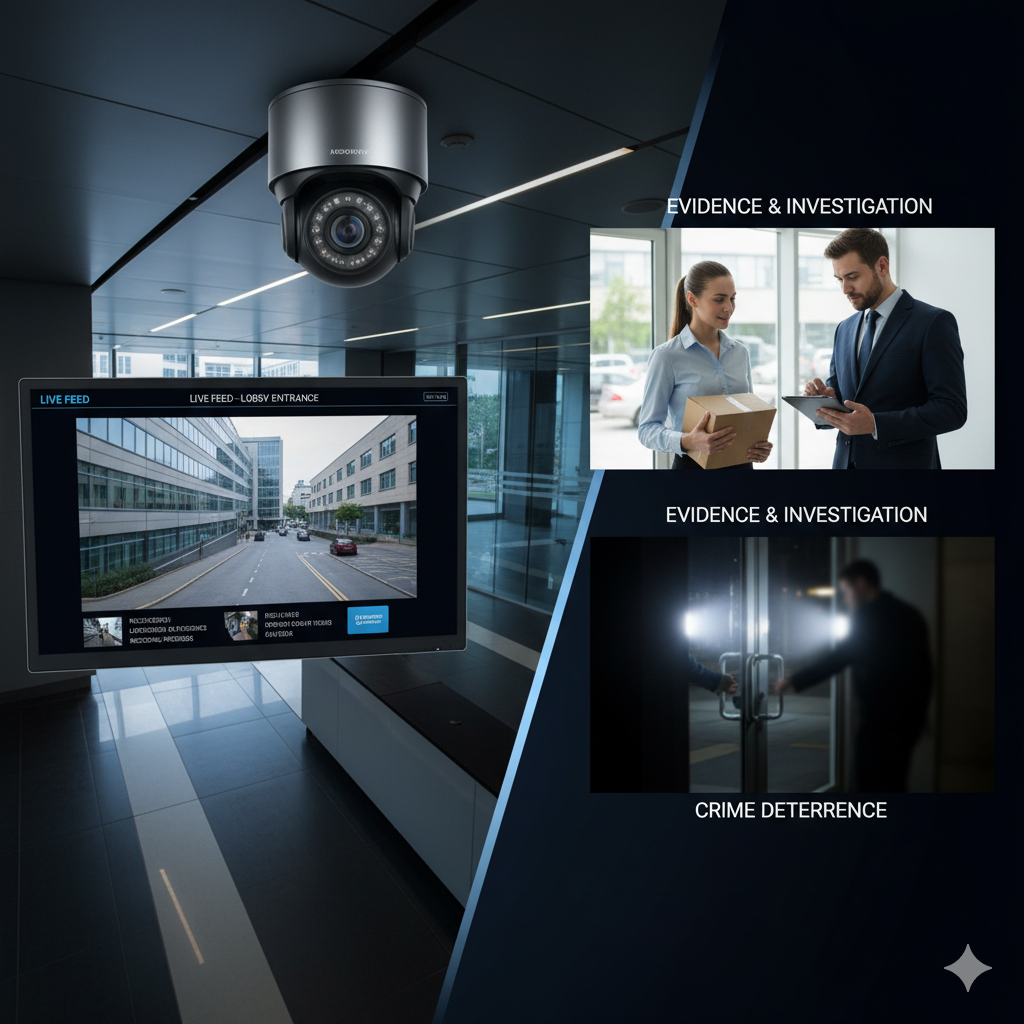
A comprehensive system covers both the inside and outside of your premises. External cameras monitor entry and exit points, parking areas, loading docks, and perimeters. Internal cameras keep watch over high-traffic areas, cash-handling zones, inventory storage, and common spaces.
The placement of each camera matters as much as the camera itself. A professional installation team will assess your site, identify blind spots, and design a layout that maximizes coverage without redundancy.
Video Management Software (VMS) and Recording Servers
VMS is the brain of your CCTV system. It manages camera feeds, stores recordings, and allows authorized users to search, review, and export footage. A quality VMS integrates seamlessly with your existing infrastructure and scales as your business grows.
Recording servers handle the data side—storing footage securely, either on-site or in the cloud. Cloud-based storage, in particular, offers remote accessibility and protection against on-site data loss.
License Plate Recognition
For businesses with parking facilities, vehicle access points, or fleet operations, license plate recognition (LPR) adds a powerful layer of security. LPR cameras automatically capture and log vehicle plates, flagging unauthorized vehicles and building a searchable record of all vehicle activity on your property.
Facial Recognition
Facial recognition technology allows businesses to identify individuals entering their premises in real time. This is particularly valuable for access control, identifying known offenders, or verifying employee identity in high-security areas.
AI and Analytics
This is where modern commercial CCTV camera installation truly separates itself from older systems. AI-powered analytics can detect unusual behavior, trigger automated alerts, count people and vehicles, and generate operational reports—all without requiring constant human monitoring.
For retail businesses, this data reveals foot traffic patterns and peak hours. For warehouses, it can flag safety violations automatically. The applications are broad and genuinely useful beyond security alone.
Mobile Applications and Remote Monitoring
One of the most practical advantages of a modern CCTV system is the ability to monitor your premises from anywhere. Mobile apps give business owners and security managers live access to camera feeds, alerts, and recordings directly from their smartphones or tablets.
This is especially valuable for multi-location businesses, where centralized oversight would otherwise require significant staffing resources.
Video Walls and Viewing Monitors
For businesses with dedicated security personnel—think large retail centers, office complexes, or logistics hubs—video walls and centralized monitoring stations provide a command-center-style overview of all camera feeds simultaneously. This setup improves response times and keeps security staff focused and organized.
Why Businesses Invest in CCTV Systems
Security is the obvious reason, but it’s rarely the only one. Businesses that invest in professional commercial security CCTV camera installation tend to see benefits across several areas.
Crime deterrence: Visible cameras reduce the likelihood of theft, vandalism, and unauthorized access. Studies consistently show that the presence of CCTV discourages opportunistic crime.
Liability protection: Footage can serve as objective evidence in the event of accidents, disputes, or false claims—protecting businesses from costly legal proceedings.
Health and safety compliance: In many industries, maintaining a record of workplace activity is a legal or regulatory requirement. CCTV supports this while also helping identify and address safety hazards proactively.
Operational efficiency: AI analytics turn camera data into actionable insights. People counting, queue monitoring, and vehicle tracking all contribute to smarter business decisions.
Employee accountability: Cameras in appropriate locations encourage professionalism and allow managers to review incidents without relying solely on eyewitness accounts.
What to Look for in a Commercial CCTV Installation Provider
Not all security camera companies offer the same level of service. When evaluating providers for your commercial security CCTV camera installation, consider the following:
Experience with commercial-scale projects: Residential and commercial installations are very different in scope. Look for a provider with a proven track record in commercial environments.
End-to-end service: The best providers handle everything from initial site assessment and system design through to installation, integration, and ongoing support.
Technology partnerships: Quality providers work with reputable hardware and software vendors, ensuring your system is built on reliable, future-proof technology.
Customization: Every business has different needs. A provider that offers tailored solutions—rather than off-the-shelf packages—will deliver a more effective result.
Ongoing maintenance and support: Technology requires upkeep. Choose a provider that offers monitoring, maintenance, and technical support after installation.
The Installation Process: What to Expect
A professional commercial security CCTV camera installation typically follows a structured process:
- Site assessment: A security specialist evaluates your premises, identifying coverage requirements, potential vulnerabilities, and technical constraints.
- System design: Based on the assessment, a custom camera layout and system configuration is proposed, outlining camera types, placement, recording infrastructure, and integration points.
- Installation: Cameras, cabling, servers, and software are installed and configured by trained technicians.
- Testing and commissioning: The full system is tested to confirm all cameras are functioning correctly, recording as expected, and integrated with any third-party systems.
- Training: Key personnel are trained on how to use the VMS, access footage, manage alerts, and operate mobile applications.
- Ongoing support: Reputable providers offer maintenance plans and technical support to keep your system running optimally over time.
Frequently Asked Questions
How many cameras does my business need?
This depends on the size of your premises, the number of entry and exit points, and your specific security priorities. A site assessment from a qualified provider is the most reliable way to determine the right coverage for your business.
Can CCTV systems integrate with other security technologies?
Yes. Modern CCTV systems are designed for high-level integration with access control systems, alarm systems, intercoms, and building management platforms. This creates a unified security ecosystem rather than a collection of disconnected tools.
Is cloud storage or on-site storage better for commercial CCTV?
Both have their merits. On-site storage offers direct control and fast local access. Cloud storage provides remote accessibility, redundancy, and protection against physical tampering or damage. Many businesses opt for a hybrid approach.
How long is footage typically retained?
Retention periods vary by business type, industry regulations, and storage capacity. Common retention periods range from 30 to 90 days, though some businesses require longer archives. Your provider can help configure retention settings to meet your requirements.
Do commercial CCTV systems require ongoing maintenance?
Yes. Regular maintenance ensures cameras remain properly aligned, firmware stays updated, and recording systems function without interruption. Most professional providers offer service agreements to cover routine upkeep.
Make Security a Strategic Investment
A well-designed CCTV system does more than prevent theft—it supports smarter operations, protects your team, and gives you documented evidence when things go wrong. The technology available today, from AI analytics to mobile monitoring, makes commercial security CCTV camera installation one of the most versatile investments a business can make.
If you’re ready to assess your current security setup or start from scratch, working with an experienced local provider is the most effective first step. Smart Security Services offers free consultations for businesses in Portland, OR and Vancouver, WA, helping you design a system that fits your premises, your team, and your budget.