Modern enterprises operate in a state of constant motion. Expansion into new markets, shifting regulatory landscapes, evolving customer expectations, and pressure for real-time insight have reshaped what organizations expect from their core systems.
ERP remains central to this reality, but its role has changed. It is no longer sufficient for ERP to record transactions reliably. It must support decision-making, adapt to change without disruption, and scale alongside the business without becoming a bottleneck.
In this environment, Dynamics ERP increasingly represents a platform model built around adaptability rather than permanence.
Enterprise Complexity Is a Design Requirement, Not an Exception
Large organizations rarely operate as a single, uniform entity. Multiple business units, shared services, cross-border operations, and diverse compliance requirements are part of everyday enterprise life.
Microsoft ERP solutions are designed to manage this complexity directly. Multi-entity structures, global finance models, and centralized governance coexist within a unified framework. Local execution remains possible without fragmenting control or visibility.
Instead of forcing simplification that breaks under scale, the platform absorbs complexity and makes it manageable, traceable, and auditable.
Change Happens Continuously, Not in Projects
Traditional ERP lifecycles assumed long periods of stability punctuated by disruptive upgrades. That model no longer aligns with how enterprises operate.
Microsoft ERP follows a continuous lifecycle. Enhancements, security updates, and performance improvements arrive as part of the platform rhythm rather than as large transformation events. Change becomes routine instead of exceptional.
This approach aligns more closely with enterprise planning cycles, reducing the operational risk associated with major upgrades and allowing organizations to stay current without pausing progress.
Enterprise Insight Requires a Unified Backbone
Leadership decisions depend on consistent data across finance, operations, procurement, and supply chain. Fragmented systems create blind spots that slow response and increase risk.
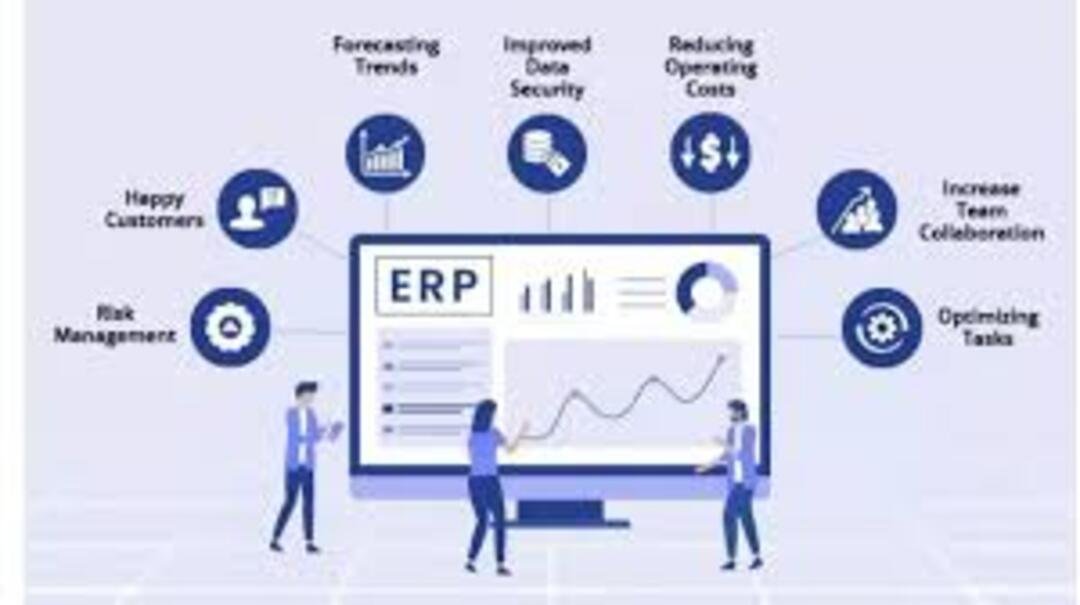
Microsoft ERP solutions provide a unified transactional backbone that enables data to flow across functions within a shared structure. Financial performance, operational metrics, and compliance indicators align naturally rather than requiring manual reconciliation.
Insight becomes operational, enabling timely decisions rather than retrospective analysis.
Governance Without Slowing the Business
Enterprises require strong controls, but excessive bureaucracy often leads to workarounds that undermine governance entirely.
Microsoft ERP embeds governance directly into processes through role-based access, approval workflows, audit trails, and segregation of duties. Controls are enforced by design rather than after-the-fact oversight.
This approach maintains compliance while preserving execution speed, allowing teams to operate confidently within defined guardrails.
Integration as an Enterprise Expectation
Modern enterprises run on ecosystems, not standalone systems. ERP must integrate cleanly with analytics platforms, automation tools, collaboration environments, and industry-specific applications.
Microsoft ERP solutions are built with interoperability as a core principle. Standardized APIs, shared identity frameworks, and native integration patterns allow organizations to extend capability without fragmenting data or governance.
This integration-first mindset supports innovation while protecting the integrity of core processes.
Alignment Between IT Governance and Business Agility
ERP friction often emerges when IT and business teams operate with conflicting priorities. Systems become either too rigid to adapt or too flexible to control.
Microsoft ERP encourages a shared operating model. IT teams focus on platform stability, security, and integration. Business teams configure workflows, adapt processes, and respond to change within established boundaries.
This balance reduces dependency, improves accountability, and accelerates the delivery of business improvements.
Security and Compliance at Enterprise Scale
Risk exposure increases as enterprises grow. Security and compliance cannot rely on isolated controls or periodic reviews.
Microsoft ERP solutions embed enterprise-grade security, identity management, and compliance frameworks into the platform itself. Monitoring, auditability, and regulatory alignment operate continuously rather than reactively.
This foundation supports enterprise risk management without introducing parallel control structures that slow operations.
A Mature Partner Ecosystem That Supports Scale
ERP success in large organizations depends heavily on execution quality and long-term stewardship.
Enterprises working with experienced Microsoft Dynamics 365 Implementation Partner gain access to industry context, structured delivery approaches, and ongoing optimization support. This ecosystem reduces execution risk and improves adoption across complex, multi-year programs.
The partner relationship extends beyond implementation, supporting continuous improvement rather than one-time delivery.
Conclusion: ERP That Evolves with the Enterprise
Modern enterprises do not stand still, and their ERP platforms cannot afford to either.
Microsoft ERP solutions align well with enterprise reality because they are designed for scale, change, and integration by default. They support governance without rigidity, insight without fragmentation, and innovation without disruption.
Rather than constraining growth, the platform evolves alongside the organization, enabling enterprises to focus on strategy, execution, and resilience in an environment defined by constant change.