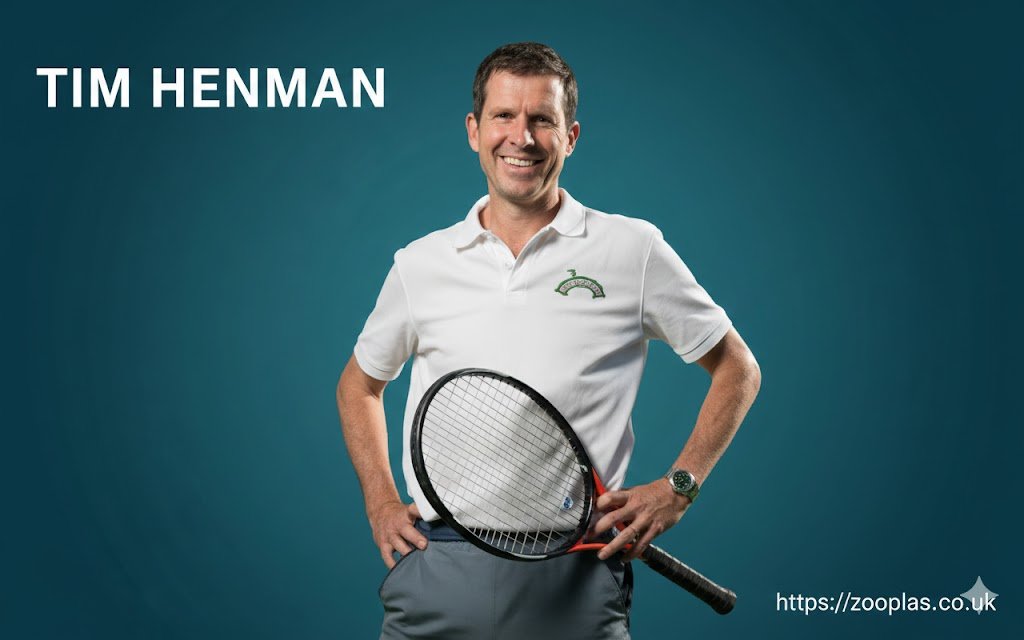
Timothy Henry Henman, better known as Tim Henman, is a name synonymous with British tennis. While he may not have clinched a Grand Slam singles title, his incredible career, remarkable consistency, and connection with British fans — especially at Wimbledon — make him one of the most iconic figures in tennis history.
Early Life: A Passion for Tennis From the Start
Born on 6 September 1974 in Oxford, England, Henman grew up in a family where sports played a significant role. His mother, Jane, was a former junior tennis player, and his grandfather, Henry Billington, had played for the Great Britain Davis Cup team in the 1940s. With this rich tennis background, it was no surprise that Tim picked up a racquet at a very young age. His first memories of tennis were spent playing on the family’s grass courts, where he developed a lifelong passion for the game.
Tim attended The Dragon School and later Eton College, where he excelled not only in tennis but in other sports, showing his competitive spirit early on. But tennis was always his true calling, and by the time he was a teenager, it was clear he had the potential to make it to the professional level.
Professional Career: A British Hope
Henman turned professional in 1993, and his style of play quickly made him stand out in the tennis world. Known for his serve-and-volley technique, Henman’s game was especially suited to grass courts, making him a regular contender at Wimbledon.
Tim’s breakthrough year came in 1996, when he cracked the top 20 ATP rankings and began to show he could compete with the best in the world. Throughout his career, Henman’s game was defined by his attacking style — he was aggressive at the net and, for much of his career, one of the few players to rely heavily on a serve-and-volley strategy, which was becoming less common in the modern game.
Grand Slam Journey: Close But No Cigar
Though Henman never won a Grand Slam singles title, he came very close on several occasions. He made six Grand Slam semifinals, with his most famous being his four Wimbledon semifinals (1998, 1999, 2001, 2002). Each time he made it to the semifinals, the British crowd eagerly awaited to see if Henman could go all the way and lift the Wimbledon trophy — something that hadn’t been done by a British male player since Fred Perry in the 1930s.
Unfortunately, Henman’s Wimbledon curse — as it came to be known — was one he could never shake off. Despite his best efforts, he never made it past the semifinals at the prestigious event. Nevertheless, he continued to capture the hearts of British tennis fans, who would gather at “Henman Hill” (later renamed “Murray Mound” after Andy Murray) outside Centre Court to cheer him on during his matches.
Henman’s best Grand Slam result outside of Wimbledon came at the French Open and US Open in 2004, where he reached the semifinals in both tournaments. These performances highlighted Henman’s all-around talent and his ability to compete on different surfaces.
Wimbledon and His Special Relationship with the British Public
No other tournament had a more special connection with Tim Henman than Wimbledon. His battles on Centre Court, with the crowd cheering him on, made him a British tennis legend. Though he never won the title, Henman’s tenacity and skill during his Wimbledon campaigns earned him the admiration of fans worldwide.
“Henman Hill” became a focal point at Wimbledon, a place where fans gathered en masse to support their homegrown hero. It was clear that Henman was more than just a tennis player — he was a symbol of British pride in the sport. His strong performances during the tournament kept hope alive for a British Wimbledon champion, even though that dream would ultimately be fulfilled by Andy Murray in 2013.
Post‑Retirement: Life After Tennis
Tim Henman retired from professional tennis in 2007 after years of battling injuries that had begun to take a toll on his body. However, life after tennis has been just as fulfilling for Henman, with his contributions to the sport continuing in other ways.
Since retiring, Henman has become a well-known television commentator and tennis pundit. He has worked with BBC Sport, providing insightful commentary during major tournaments like Wimbledon and the US Open. His extensive knowledge of the game, combined with his personal experience at the highest level, makes him one of the sport’s most respected analysts.
In addition to his media career, Henman is also actively involved in philanthropy through the Tim Henman Foundation, which focuses on supporting young people in the areas of sport, education, and health.
Family Life: Wife and Children
Tim Henman married Lucy Heald, a former TV producer, in 1999, and together, they have three daughters. Henman is known to be a family man who enjoys spending time with his loved ones, and he often speaks about how important his family is to him. He currently lives in Oxfordshire, England, where he and his family enjoy a quieter life away from the spotlight.
Despite his fame and public profile, Henman has always maintained a relatively private personal life, preferring to focus on his career and family rather than on the trappings of celebrity.
Tim Henman’s Legacy
Tim Henman’s impact on British tennis cannot be overstated. While he never won a Grand Slam singles title, he was the first British male tennis player in decades to consistently challenge at the highest levels. His influence paved the way for future British tennis stars, including Andy Murray, who went on to win three Grand Slam titles and an Olympic gold medal.
Henman’s greatest legacy lies in his ability to inspire an entire generation of tennis players and fans in the UK. His performances at Wimbledon gave hope to British tennis, and even though he never captured the elusive title, his contributions to the sport are still remembered fondly.
Today, Henman is still involved in tennis as a commentator and mentor, providing his expertise to the next generation of players. Whether it’s through his charitable work, his contributions to broadcasting, or his legacy as a trailblazer for British tennis, Tim Henman remains an iconic figure in the sport.
Conclusion
Tim Henman may not have won a Grand Slam singles title, but his career was defined by heart, dedication, and sportsmanship. His connection to Wimbledon, his consistent performances, and his role as a British tennis icon make him one of the most respected and beloved athletes in the country. Through his work in broadcasting, philanthropy, and mentoring, Henman continues to leave a lasting impact on the sport he loves.
If you’d like more details or changes in any section, just let me know!