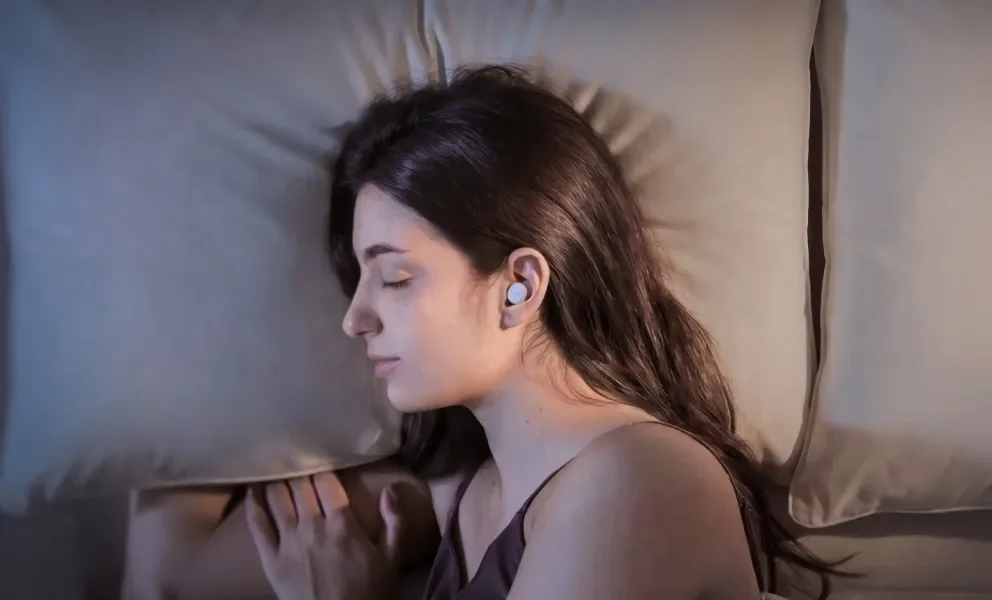
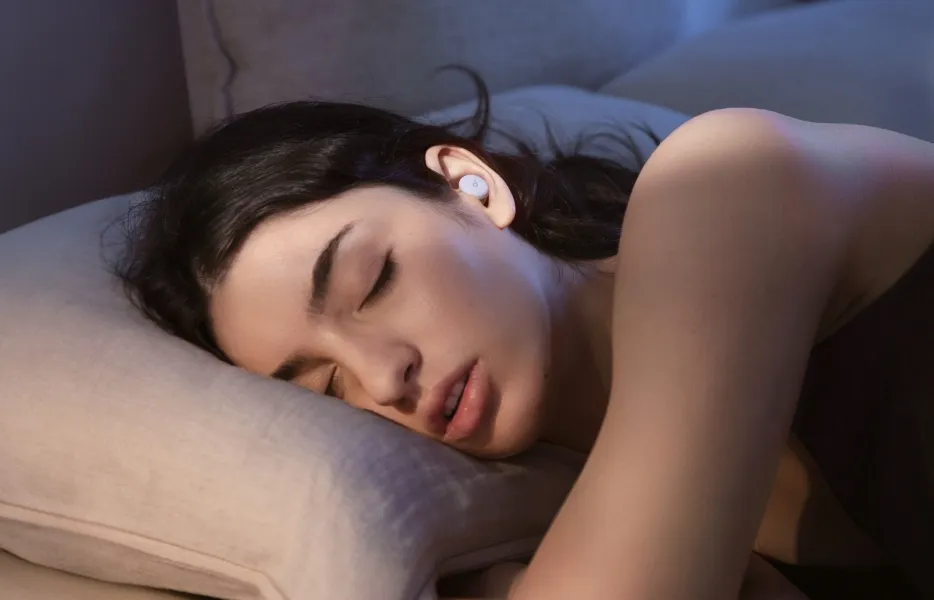
soundcore Sleep A30 are worth considering for side sleepers because they focus on the issues that usually make nighttime earbuds uncomfortable: pressure against the pillow, shifting during sleep, and noise that interrupts rest. For people who sleep on one side or switch sides often, comfort and stability matter just as much as sound quality. The real question is not simply whether these earbuds play audio well, but whether they stay comfortable for hours and support a realistic bedtime routine. Looking at the design, noise control, and overnight usability gives the clearest answer for side sleepers.
How Does the Sleep A30 Design Suit Side Sleeping?
Low-Profile Earbuds and Pillow Contact
For side sleepers, the biggest comfort test is how the earbud feels when the ear presses into a pillow. soundcore Sleep A30 address that with a low-profile shape intended to sit more flush in the ear rather than protrude outward. That slimmer fit helps reduce the sharp pressure points that larger earbuds can create after an hour or two on one side. It also makes the contact with the pillow feel less intrusive when you shift positions during the night. While no in-ear design can remove all pillow pressure, a compact body is a meaningful advantage for people who regularly fall asleep on their side and stay there for most of the night.
Ear-Tip Seal and Stability During Movement
A side-sleeping earbud also needs to stay in place while you turn over, adjust your pillow, or move between light and deep sleep. Sleep A30 rely on a snug ear-tip seal to create stability without feeling overly rigid. When the fit is correct, that seal helps the earbuds resist loosening as your head rubs against bedding, which matters for comfort and uninterrupted playback. A secure fit also improves passive noise blocking, so stability affects both feel and function. For most side sleepers, the practical benefit is simple: less need to reseat the earbuds before bed, and a lower chance of waking up to one earbud half-disconnected or fully displaced.
What Can Sleep A30 Do About Bedroom Noise?
ANC and Passive Isolation for Background Sounds
Bedroom noise often comes from a mix of sources rather than one loud interruption, and Sleep A30 are better suited to that layered problem than basic sleep earbuds. Their in-ear seal provides passive isolation that can soften common background sounds such as HVAC hum, distant traffic, or household movement. Active noise cancellation adds another layer by reducing steady low-frequency noise that passive blocking alone may not handle as effectively. For side sleepers, that matters because noise feels more noticeable when you are already focused on getting comfortable. This combination will not erase every sound, but it can create a calmer, less distracting sound environment that makes falling asleep and staying asleep easier.
Adaptive Snore Masking and Bedtime Audio
One of the more sleep-focused features is adaptive snore masking, which targets a common reason people seek nighttime earbuds in the first place. Instead of only blocking noise, Sleep A30 can respond with masking audio designed to make snoring less disruptive at the ear. That approach can feel more practical overnight than relying on volume alone. The earbuds also support bedtime audio such as white noise, nature sounds, or other sleep tracks, giving users a familiar audio cue as part of their wind-down routine. For side sleepers sharing a bed, this makes the product more than a comfort accessory; it becomes a tool for managing recurring sleep disturbances without filling the whole room with sound.
Does Sleep A30 Fit Your Whole-Night Routine?
Battery Life With Your Preferred Playback Settings
When exploring Anker soundcore audio hot deals, assess battery life against your bedtime routine, including playback duration and preferred noise control settings. With Sleep A30, overnight performance will be shaped by your chosen settings, especially whether you use continuous audio, stronger noise control, or snore masking features through the night. Lower-demand playback modes generally support longer use, while more active processing can reduce runtime before morning. For side sleepers, the important question is whether the earbuds can last through your normal sleep window without forcing compromises. If your routine includes several hours of sleep sounds or masking audio, battery expectations should line up with those specific habits rather than a generic all-night claim.
Bedtime Controls, Alarms, and Daily Charging
Sleep earbuds work best when their controls support a repeatable nighttime routine, and that is where convenience matters as much as comfort. Sleep A30 are most useful if you can start your preferred audio quickly, set the functions you want before lights out, and rely on alarms without switching devices in the morning. App-based settings can help personalize how the earbuds behave at bedtime, especially for users who want a consistent sequence every night. Daily charging is still part of ownership, so the charging case and your placement habits matter. For side sleepers, the overall value improves when the earbuds become easy to wear, easy to manage, and easy to prepare again for the next night.
Conclusion
Yes, soundcore Sleep A30 are worth it for side sleepers if your main priorities are reduced pillow pressure, stable in-ear fit, and better control over bedroom noise. Their low-profile design directly addresses the comfort issue that makes many standard earbuds frustrating in bed, while the combination of passive isolation, ANC, and adaptive snore masking gives them clear sleep-specific value. They make the most sense for people who want earbuds that fit into a full overnight routine rather than just play audio for a few minutes. If side-sleep comfort and nighttime noise are your biggest sleep obstacles, Sleep A30 are a strong match.