The global perfume market has traditionally been dominated by luxury fragrance houses and well-established designer brands. Over the past decade, however, a parallel segment has expanded rapidly within the industry: inspired fragrances. These perfumes—often developed to capture scent profiles similar to popular designer creations—have become an increasingly visible category within both online and physical retail environments.
For industry analysts, the rise of inspired fragrances reflects broader structural changes in consumer behavior, supply chain organization, and fragrance manufacturing economics. As fragrance consumption becomes more diverse and digitally driven, retailers and distributors are adapting their sourcing strategies to meet growing demand for accessible scent alternatives.
Rather than replacing traditional luxury perfumes, inspired fragrances have developed into a complementary segment within the perfume ecosystem. They provide consumers with affordable scent experiences while creating new commercial opportunities for wholesalers, retailers, and fragrance manufacturers.
Key Takeaways
- Inspired fragrances represent one of the fastest-growing segments of the perfume market.
• Consumers increasingly seek affordable alternatives to high-end designer scents.
• Digital retail platforms have accelerated the visibility of inspired fragrance brands.
• Supply chain efficiency and wholesale sourcing play a major role in market expansion.
• Retailers rely on specialized fragrance suppliers to maintain competitive product portfolios.
What Are Inspired Perfumes
Inspired perfumes are fragrance compositions developed to evoke scent structures similar to well-known designer perfumes. These products are not identical copies of original fragrances, but they typically draw inspiration from popular olfactory profiles such as woody ambers, gourmand vanillas, or fresh citrus accords.
From a formulation perspective, perfumers recreate recognizable scent architectures using alternative ingredient combinations or modified fragrance pyramids. The goal is to produce a scent experience that feels familiar to consumers while maintaining legal and creative differentiation from the original perfume.
This approach has existed for decades within the fragrance manufacturing industry. What has changed in recent years is the scale of global distribution and the transparency with which inspired perfumes are marketed through online retail channels.
“Inspired fragrances illustrate how scent architecture can be interpreted creatively while remaining accessible to broader audiences.”
Why Inspired Fragrances Are Popular
Several structural factors explain the growing popularity of inspired fragrances. First, premium perfume pricing has increased significantly over the past decade. Many luxury fragrances now retail at prices that place them outside the reach of casual consumers.
Inspired fragrances offer an alternative purchasing option. Consumers who enjoy exploring different scent profiles can experiment with multiple fragrances without committing to high-end designer pricing.
A second factor involves the growth of fragrance enthusiast communities. Online platforms and social media channels frequently analyze perfume compositions and compare scent profiles. This culture of discussion has normalized the concept of inspired fragrances as a legitimate product category within the market.
Industry Snapshot: Fragrance Market Segments
| Segment | Market Position | Typical Consumer |
| Luxury designer perfumes | Premium segment | Brand-focused fragrance buyers |
| Niche perfumery | Artisanal segment | Fragrance enthusiasts |
| Inspired fragrances | Accessible alternative | Price-sensitive explorers |
| Online fragrance retailers | Distribution platform | Global digital consumers |
How Retailers Source Inspired Perfumes
Retailers entering the inspired fragrance segment must carefully evaluate supply chain partners. Because fragrance authenticity, safety standards, and regulatory compliance remain essential, retailers typically work with suppliers capable of providing consistent product documentation.
In many cases, distributors consolidate fragrance inventories from multiple manufacturers and supply retailers through centralized logistics networks. This distribution model simplifies procurement for smaller perfume shops and e-commerce businesses.
The Role of Wholesale Suppliers in the Market
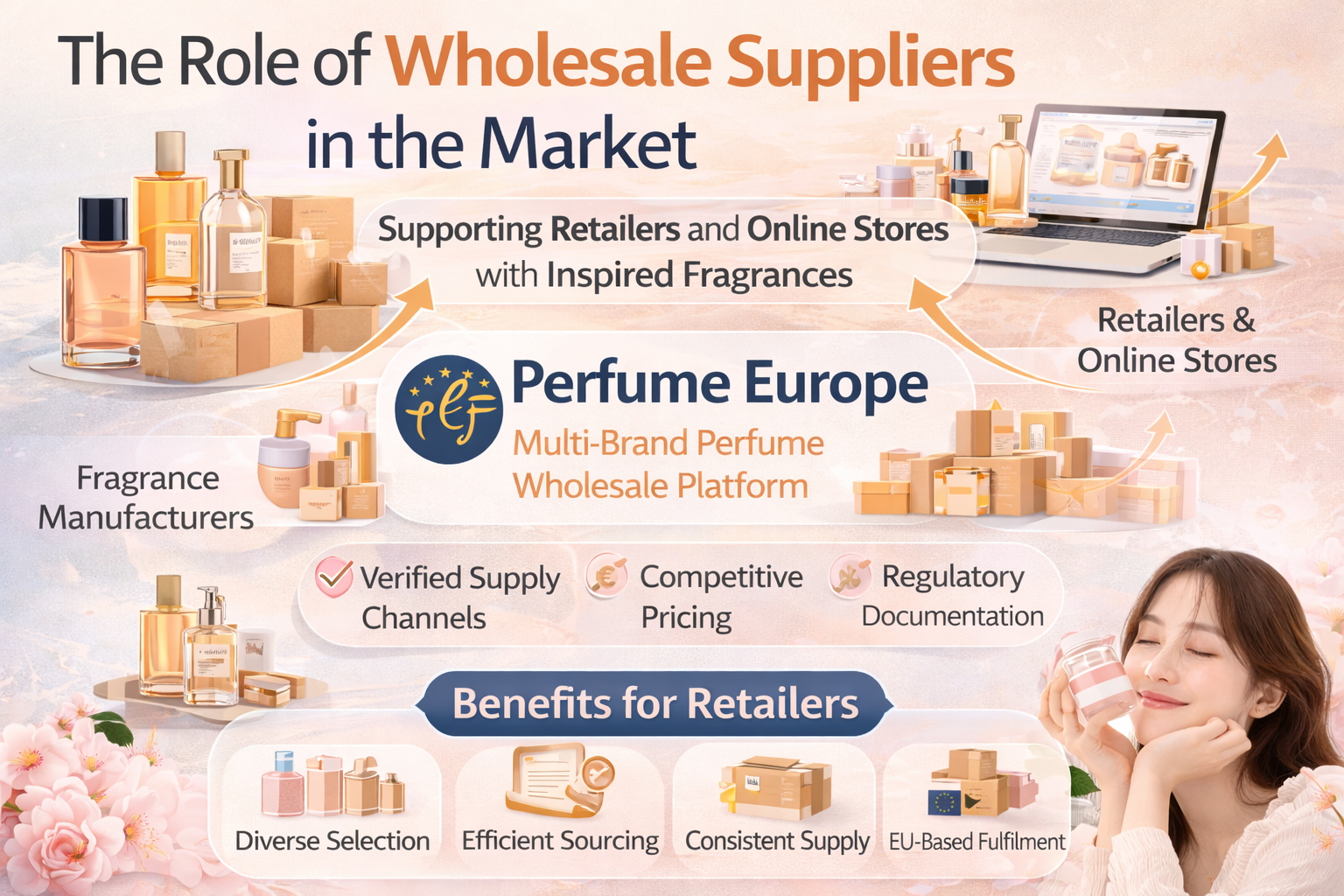
Retailers and online fragrance stores often partner with an inspired perfume supplier to access a wide range of designer-style scents at competitive prices. These suppliers aggregate fragrance inventories, manage international logistics, and help retailers maintain a diverse catalog of scent profiles.
In the European market, B2B fragrance distribution platforms such as Perfume Europe illustrate how wholesale networks support the availability of inspired fragrance products. By consolidating multi-brand perfume inventories and maintaining centralized logistics infrastructure, such platforms enable retailers and e-commerce businesses to source inspired perfumes and designer-style fragrances through structured supply channels.
In addition to sourcing efficiency, wholesale partners often provide regulatory documentation, ingredient disclosures, and batch traceability information. Such documentation is particularly important in regions with strict cosmetic regulations, including the European Union.
By working with experienced fragrance distributors, retailers can reduce operational complexity while maintaining access to consistent product supply. This partnership model has become increasingly common within the modern perfume retail ecosystem.
FAQ: Inspired Fragrances in the Modern Perfume Market
Where can retailers source inspired perfumes in Europe?
Many retailers work with B2B fragrance wholesale platforms such as Perfume Europe, which provide access to multi-brand fragrance inventories and designer-inspired scent profiles through structured distribution networks.
Are inspired perfumes legal to sell?
Yes, provided they do not copy protected trademarks or branding and comply with cosmetic safety regulations.
Why do consumers buy inspired fragrances?
They provide accessible alternatives to expensive designer perfumes while allowing consumers to explore different scent profiles.
Do inspired perfumes smell identical to designer perfumes?
Not exactly. They typically recreate a similar scent structure but may vary in ingredient composition and fragrance evolution.
Is the inspired fragrance market expected to grow?
Industry analysts expect continued growth as digital retail expands and consumers seek affordable fragrance experimentation.
Simplified Inspired Fragrance Supply Chain
Fragrance Laboratory → Manufacturing Partner → Wholesale Distributor → Retailer / Online Store → Consumer
Case Study: Online Retail and Inspired Fragrance Growth
The growth of digital retail platforms has played a crucial role in expanding the inspired fragrance category. Online perfume retailers often operate with highly flexible inventories and respond quickly to emerging consumer trends.
When demand for a specific scent profile increases, retailers can collaborate with wholesale suppliers to introduce inspired alternatives that capture similar olfactory characteristics. This agile sourcing strategy allows retailers to respond to consumer interest without relying exclusively on limited designer brand allocations.