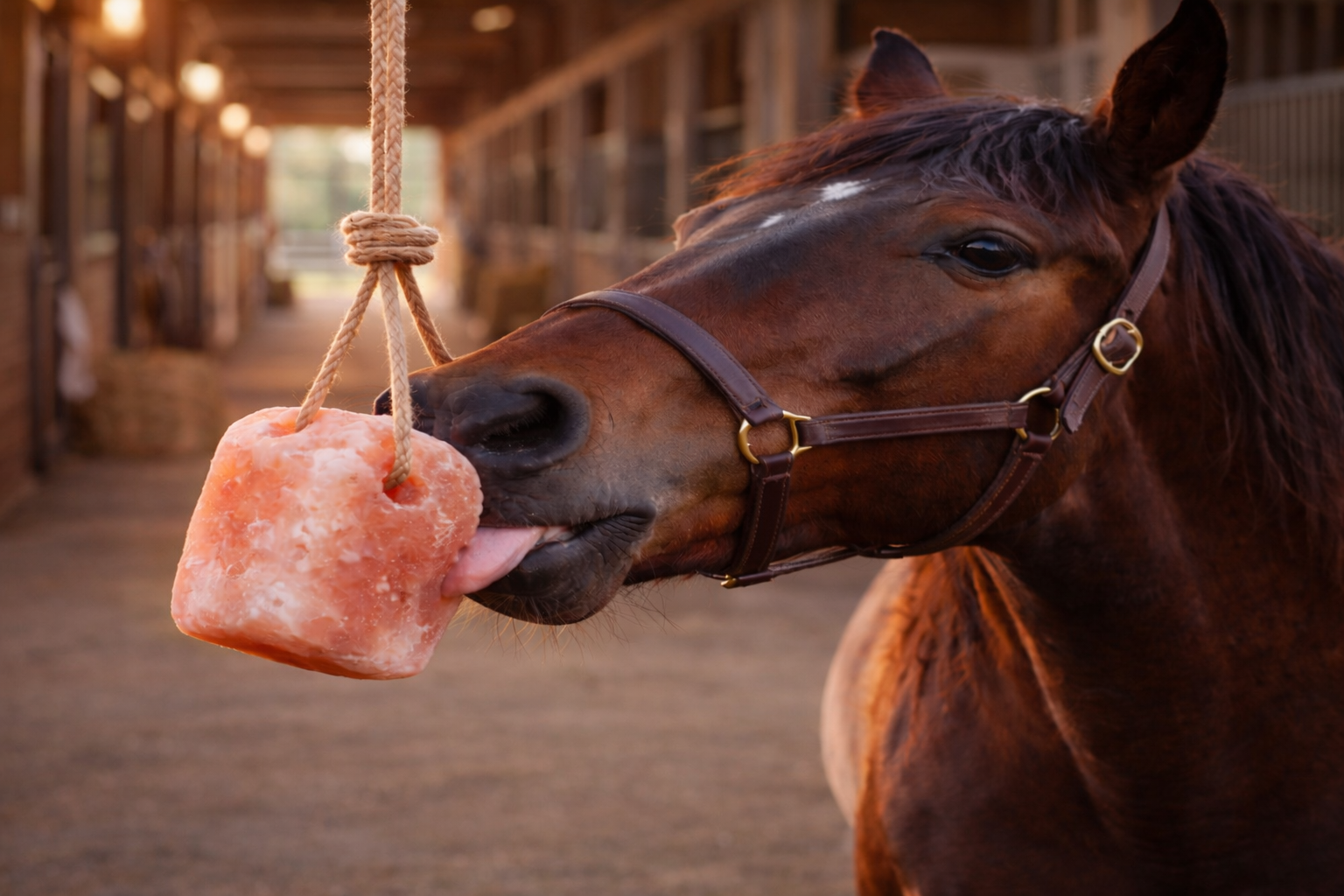
Horses are strong and athletic animals, and their power depends on the delicate balance of nutrition and water. Salt is one of the most significant ingredients you cannot ignore when caring for horses. The natural salt-licking behavior in horses is brought to the attention of many horse owners, and the next question is: do horses need salt, or is it a natural salt-licking habit?
It is not so hard to guess the answer to this question: salt licks are necessary to the health and well-being of the horse. In this guide, we will discuss the importance of salt licks for horses and how salt licks can be used in an easy and practical manner.
Why Do Horses Need Salt?
Salt has sodium and chloride, which are important electrolytes that cannot be naturally produced in adequate amounts by horses. These minerals help in several vital body processes, such as:
- Maintaining hydration
- Supporting nerve function
- Assistance in the proper contraction of muscles.
- Controlling the body temperature
- Supporting digestion
Salt is provided to domestic horses either through food or salt licks. On the other hand, wild horses prefer to find salt in mineral deposits or salty soil.
When a horse doesn’t get enough salt, usually during exercise or even in hot weather conditions, it will fail to balance the fluids in its body.
What Is a Salt Lick For Horses?
A horse salt lick is a compressed block of natural salt or mineral-enriched salt, which is placed in a stable pasture to supply necessary minerals. Horses lick on these blocks when they need sodium or any other valuable nutrient in their bodies.
Salt licks for horses are a simple and natural method of supporting their nutrition.
There are many different types of salt licks: plain white blocks of salt, mineral- enriched salt blocks, and Himalayan salt licks.
The licking behavior helps the horses to regulate their intake with the passage of time, so that they do not overconsume but receive the necessary minerals to keep them hydrated, strong, and healthy. Salt licks are suitable for pets, livestock, and animals other than horses.
What Makes Himalayan Salt Licks Different?
The Himalayan salt licks typically consist of Himalayan pink salt and contain 84 minerals and trace elements such as calcium, magnesium, potassium, and iron. These minerals and trace elements will facilitate the process of electrolytes, healthy drinking habits, and overall health and well-being.
Pink Himalayan salt licks are dense and durable, so they last longer and allow horses to lick safely and comfortably.
Are Salt Licks Good For Horses?
Yes, this is the reason why most trainers believe salt is the key to active horses. Electrolytes help regulate muscles in a proper manner. At low sodium concentrations, the horse may develop:
- Muscle fatigue
- Weakness
- Reduced stamina
A salt lick for horses promotes balanced electrolytes, which enables muscles and nerves to communicate properly. This leads to increased stamina and quick recovery from physical activity.
How Do Salt Licks Help Keep Horses Hydrated?
Lick salt ensures that horses stay hydrated since sodium is a vital electrolyte that activates thirst and enough water level in the body. When horses lick salt, the sodium concentration of the animals increases, and this triggers water intake.
The body retains more water with adequate sodium levels. This will prevent dehydration and maintain blood circulation. Animal lick salt is important to maintain healthy hydration because they make the horses adopt a regular drinking habit.
Do Salt Licks Support Digestion in Horses?
The fact that salt also improves digestion is a surprising fact for many horse owners. Salt triggers the production of saliva. Saliva plays a key role in:
- Breaking down feed
- Supporting gut health
- Regulating the acidity in the stomach.
Benefits Of Himalayan Salt Licks For Horses:
The reason why many horse owners have been attracted to Himalayan salt licks is since they are naturally mined and minimally processed. Pink salt licks also contain 84 minerals and trace elements, which are vital for horse health.
Together with sodium and chloride, these minerals help maintain hydration, support healthy muscle function, and contribute to a horse’s overall well-being.
If you are looking for naturally sourced Himalayan salt licks, Ittefaq Salt Company offers quality options suitable for horses and other animals.
Where Should You Place A Salt Lick?
Effective and safe use is achieved by proper placement.
Best locations include:
- Close to water (promotes drinking).
- Place inside stables at the proper height.
- Outdoor areas are covered to keep off rain.
- Use secure holders to avoid contamination.
Do not place the blocks of salt on the ground where they can be contaminated with dirt.
Frequently Asked Questions (FAQ):
- Do horses need salt?
Yes. Most horses need to be given free-choice salt to balance electrolytes.
- Is salt necessary to horses even when they consume food?
Yes. Most feeds do not contain sufficient sodium to meet a horse’s daily nutritional requirements, so additional salt supplementation is necessary.
- What are the signs my horse may need more salt?
Common signs can include reduced performance, muscle cramps, dullness, or heavy sweating. If you notice these signs, consult a veterinarian.
Final Thoughts:
Salt licks might seem basic, but they are among the most efficient means of keeping horses healthy. Salt is a basic ingredient of equine care, whether it comes to hydration, digestion, or muscle function and natural mineral balance.
Supplying proper salt lick and fresh water, horse owners provide their animals with the chance to control the necessary nutrients independently, as nature intended.