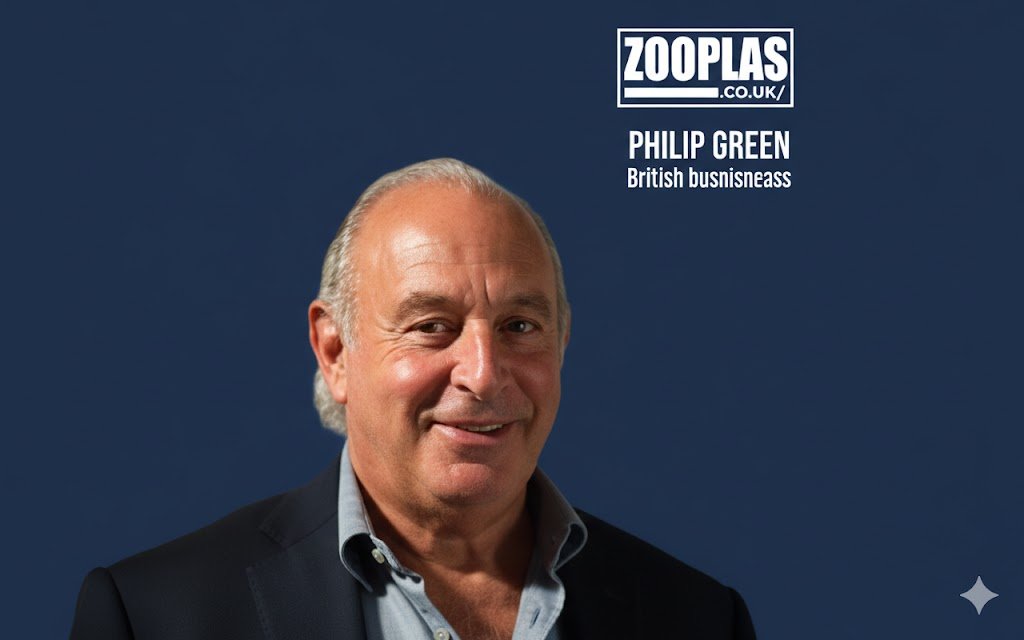
Sir Philip Green is a name that has been both revered and criticized in the British business world. As the former chairman of Arcadia Group, which housed major brands like Topshop, Burton, Miss Selfridge, and Dorothy Perkins, Green built one of the most influential retail empires in the UK. However, his career has been overshadowed by numerous controversies, leading to a complicated legacy.
Early Life and Career Beginnings
Born on March 15, 1952, in Croydon, England, Philip Green came from a middle-class Jewish family. He was the son of Simon Green, a property developer, and his mother was Alma Green. Green attended Carmel College, a Jewish boarding school in Oxfordshire, before deciding to leave formal education at the age of 15. Without any academic qualifications, he ventured into the world of business, following in his father’s footsteps.
Green started by working in shoe imports and soon began to make his mark in the retail industry. His entrepreneurial spirit led him to establish several business ventures, including importing jeans from the Far East. By his twenties, he was already establishing his own business empire.
The Rise of Arcadia and Retail Dominance
Green’s rise to prominence began with the acquisition of Arcadia Group, a conglomerate of high‑street fashion brands, in the early 2000s. Arcadia was home to some of the most iconic British fashion retailers, such as Topshop, Topman, Burton, Dorothy Perkins, and Miss Selfridge. Under Green’s leadership, Arcadia experienced massive growth, and the brands became some of the most popular and recognizable on the UK high street.
The Topshop brand, in particular, became a major player in global fashion, especially in the early 2000s, attracting a youthful following with its trendy clothing lines. Green’s ability to target younger audiences and adapt to changing retail trends allowed Arcadia to dominate the high‑street fashion market for over a decade.
Controversies and Criticisms
Despite his business success, Green’s career has been marred by several controversies that have significantly impacted his public image.
BHS and the Pension Crisis
One of the most significant controversies surrounding Sir Philip Green involved the collapse of British Home Stores (BHS), a company he bought in 2000. In 2015, he sold BHS for £1 to a group of buyers, including Dominic Chappell, a businessman with little experience in retail. Shortly after the sale, BHS went into administration, leaving around 11,000 employees without jobs and facing a pension deficit of £571 million.
The BHS scandal became a defining moment in Green’s career. Many criticized him for extracting large sums from the company while it was struggling and leaving behind a massive pension liability. In response to these allegations, Green defended his actions, but the controversy damaged his reputation and led to a parliamentary investigation.
Tax Avoidance Allegations
Green has also faced accusations of tax avoidance. It was revealed that his family’s business interests were registered offshore, particularly in Monaco, to reduce UK tax liabilities. While this arrangement was legal, it raised ethical questions, particularly given the public nature of his wealth. Green faced significant public backlash over the years due to these allegations.
Personal Life and Wealth
Green has always enjoyed a luxurious lifestyle, often making headlines for his extravagant personal possessions. He owns a superyacht called Lionheart, which is one of the largest privately owned yachts in the world. He also owns several homes around the world, including a luxurious mansion in Monaco.
Green married Cristina (Tina) Green, and together they have two children. The Green family lives a private life, though they are known for their wealth and luxurious lifestyle.
At the height of his career, Sir Philip Green was considered one of the richest men in the UK, with an estimated net worth in the billions. However, following the collapse of Arcadia and the controversies surrounding BHS, Green’s wealth has been significantly impacted. His net worth is currently estimated to be in the £900 million to £1 billion range, though it fluctuates depending on the performance of his remaining business interests.
Legacy and Influence
Sir Philip Green’s legacy is undeniably complex. On one hand, he is credited with building a retail empire that reshaped the British fashion industry, bringing iconic brands like Topshop and Burton to the forefront of UK retail. His ability to successfully run a global business for several decades is a testament to his business acumen.
On the other hand, his career has been tainted by corporate failures, particularly the collapse of BHS, the pension scandal, and allegations of tax avoidance. These controversies have overshadowed his achievements, leading to a damaged reputation among the British public and in the world of business.
Despite the challenges he faced in recent years, Green’s impact on British retail cannot be overstated. His companies shaped the landscape of high‑street fashion and influenced how brands connect with consumers.
Conclusion
Sir Philip Green’s career has been marked by extraordinary success and controversial setbacks. His business ventures reshaped the UK retail market, and his brands became household names. However, his role in the collapse of BHS, the pension scandal, and his tax avoidance practices have left a stain on his legacy. As of now, Green continues to maintain a low public profile, but his story remains one of the most talked‑about in British retail history. His influence on both fashion and corporate governance will continue to be felt for years to come, even as his reputation remains a subject of ongoing debate.