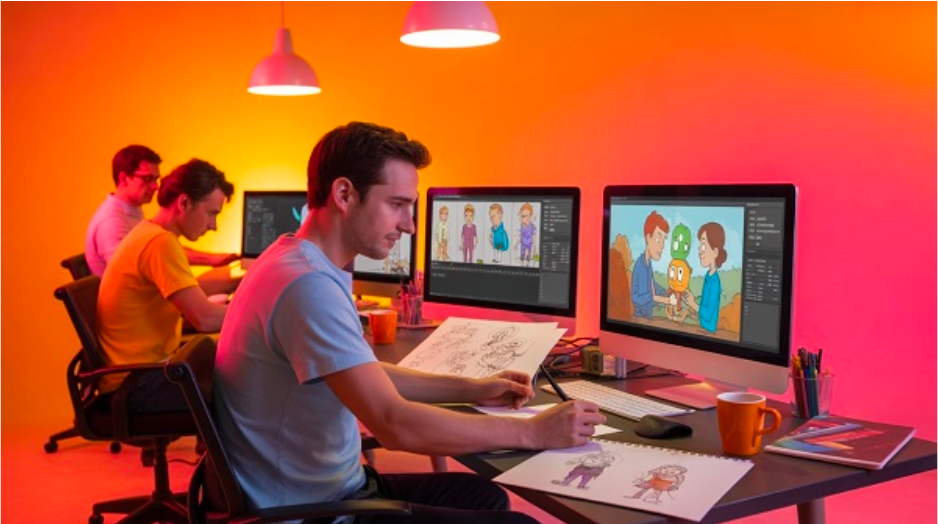
A great product does not always sell itself. In fact, the more sophisticated the product, the harder it often is to explain. Features stack up, use cases branch out, and suddenly what sounded simple internally feels overwhelming to an outside buyer.
This is where product-focused videos change the game.
Instead of asking prospects to read dense pages or sit through long demos, animation shows value in motion. It guides attention, simplifies decision-making, and helps buyers understand not just what a product does, but why it matters to them.
In this post, we will break down why animated product videos are becoming essential, how they support the full buyer journey, and what businesses should look for when choosing the right production partner.
Why product understanding is the biggest conversion blocker
Most drop-offs do not happen because buyers dislike the product. They happen because buyers are unsure.
Uncertainty slows decisions. When people do not fully grasp how something works, how it fits their needs, or what outcome to expect, they delay or walk away.
Product videos remove that friction by:
- Showing functionality instead of describing it
- Explaining benefits in context
- Reducing cognitive load
- Helping viewers self-qualify faster
When understanding improves, confidence follows. And confident buyers convert more often.
The difference between explainer videos and product videos
While the terms are often used interchangeably, explainer videos and product videos serve slightly different roles.
Explainer videos focus on the big picture. They answer questions like:
- What problem does this solve
- Who is it for
- Why is this approach better
Product videos zoom in on the experience. They show:
- How the product works
- What the interface or workflow looks like
- How features solve real scenarios
The strongest marketing strategies use both, starting with an explainer and following up with product-focused animation as buyers move closer to a decision.
Where animated product videos deliver the most impact
Animated product videos are flexible. They perform well across multiple touchpoints, not just on a homepage.
High-impact placements include:
- Product and feature pages
- Sales follow-up emails
- Demo landing pages
- Paid ad campaigns
- App onboarding flows
- Investor and stakeholder presentations
Because animation can abstract and highlight key moments, it works even when products are still evolving or when live footage is not ideal.
Why animation often beats live-action for products
Live-action videos have their place, but animation offers advantages that are hard to ignore, especially for digital products and services.
Animation allows brands to:
- Show workflows without real users
- Highlight invisible processes
- Control pacing and focus
- Avoid reshoots when features change
- Maintain consistent visuals across updates
This flexibility is why many companies invest in product video animation services as a long-term content solution rather than a one-off campaign asset.
What makes a product video actually effective
An effective product video is not a feature dump. It is a guided experience.
Strong product videos usually follow this structure:
- Start with a relatable problem or scenario
- Introduce the product as the solution
- Walk through key actions step by step
- Highlight outcomes, not just features
- Reinforce value with a clear takeaway
- End with one next step
The goal is not to show everything. It is to show enough that the viewer feels informed and motivated.
The role of scripting and storyboarding
One of the biggest misconceptions about product videos is that animation is the hard part. In reality, the script and storyboard do most of the work.
A strong script:
- Sounds conversational, not technical
- Uses simple language without oversimplifying
- Anticipates viewer questions
- Builds momentum toward a clear conclusion
Storyboarding then translates that script into visuals, deciding what appears on screen and when. This stage prevents confusion, bloated timelines, and unnecessary revisions later.
Why businesses choose experienced production partners
Product videos sit at the intersection of marketing, sales, and product teams. That makes alignment critical.
An experienced explainer video production company in the USA often brings value beyond animation alone by:
- Helping refine messaging
- Understanding buyer psychology
- Aligning visuals with brand standards
- Managing structured review cycles
- Delivering assets in multiple formats
This level of coordination is especially important when videos support revenue-driving pages and campaigns.
Measuring success beyond views
The success of a product video is not measured only in views. Performance shows up in behavior.
Key indicators include:
- Increased time on product pages
- Higher demo or trial sign-ups
- Better-qualified leads
- Shorter sales cycles
- Fewer repetitive sales questions
When product videos are placed strategically, they quietly improve efficiency across teams.
Planning product videos as a system, not a single asset
One mistake brands make is treating each product video as a standalone piece. This leads to inconsistent visuals and messaging.
A smarter approach is to plan a product video system:
- One core explainer
- Feature-specific animations
- Short clips for ads and social
- Onboarding or tutorial videos
This system approach reduces costs over time and keeps communication consistent as the product evolves.
Common pitfalls to avoid
Before starting a product video project, watch out for these common mistakes:
- Trying to cover every feature in one video
- Writing scripts without a clear audience in mind
- Choosing animation style before defining the message
- Skipping storyboard approvals
- Using multiple calls to action
Focus almost always beats breadth.
Conclusion
Product videos are no longer optional for brands selling complex or competitive offerings. They help buyers understand faster, trust sooner, and decide with confidence.
When animation is guided by clear messaging and thoughtful structure, it becomes a powerful bridge between curiosity and commitment. Whether used for marketing, sales, or onboarding, a well-executed product video quietly does what text and static visuals struggle to achieve.
For businesses ready to scale clarity along with growth, animated product videos are one of the smartest investments they can make.